
Aspendos and Its Roman Theatre
Aspendos in Antalya Province preserves a strikingly complete Roman theatre, where tiered seating, a towering stage wall and a nearby aqueduct reveal how Roman Pamphylia was built and lived.
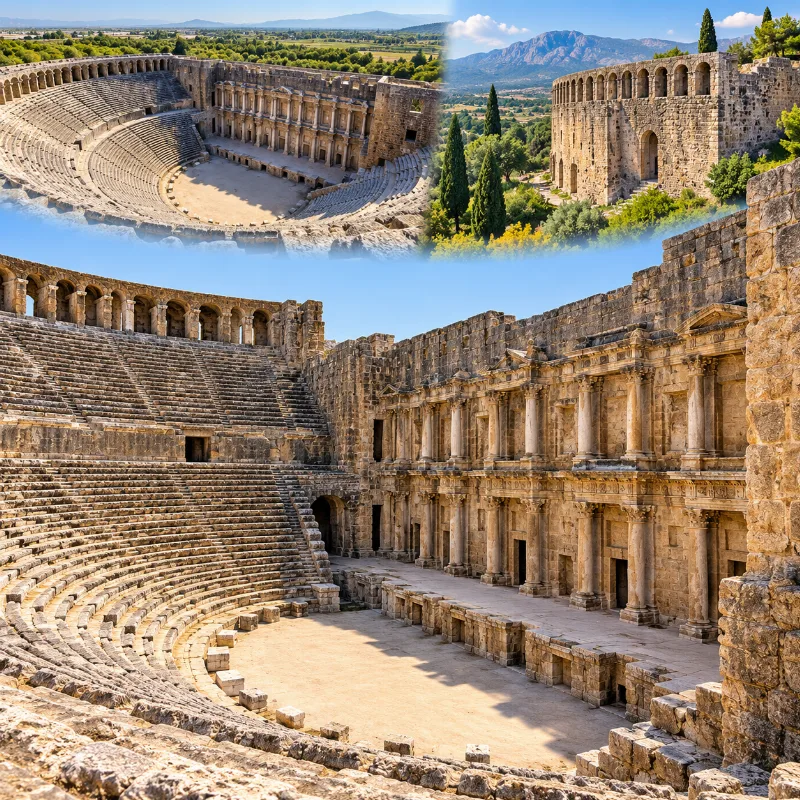
Aspendos is an ancient city in the Pamphylia region of southern Türkiye, standing on the fertile plain of the Köprüçay River in Antalya Province near the town of Serik. While the site also preserves an acropolis, an agora, a basilica and a stadium, it is the Roman theatre that has carried its name through the centuries. Built into the hillside and surviving in a notably intact condition, the structure shows how Roman architects organised space for large audiences, clear sightlines and strong acoustics.
A Theatre from the Second Century AD
The theatre at Aspendos was constructed in the second century AD, during the reign of Marcus Aurelius. An inscription on the building names Zenon, son of Theodoros, as its architect and records that the project was completed with support from the city and the emperor. Estimates of capacity vary, but the seating area is generally thought to have held well over ten thousand spectators, placing it among the larger theatres of Anatolia.
Reading the Architecture
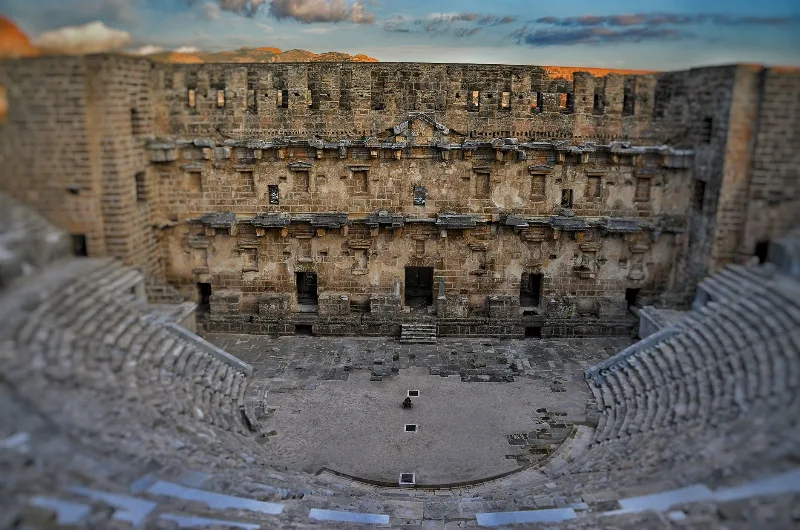
The design follows the classic Roman plan. A semicircular cavea of tiered stone seats rises up the slope, divided by a horizontal walkway known as the diazoma and by vertical stairways that also served as passages. At the bottom stands the stage building, or scaenae frons, whose two-storey facade of columns, niches and doorways once formed the backdrop for performances. The side entrances, or parodoi, allowed actors and processions to enter. The curve of the seating and the height of the stage wall helped project the human voice across the rows, a practical concern that still shapes the character of the building today.
The Wider Site of Aspendos
Beyond the theatre, the ruins spread across two hills. The acropolis holds traces of public buildings, a basilica and a market area, while a stadium lies on the flat ground nearby. Among the most striking remains is the aqueduct that once carried water to the city. Its system of towers and pipes used an inverted siphon to cross the valley, an engineering solution that reveals the sophistication of Roman water management in Pamphylia.
The Köprüçay River and Its Bridge
The Köprüçay, known in antiquity as the Eurymedon, flows past the site and gave Aspendos access to trade routes and river transport. A short distance away, the Eurymedon Bridge — locally linked with the name Köprüpazar — spans the water with a series of arches. Its earliest Roman form was later rebuilt and repaired during the Seljuk period, and the crossing remained in use for centuries.
Continuity of Use
The survival of the theatre is tied to its continued usefulness. In the Seljuk era the building was adapted for other purposes, and its solid stage wall helped shield the structure from being quarried for stone, a fate that damaged many ancient monuments. That long continuity, from Roman spectacle to later reuse, explains why so much of the original fabric is still visible.
The Surrounding Region
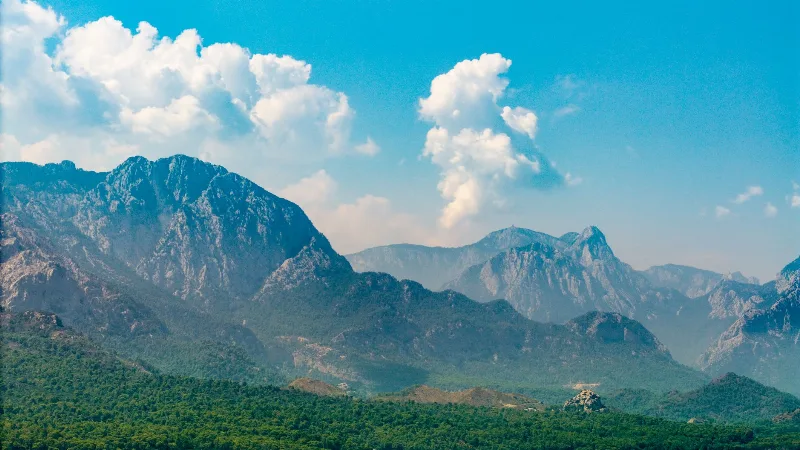
Aspendos sits within a landscape of rivers, plains and mountains. The Taurus range rises to the north, the Mediterranean coast lies to the south, and the wider Antalya region includes the ancient cities of Side and Perge, the Köprülü Canyon and the long beaches of the Pamphylian shore. Together they place Aspendos within a broader picture of Anatolian history, where Greek, Roman, Byzantine and Seljuk layers sit close together.
Related content
Aspendos
An ancient city near Antalya best known for its large Roman theatre and other surviving structures.
Aspendos
Aspendos is a Pamphylian ancient city near Serik in Antalya Province, dominated by a second-century Roman theatre that survives almost intact. Its aqueduct, acropolis and lower-city ruins sit in the flat farmland of the Köprüçay plain.
Antalya
Antalya offers a unique blend of vibrant history and stunning natural beauty, making it a must-visit destination in Türkiye.
3-Day Antalya to Side Ancient Coast Route
A three-day coastal journey from Antalya to Side that links the archaeological sites of Perge and Aspendos with the Manavgat Waterfall and the ruins of Side, with a clear day-by-day sequence of stops.
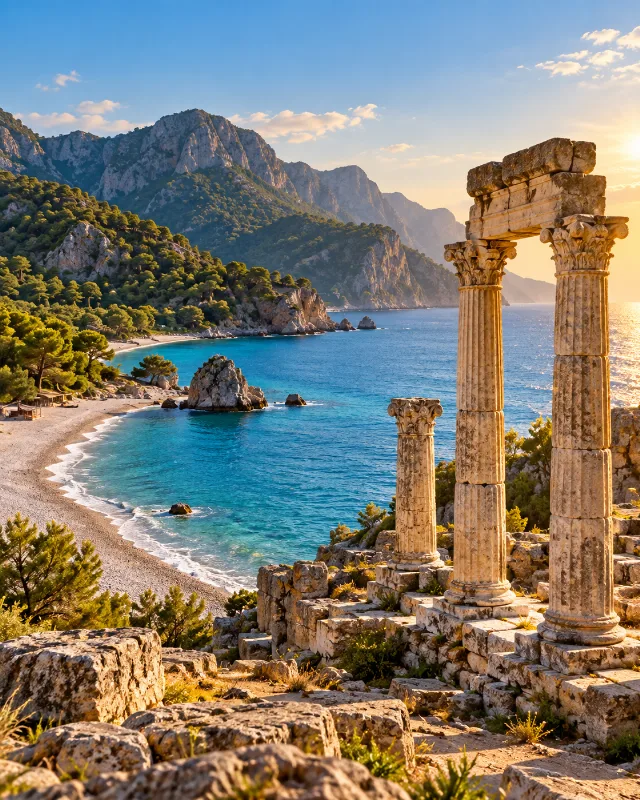
3-Day Antalya Ancient Coast Route
A three-day route combining Antalya’s old city with Perge, Aspendos, Side, Olympos and the Mediterranean landscapes around Çıralı.
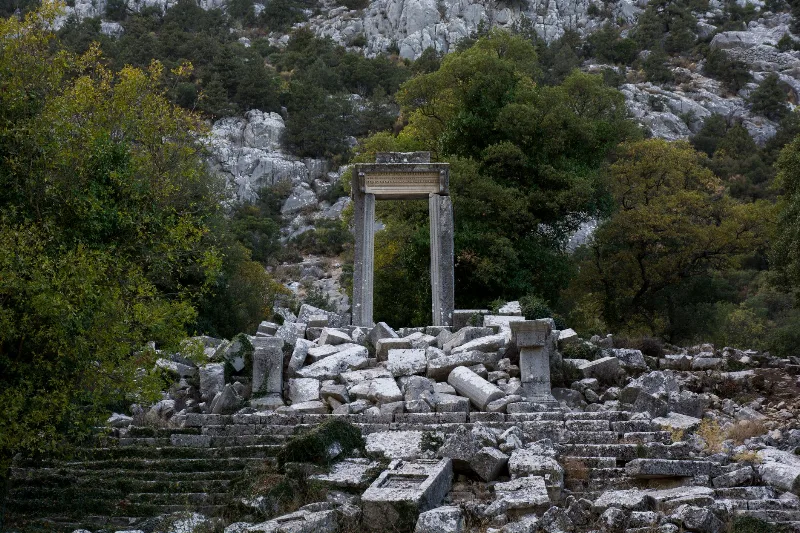
Antalya's Ancient Ruins
Antalya's ancient ruins trace Lycian, Pamphylian, Roman and Byzantine life across the Mediterranean coast and the Taurus foothills. Scattered theatres, colonnaded streets and rock-cut tombs reveal how successive peoples shaped this landscape.
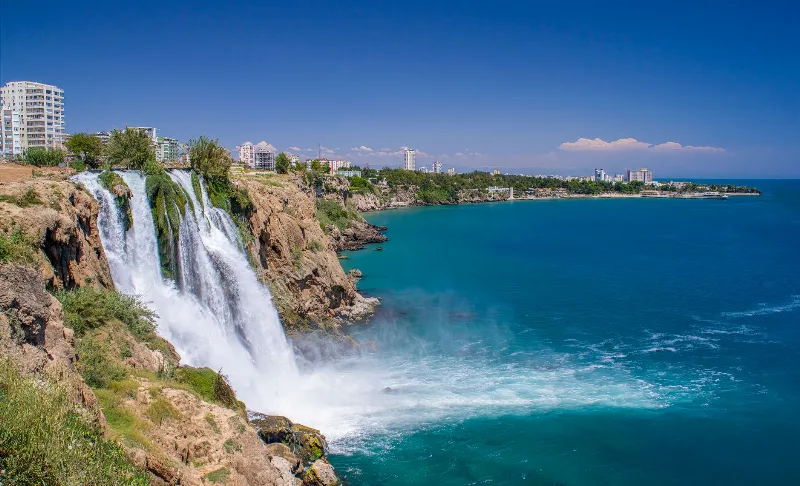
2-Day Antalya Waterfalls and Ancient Cities Route
A circular two-day route based in Antalya that pairs the Düden and Kurşunlu waterfalls with the ancient cities of Perge, Aspendos and Termessos, following the eastern coastal plain on the first day and the Taurus foothills on the second.
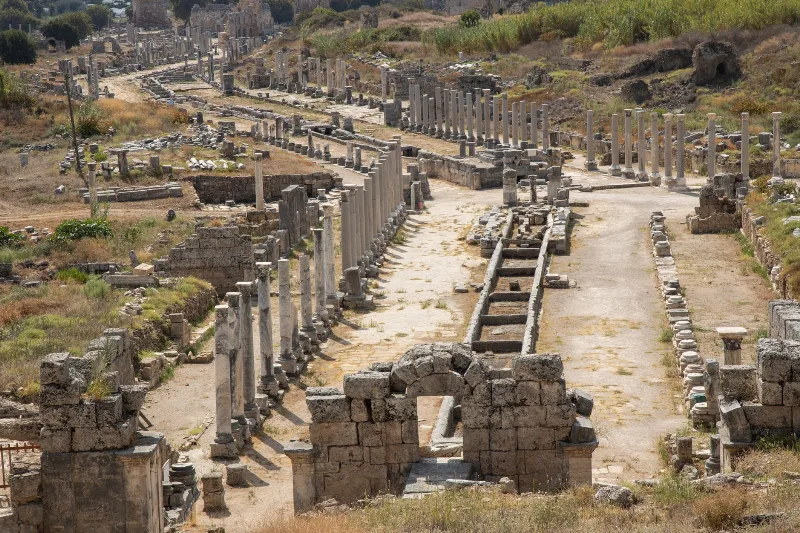
Perge
Perge is an ancient Pamphylian city east of Antalya, whose Hellenistic gates, colonnaded streets, theatre and exceptionally well-preserved stadium make it one of the most legible Roman-era sites in southern Turkey.