
Anadolu Hisarı
Anadolu Hisarı is an Ottoman fortress built by Sultan Bayezid I in 1393–1394 on the Asian shore of the Bosphorus in Istanbul, commanding the narrowest stretch of the strait. Long described as the oldest surviving Ottoman building in the city, it was later reinforced by Mehmed II in preparation for the conquest of Constantinople.
Anadolu Hisarı — the "Anatolian Fortress" — is a compact Ottoman castle on the Asian shore of the Bosphorus, in the Beykoz district of Istanbul. Sultan Bayezid I ordered its construction in 1393–1394 at a point where the strait narrows sharply, and it is commonly described as the oldest surviving Ottoman architectural monument within the modern city. Its purpose was strategic rather than residential: to help cut the sea approaches to Byzantine Constantinople and to control shipping moving between the Black Sea and the Sea of Marmara.
Although modest in scale, the fortress marks a decisive phase in Ottoman expansion. It was built while Constantinople was still a Byzantine capital, and it belongs to the same strategic logic that produced the far larger Rumeli Hisarı on the opposite European shore some sixty years later.
Where the Fortress Stands
Anadolu Hisarı occupies a small promontory on the Anatolian side of the Bosphorus, at the mouth of the Göksu Deresi, a stream that reaches the strait here. The site lies in the neighbourhood that takes its name from the fortress, within the Beykoz district. The Bosphorus is at one of its narrowest points in this stretch of the waterway, roughly seven hundred metres across, which is precisely why the location was chosen.
The fortress faces the European shore, where Rumeli Hisarı stands on the opposite hillside. Just north of the two fortresses, the Fatih Sultan Mehmet Bridge crosses the strait, connecting the European side near Rumeli Hisarı with the Asian side at Kavacık. The waterfront in front of Anadolu Hisarı forms part of the long Bosphorus coastal road, and the fortress is a familiar landmark to anyone travelling the Asian shore.
Bayezid I and the Blockade of Constantinople
Bayezid I, known as Yıldırım or "the Thunderbolt", had expanded Ottoman territory deep into the Balkans by the early 1390s. With Byzantine Constantinople increasingly isolated, he began a long blockade of the city from 1394. Anadolu Hisarı was built in this context, and contemporary usage gave it the name Güzelcehisar, meaning "the beautiful fortress". Its task was to interrupt maritime traffic into the Golden Horn and to prevent supplies and reinforcements from reaching the Byzantine capital from the Black Sea.
The blockade was never completed. Bayezid was defeated by Timur at the Battle of Ankara in 1402, and the Ottoman state fell into the period of civil conflict known as the Interregnum. The fortress on the Bosphorus survived, however, as a permanent Ottoman foothold on the Asian shore at one of the most sensitive points of the strait.
Mehmed II, Rumeli Hisarı and the Years Before 1453
The fortress gained a second life in the reign of Mehmed II. In 1452, while preparing to besiege Constantinople, the sultan built Rumeli Hisarı directly opposite, on the European shore, and had the older Anatolian castle enlarged and strengthened so that the two could operate together. The paired fortresses, supported by artillery, were intended to close the Bosphorus to shipping and to isolate the city before the final campaign. Constantinople fell in 1453.
Once the strait was securely Ottoman and the capital had been taken, Anadolu Hisarı lost its frontline military role. It remained an Ottoman structure on the waterway, but its function as a defensive barrier belonged to the period before the conquest.
Architecture and Surviving Remains
The fortress is small compared with Rumeli Hisarı and combines an inner stronghold with an outer walled enclosure that once reached towards the water. The core of the complex is a compact inner castle dominated by a tall keep, said to rise to roughly twenty-five metres, whose walls are built mainly of rubble stone with cut stone used for the more exposed elements. The surviving curtain walls, the outline of the outer enclosure and the remains of the towers still define the original footprint of the castle.
The fortress has been restored in modern times, and its masonry today reflects that conservation work. Visitors who look at the structure from the shore or from the water can read the basic Ottoman military plan: a defended core, an outer line of walls and a position placed tight against the narrowest part of the channel.
The Mosque and the Fifteenth-Century Endowment
Written sources record that Mehmed II endowed a mosque, a madrasa and a public kitchen, or imaret, in connection with Anadolu Hisarı, turning the military site into the nucleus of a small settlement. The mosque associated with the fortress has been rebuilt in later periods, while the other elements of the endowment have not survived in recognisable form. The presence of these foundations explains why a residential quarter grew up around the castle and why the fortress continued to be a point of reference on the Asian shore long after it ceased to have any defensive purpose.
How the Site Changed Over Time
Across the centuries the fortress passed from a forward position in a blockade to a secondary fortification in a conquest, and finally to a monument inside a busy Bosphorus neighbourhood. Its walls were repaired at various times, and the surrounding district filled with houses, gardens and waterfront buildings. Modern restoration work in the late twentieth century consolidated the surviving masonry and confirmed the fortress as a protected historic monument rather than a ruin in active decay.
What to See at Anadolu Hisarı Today
The most rewarding view of the fortress is from outside, along the waterfront, where the keep and the walls rise directly above the shore. The shape of the castle is clearest when seen from the water, from a Bosphorus boat, or from the European shore near Rumeli Hisarı, from which the two fortresses can be compared across the strait. The exterior and the surrounding quarter are freely accessible and form part of the everyday life of the neighbourhood.
Access to the interior of the fortress has been limited at different periods, and it should be treated as something to check locally rather than assumed. The terrain around the site is essentially level along the waterfront, and the castle stands immediately beside the coastal road, making it easy to approach on foot once in the area.
Reaching the Area and Choosing a Time to Visit
The fortress lies on the Asian side of the Bosphorus and can be reached along the coastal road by bus or car, with the nearest ferry piers at Kanlıca and Beykoz. The Bosphorus shore is at its most comfortable in spring and autumn, when temperatures are moderate and the light along the strait is clear. Summer brings heavier traffic and more visitors to the waterfront, while winter can be cold and windy on the exposed shore.
Related Historic Places Nearby
Anadolu Hisarı is best understood together with Rumeli Hisarı on the opposite European shore, since the two were designed to work as a pair. Also in the immediate surroundings are the Göksu Deresi valley and the Küçüksu area, where the nineteenth-century Küçüksu Pavilion stands near the water. Further along the Asian shore are the districts of Kanlıca and Beykoz, and the Fatih Sultan Mehmet Bridge crosses the strait a short distance to the north. Together these places allow the visitor to read the Bosphorus as a continuous historical landscape, from the Ottoman fortifications of the fourteenth and fifteenth centuries to the palaces and pavilions of the late Ottoman period.
Routes
All routes →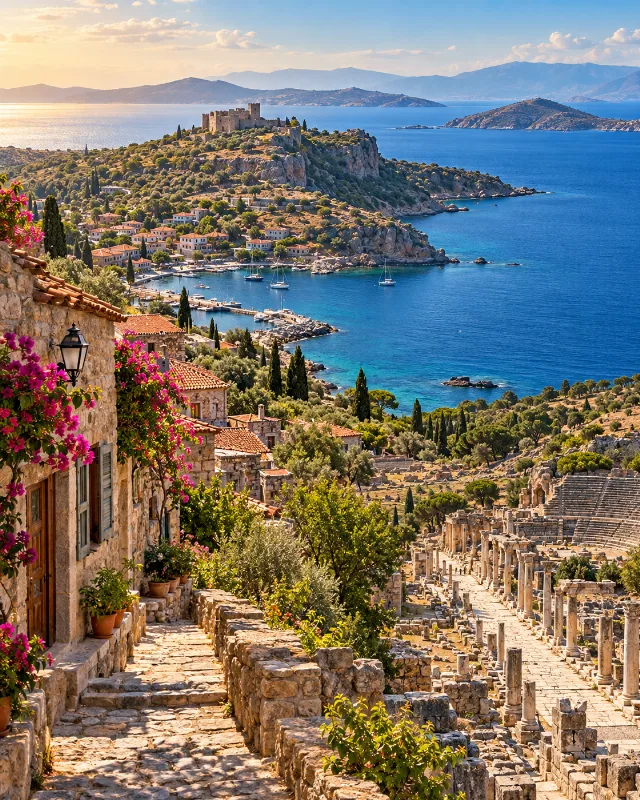
7-Day North Aegean to Ephesus Route
A seven-day southbound route through Troy, Assos, Bozcaada, Ayvalık, Bergama, İzmir and Ephesus, combining archaeology, coastal towns and Aegean culture.
Explore →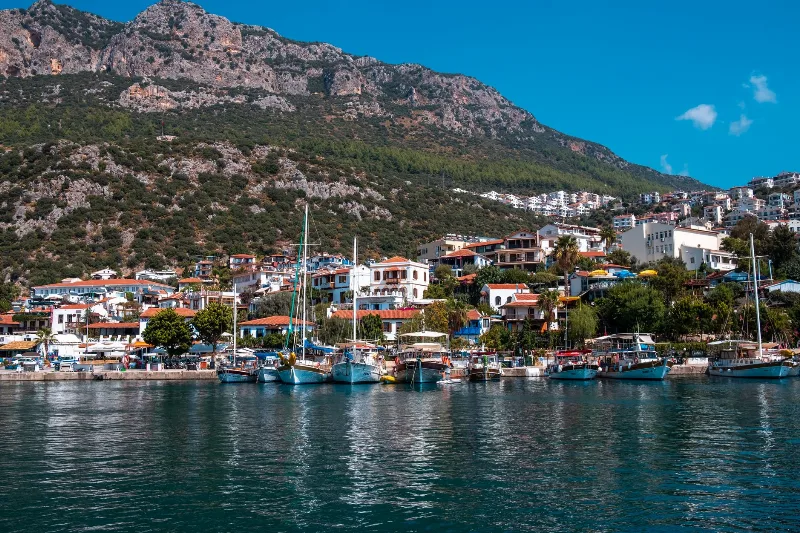
5-Day Antalya to Fethiye Coastal Route
A five-day driving itinerary along Turkey's Mediterranean shore, linking Antalya, Phaselis, Olympos, Demre, Kekova, Kaş, Kalkan, Patara and Fethiye. The route is linear, coastal for most of its length, with short inland detours to Lycian ruins.
Explore →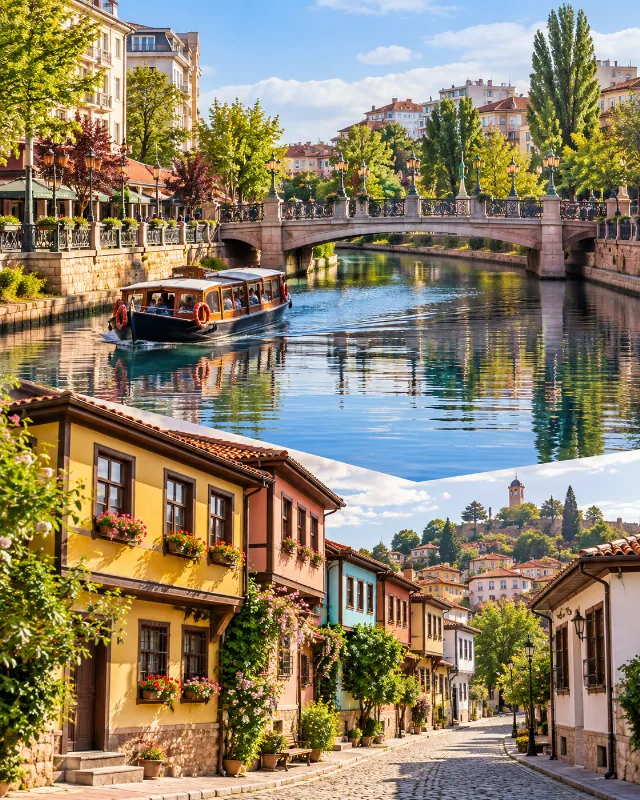
1-Day Eskişehir Route
A one-day route through Eskişehir combining Odunpazarı’s historic streets, local food, the Porsuk River and some of the city’s best-known public spaces.
Explore →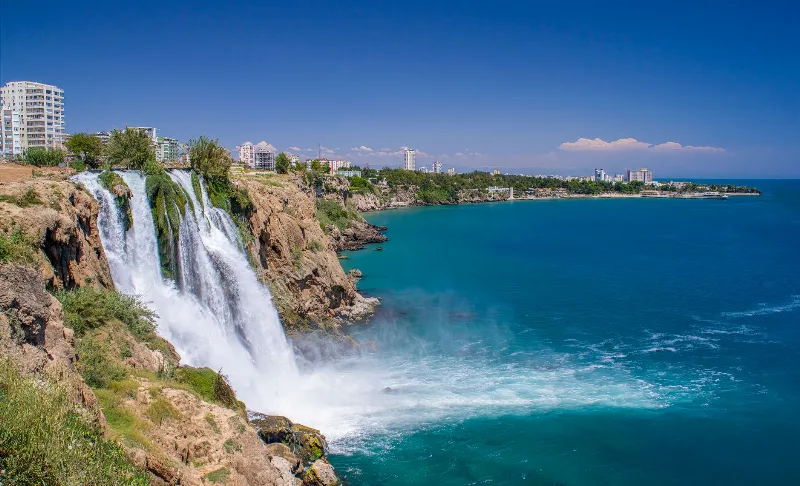
2-Day Antalya Waterfalls and Ancient Cities Route
A circular two-day route based in Antalya that pairs the Düden and Kurşunlu waterfalls with the ancient cities of Perge, Aspendos and Termessos, following the eastern coastal plain on the first day and the Taurus foothills on the second.
Explore →Related content
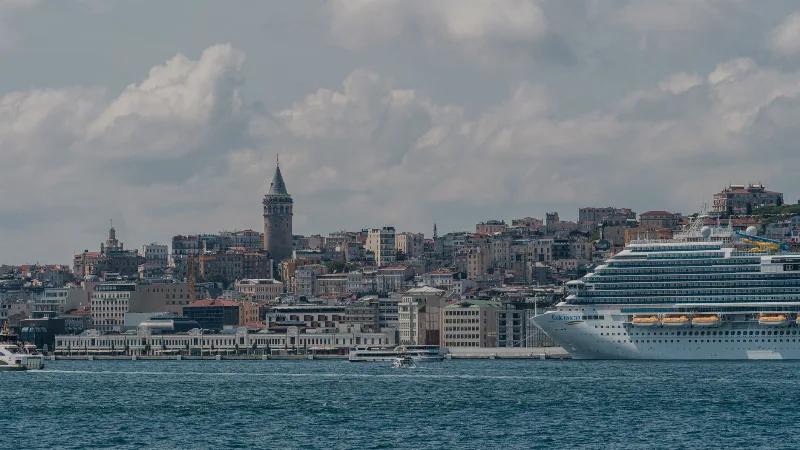
Istanbul
Istanbul is Türkiye's largest city and the country's only metropolis that spans two continents, divided by the Bosphorus strait into a European and an Asian half. Its long run as an imperial capital left a historic core of palaces, mosques and bazaars that still shapes the city's identity.
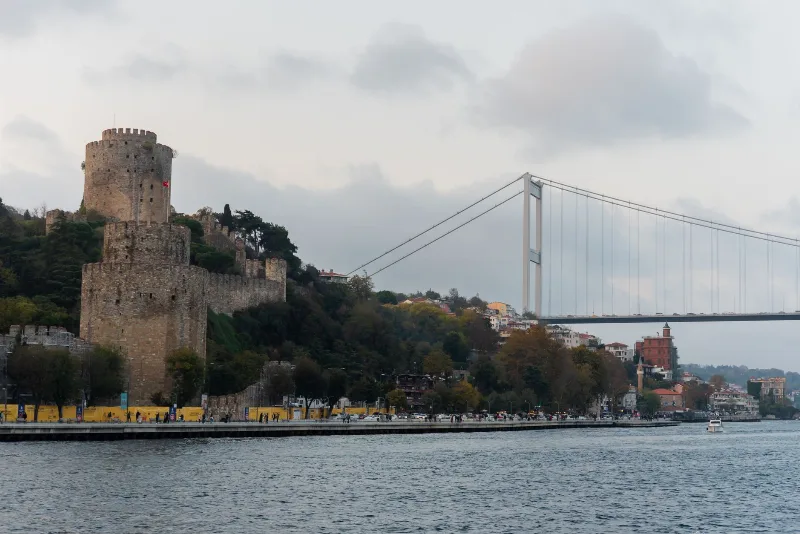
Rumeli Hisarı
Rumeli Hisarı is a 15th-century Ottoman fortress on the European shore of the Bosphorus in Istanbul, built by Sultan Mehmed II in 1452 to control the strait before the conquest of Constantinople. It survives today as a monumental open-air museum.
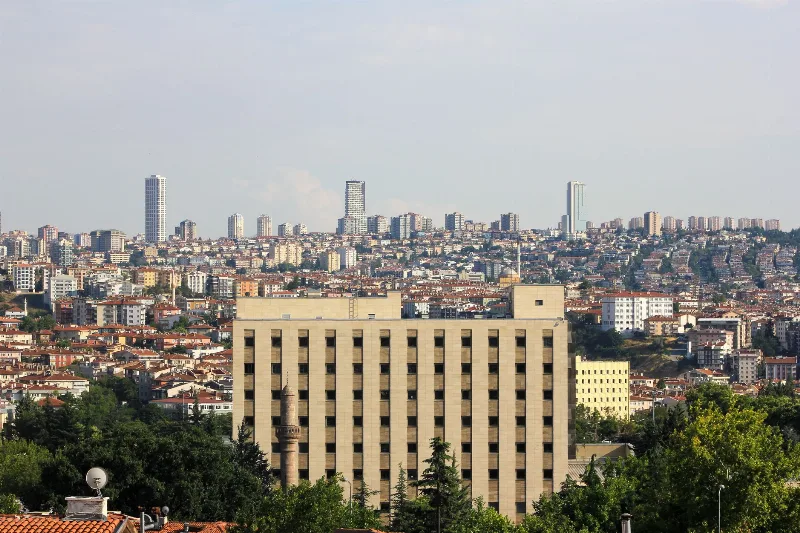
Ankara
Ankara is the capital of Türkiye and the country's second-largest city, set on the high plateau of Central Anatolia and defined by its republican institutions, its long pre-Ottoman history and the mausoleum of Mustafa Kemal Atatürk.
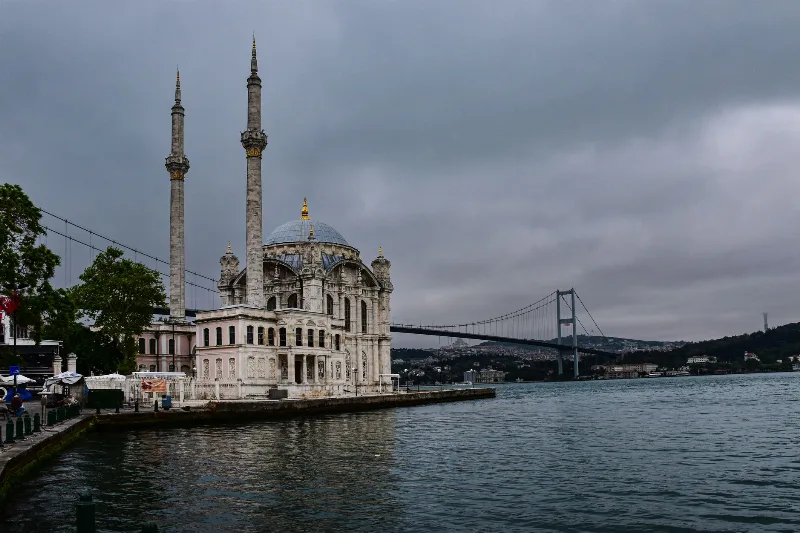
2-Day Istanbul Bosphorus Route
A two-day Bosphorus route that starts on Istanbul's European shore at Ortaköy and Bebek, includes a ferry cruise up the strait, then crosses to the Asian side for Kadıköy and Üsküdar.
Eskişehir
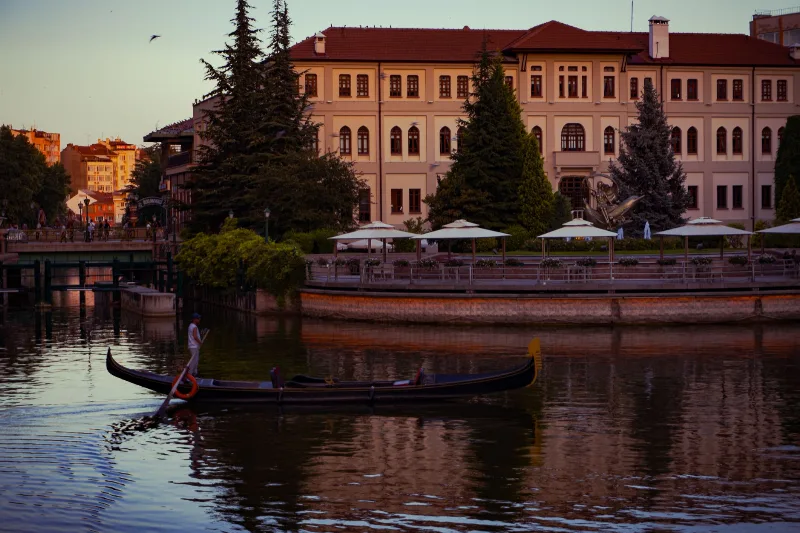
Eskişehir is a university city on the Porsuk River in northwestern Central Anatolia, where a restored Ottoman-era quarter and a modern, pedestrian-friendly centre sit side by side.
The Bosphorus Strait and Its Historic Mansions
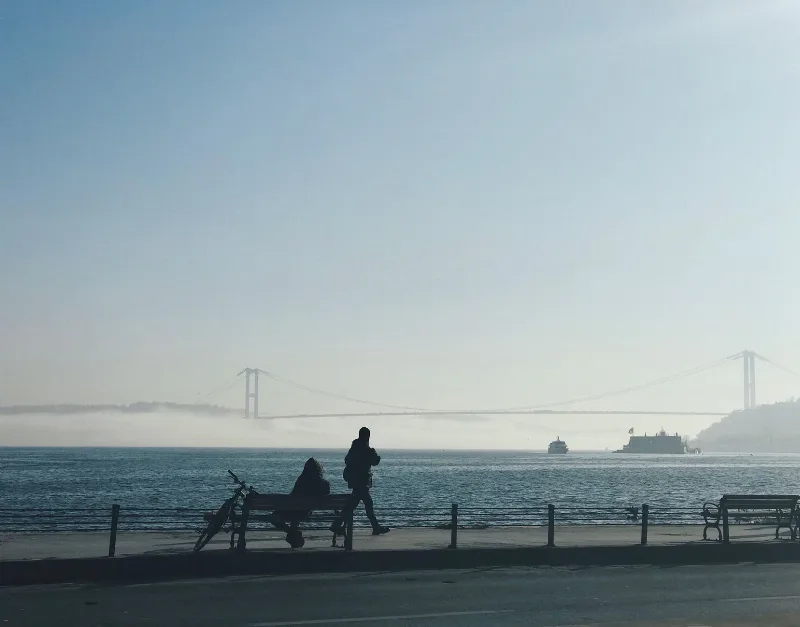
The Bosphorus is the winding strait that divides Istanbul between Europe and Asia, and its shores are lined with wooden Ottoman-era waterfront mansions known as yalıs.