Bodrum
Bodrum is a coastal district of Muğla Province on Türkiye's Aegean coast, built around a medieval castle and spread across a peninsula of whitewashed towns, bays and a working marina.
Bodrum is a coastal district and town in Muğla Province, in southwestern Türkiye, occupying a long peninsula that reaches into the Aegean Sea. It is one of the country's best-known coastal settlements, set apart by a medieval castle standing at the water's edge, a past that reaches back to the ancient city of Halicarnassus, and a character that blends whitewashed Aegean architecture with a busy marina and a lively entertainment scene.
A Peninsula on the Aegean
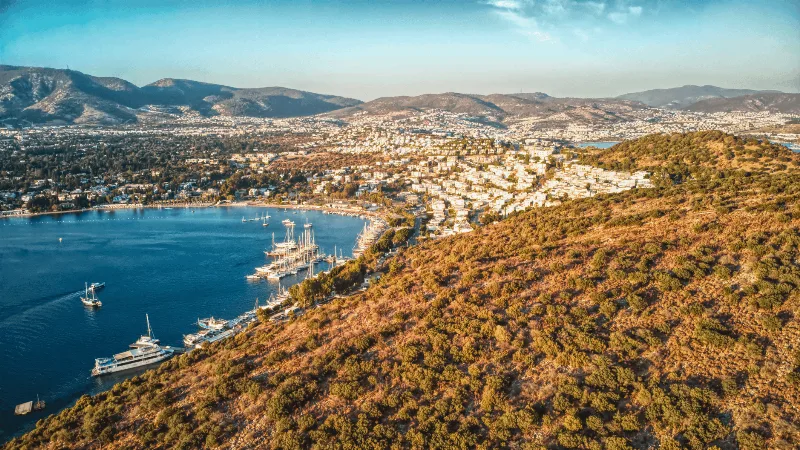
The district covers the whole Bodrum Peninsula, a rocky, low-lying landmass that pushes westward from the Muğla mainland into the Aegean. Its surface is a mix of rounded hills, dry slopes and indented coastline, so the sea is rarely far from view. The shoreline is deeply folded, forming countless small bays, coves and headlands that give the peninsula its fragmented shape and shelter calm water in many places.
The natural vegetation is typical eastern Aegean scrub — low, drought-resistant shrubs and scattered olive and pine rather than dense forest. Summers are hot and dry, and the peninsula is exposed to steady regional winds, which historically shaped how the coast was settled and used. That geography explains much of Bodrum's appeal: it is a place of sea views, sea access and open horizons rather than a green, inland landscape.
From Halicarnassus to Bodrum
The town sits on the site of Halicarnassus, an ancient city of the Carian region and the birthplace of the historian Herodotus. Its most famous monument was the Mausoleum of Mausolus, a monumental tomb so renowned in the ancient world that it was counted among the Seven Wonders. The monument survives only in fragments and scattered remains, so detailed historical coverage belongs with the area's dedicated historic-place material rather than here.
In the medieval period the Knights of St. John built the Castle of St. Peter on the rocky promontory that separates the peninsula's two main bays, using the site as a stronghold on the Aegean. Later, under Ottoman rule, the settlement grew around the fortress and became known as Bodrum. The castle is the anchor of the town's identity and the clearest single link between its ancient and modern chapters.
The Town Centre: Castle, Old Town and Marina
Modern Bodrum town clusters around its harbour and the castle. The streets near the waterfront are narrow and largely pedestrian in feel, lined with low, cube-shaped houses that are traditionally whitewashed, often brightened by bougainvillea. This compact core holds the bazaar area, small squares and the everyday bustle of a working coastal town during the day, before shifting toward a much more energetic rhythm after dark.
The Castle of St. Peter now serves as a museum, and it is best known for housing a collection devoted to underwater archaeology — an appropriate focus for a town whose history has always been tied to the sea. From the castle walls the layout of the town, the two bays and the marina becomes easy to read.
Around the Harbour
Bodrum has a long association with boats. The harbour and marina are central to local life, and the area is widely recognised for its tradition of wooden boat building, particularly the gulet, a type of traditional sailing vessel still seen along the coast. The waterfront brings together the practical and the recreational sides of the town in a single, busy setting.
Around the Peninsula
Bodrum is far more than its central town; the peninsula is dotted with distinct resort and residential settlements, each with its own character. They are connected by coastal and inland roads that wind over the hills.
These places are sometimes treated as separate destinations, but they are all part of the same administrative district and share its geography, climate and seasonal rhythm.
Coastline and Bays
The peninsula's beaches and bays vary widely, from long sandy stretches suited to families to smaller coves with darker sand or pebbled shores. Because the coast is so fragmented, swimming and anchoring conditions differ from one bay to the next, and some areas are better known for wind and water sports than others. Individual beaches are covered in more detail in the dedicated Beaches & Bays material, so here the coastline is best understood simply as the defining feature of the whole district.
Climate and the Best Time to Visit
Bodrum has a Mediterranean climate, with hot, dry summers and mild, wetter winters. The swimming and boating season centres on the warm months, when the sea is at its most inviting and the town is at its busiest. Spring and autumn tend to be milder and calmer, with comfortable temperatures that suit walking, sightseeing and exploring the peninsula, while winter is quiet and considerably cooler, though rarely severe.
Reaching Bodrum and Its Place in the Region
The district is served by Milas–Bodrum Airport, which links the peninsula with major cities and international destinations, and by road connections across Muğla Province toward Milas and the wider region. The harbour also handles seasonal sailings, including links with some nearby Aegean islands. This position makes Bodrum a natural base for exploring southwestern Türkiye, sitting between the province's inland towns and the open Aegean.
What defines Bodrum overall is the combination of a genuinely historic town centre, a sprawling peninsula of distinct coastal settlements, and a strong, long-standing relationship with the sea. It is at once an ancient site, a working Aegean town and one of Türkiye's most recognisable coastal districts.
Discover Food in Türkiye
All food →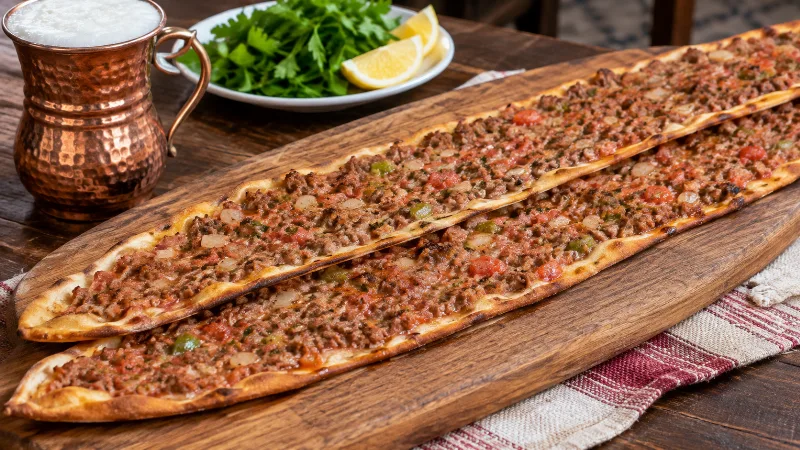
Etli Ekmek
Konya etli ekmek is a long, very thin flatbread topped with finely minced meat, onion and vegetables, then baked quickly in a high-heat oven.
Explore →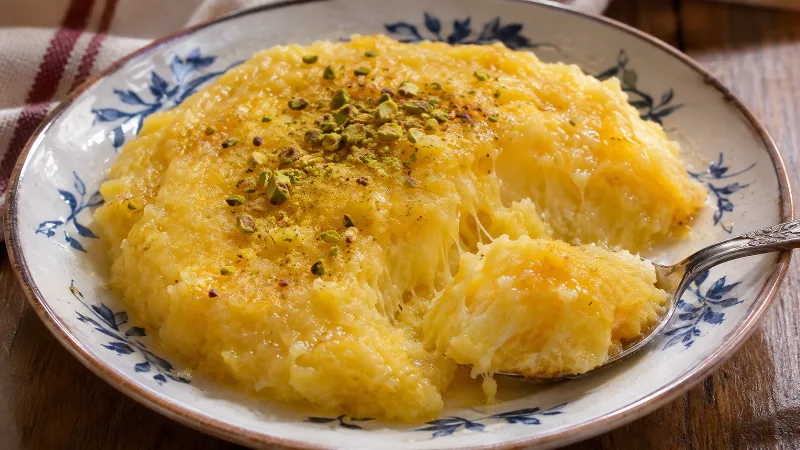
Höşmerim
Höşmerim is a traditional cheese-based sweet associated especially with Balıkesir, made by cooking fresh cheese with semolina and sugar into a soft dessert.
Explore →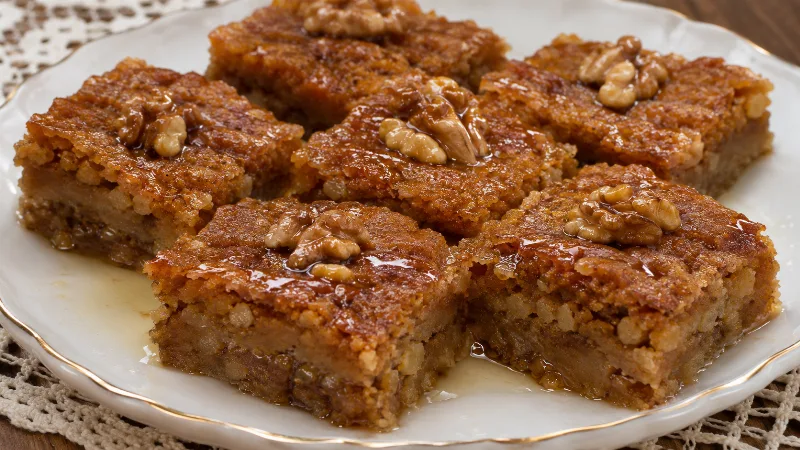
Nevzine Tatlısı
Nevzine is a traditional Kayseri dessert made with a tahini-rich dough, walnuts and a syrup commonly prepared with grape molasses.
Explore →Related content
Muğla
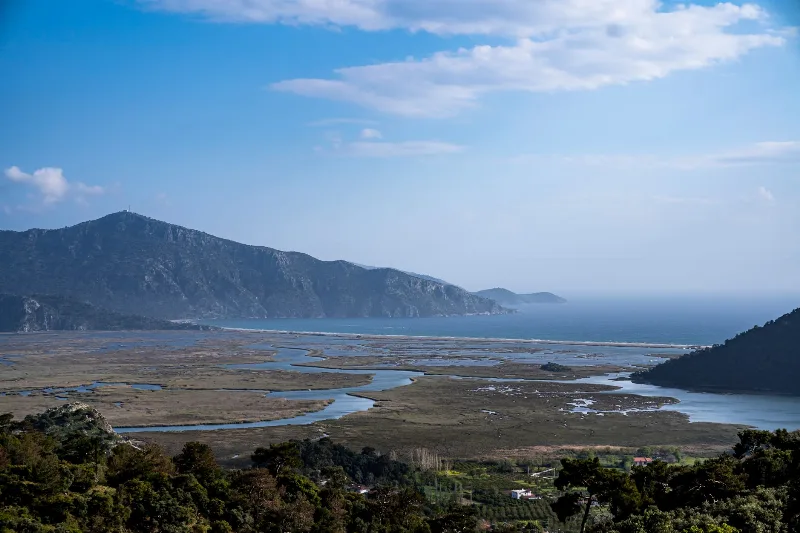
Muğla is a captivating province in southwestern Türkiye, renowned for its stunning Aegean coastline and rich cultural heritage.
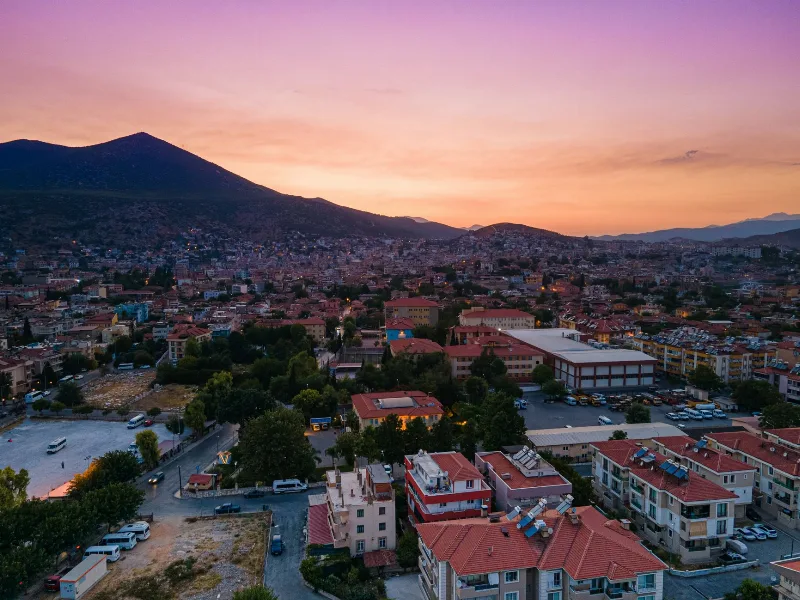
Muğla
Muğla is the inland administrative capital of the province that carries its name, a historic Anatolian city set in a pine-covered high valley behind Türkiye's Aegean and Mediterranean coast.
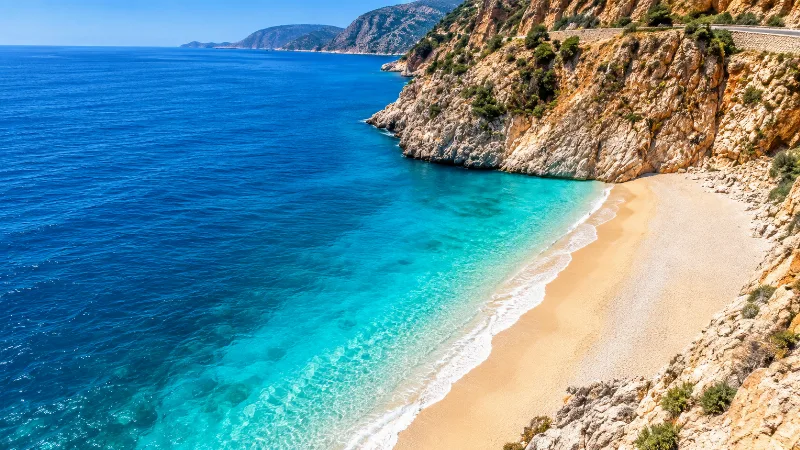
Beaches & Bays
Coasts, coves, islands and seaside places across Türkiye.
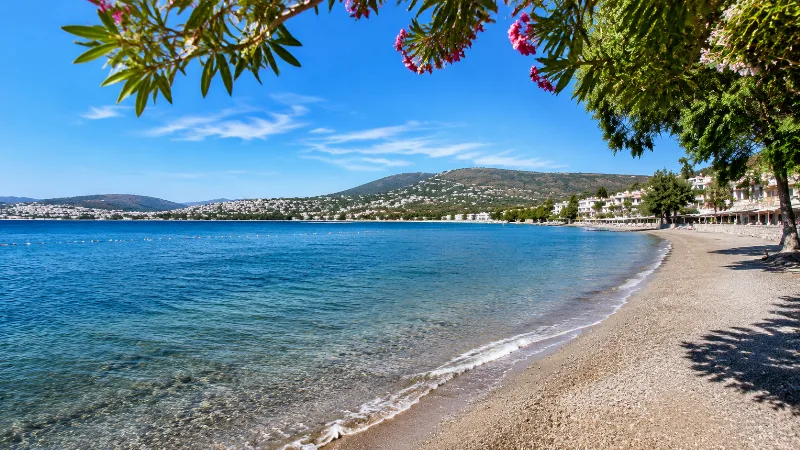
Bitez Beach
Bitez curves gently around a sheltered bay on the Bodrum Peninsula. Its low hills, seaside settlement and accessible waterfront give it a quieter coastal profile.
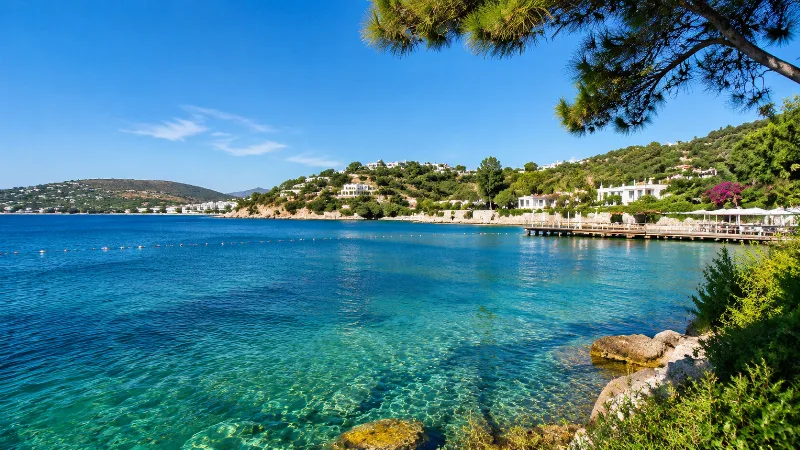
Türkbükü Bay
Rather than a long sandy beach, Türkbükü is known for its compact waterfront, piers and sheltered northern Bodrum bay, framed by green hills.
Gümüşlük
Gümüşlük is a sheltered Aegean inlet on the western side of the Bodrum Peninsula, where a shallow bay, a narrow sand spit and a small offshore island shape a distinctive shoreline.