Damal Lake and Highland Meadows: A Quiet Corner of Ardahan
Ringed by alpine pasture on the Ardahan plateau, Damal Lake is a quiet highland destination where grazing herds, hay meadows and village crafts set the pace of the day.
Damal Lake lies in the far north-east of Türkiye, in the district of Damal within Ardahan province, a short distance from the Georgian border. Sitting at roughly two thousand metres above sea level on the wide Ardahan plateau, it is a small, calm sheet of water held inside a basin of high pasture. There are no promenades, ticket gates or crowded viewpoints here; the lake is left to the sky, the grasses and the animals that graze its edges, and that is precisely what gives it its character.
A Highland Lake on the Ardahan Plateau
The plateau around Damal is built largely of volcanic rock and shaped by long, severe winters. Snow commonly lies from late autumn into April, and its meltwater feeds both the lake and the meadows that surround it. The lake is shallow towards the shore, with reedy margins and low willow scrub, while the open water carries a wide reflection of the sky and the low hills behind it.
The climate is strongly continental, with short, bright summers and a long cold season. This rhythm gives the landscape its shifting colour: fresh green in June and July, then gold, ochre and russet by early autumn. Mornings are often still and clear, with mist lying on the water until the sun lifts it.
Meadows, Livestock and the Yayla Season
The meadows around Damal are working land as well as a natural habitat. In summer, families from the surrounding villages move cattle, sheep and sometimes horses up to the high pastures, continuing a form of transhumance that has shaped upland life in Eastern Anatolia for centuries. Hay is cut in late summer and stacked in the fields, and the tracks between the villages carry a slow, seasonal traffic of animals and farm vehicles.
The pasture is rich in wildflowers, including buttercups, cranesbill and gentians, which draw bees and butterflies through the warm months. The lake and its marshy margins also provide resting places for waterfowl during migration, and birds of prey are frequently seen circling above the open ground.
Village Crafts and the Damal Doll
Damal is best known throughout Türkiye for its handmade doll, a craft kept alive largely by women in the district's villages. The dolls have a modelled head and a cloth body, dressed in the traditional costume of the region, with a headscarf, a patterned waistcoat and layered fabrics. Making them is a small-scale, home-based activity that passes skills between generations and provides a modest additional income in a district where herding and farming remain central.
Alongside the dolls, wool work, knitting and embroidery are still part of everyday domestic life, and the patterns used often echo the motifs found on local textiles.
The Shadow on Karadağ
One of the district's curiosities is a seasonal optical effect on the slopes of Karadağ. For a period in the summer months, the low evening sun casts a shadow across the hillside that local people read as the profile of a human face. Villagers gather on the hillside to watch it appear, and the phenomenon has become a familiar part of summer life in Damal, drawing visitors who come to see the shape emerge as the light shifts.
Lake Çıldır and the Wider Plateau
Damal makes a natural stop for anyone exploring the wider plateau. To the east, Lake Çıldır is one of the largest lakes in eastern Anatolia and is known for freezing over in winter, when its surface becomes a landmark of the frozen landscape. The roads between Kars, Ardahan and Posof cross open grassland dotted with villages, stone houses and small cemeteries, offering a clear sense of how settlement fits around the high pasture.
Damal Lake itself asks little of a visitor beyond time and quiet. Walking its edges, watching the herds move across the meadows and noting how the light changes through the afternoon is enough to understand the appeal of this remote highland corner, where nature, agriculture and village craft remain closely interwoven.
Related content
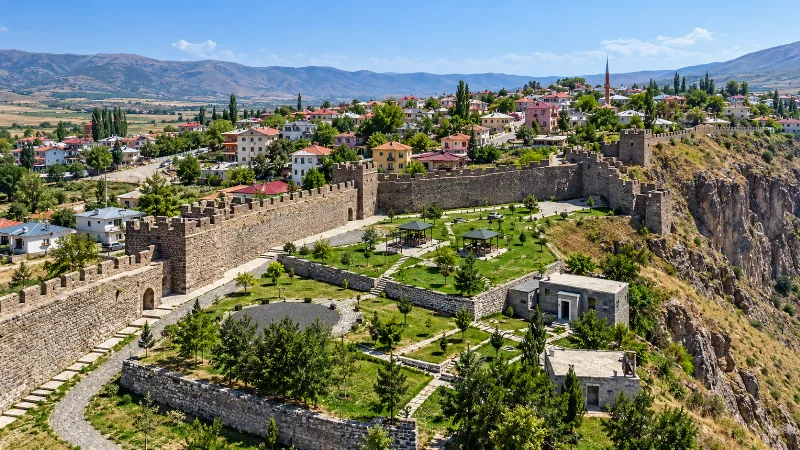
Ardahan
Explore Ardahan, northeastern Türkiye: history, standout sights, landscapes, local food and practical travel advice for an unforgettable journey in Türkiye.
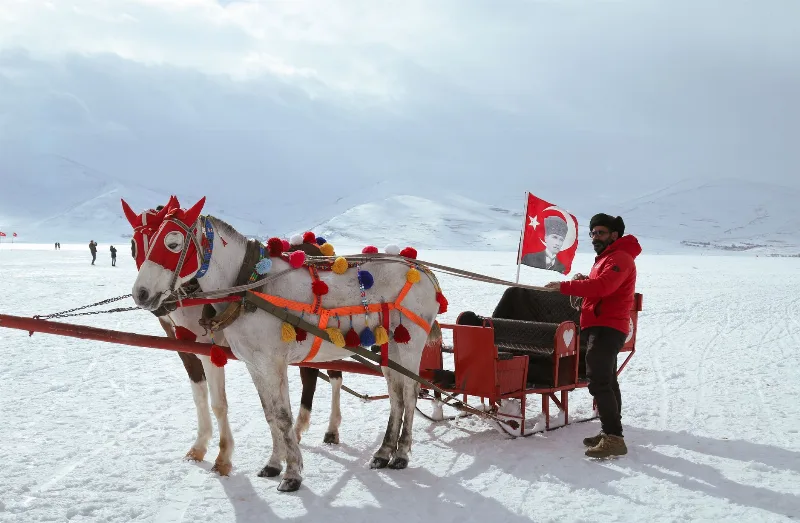
Lake Çıldır
Lake Çıldır is a large freshwater lake in northeastern Türkiye, set on a high steppe plateau between Ardahan and Kars and known for freezing solid during the long eastern Anatolian winter.
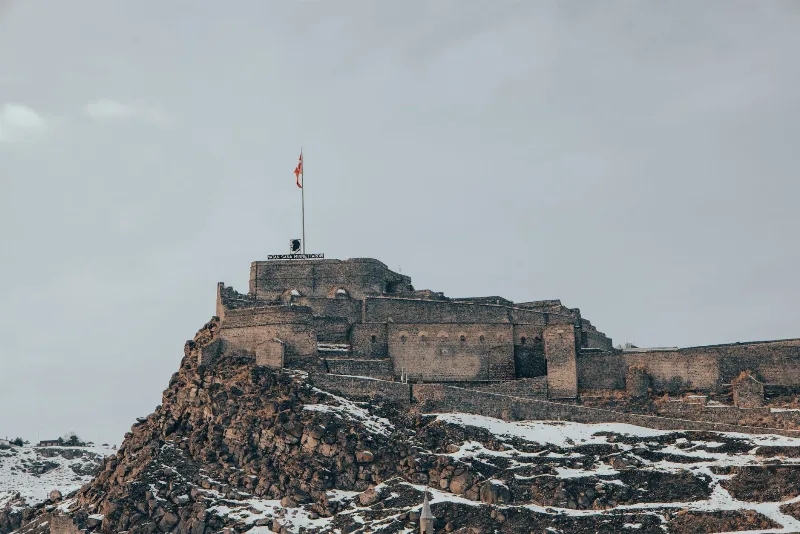
Kars
Kars is a high-plateau city in northeastern Türkiye, close to the Armenian border, shaped by decades of Russian rule and known for its cheesemaking tradition and the nearby medieval ruins of Ani. It serves as the main urban base for exploring this remote corner of Eastern Anatolia.
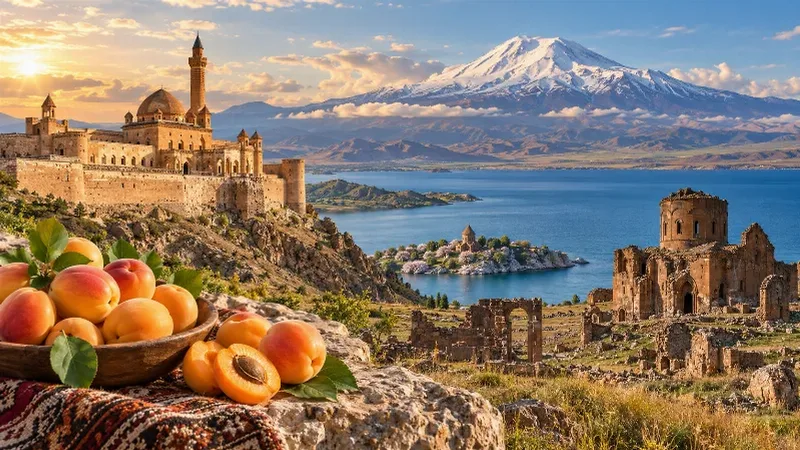
Eastern Anatolia Region
Eastern Anatolia is a region of majestic mountains, vast highlands, beautiful lakes and ancient cultural heritage. Home to Mount Ararat, Lake Van and historic settlements, it offers some of Türkiye's most dramatic natural landscapes alongside distinctive architecture, local traditions and regional cuisine.
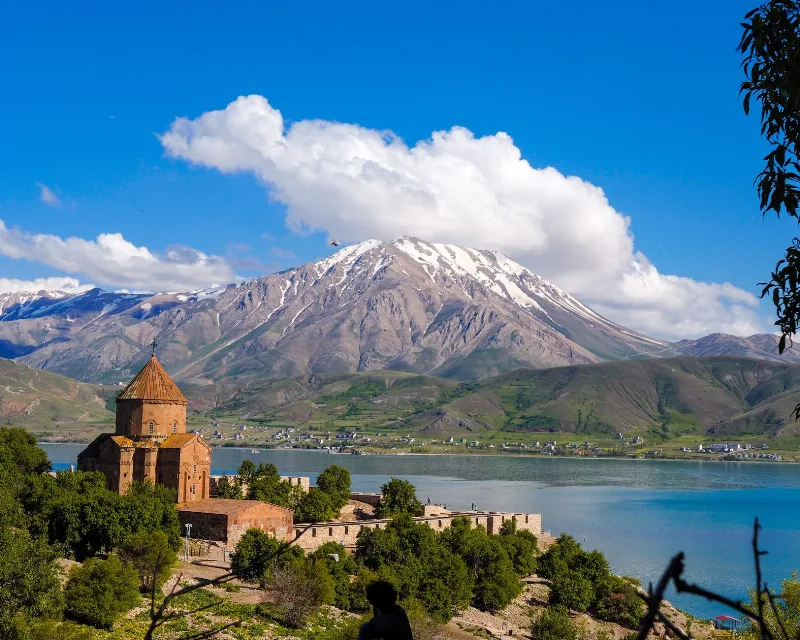
Lakes and Natural Beauty in Türkiye
A journey through the lakes of Türkiye, from the wide soda waters of Lake Van to forest pools in Bolu, salt flats on the Central Anatolian plateau and reed beds full of birds.
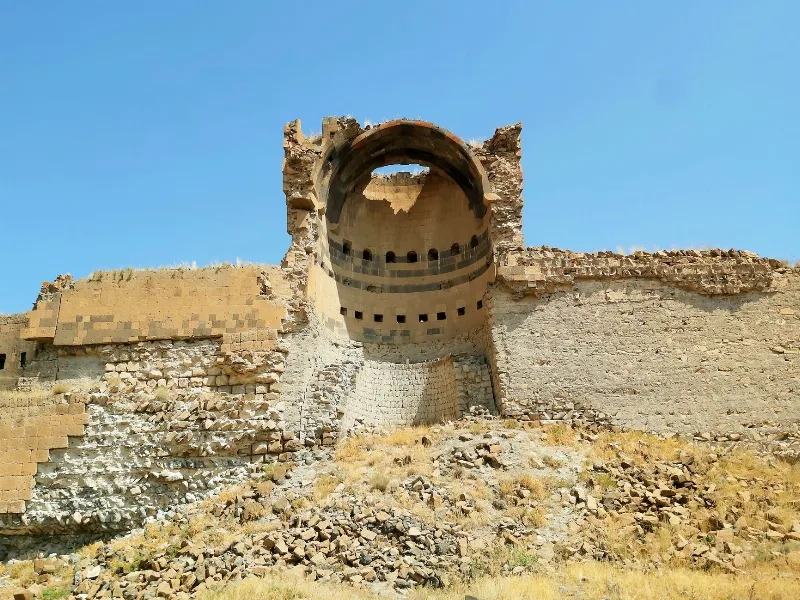
Kars and the Ruins of Ani
In eastern Türkiye, the highland city of Kars stands near Ani, a medieval settlement whose churches, walls and gorges still shape the surrounding plateau.
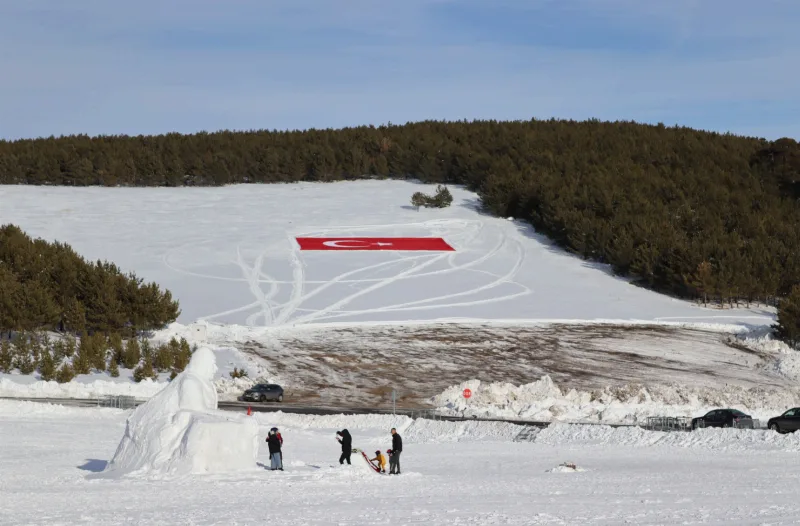
Winter in Sarıkamış, Kars
Sarıkamış in Kars is known for its crystal snow and a winter season that typically runs from December to March. The ski terrain sits among pine forests, and the district also carries a heavy historical legacy.
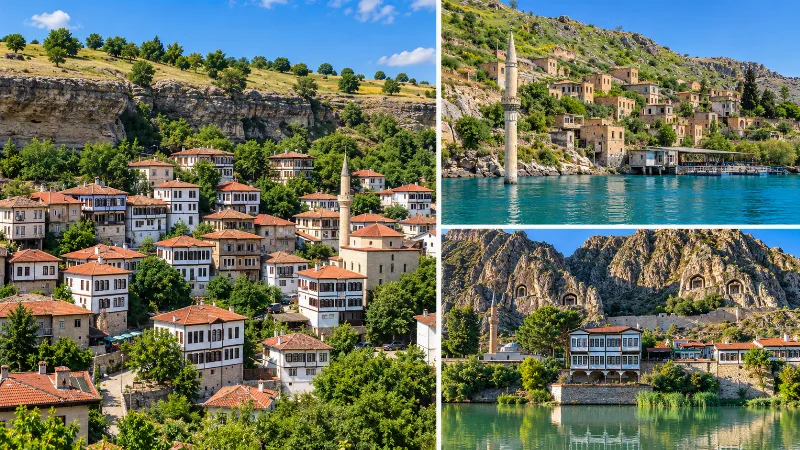
Exploring Turkey Beyond the Best-Known Destinations
A look beyond Turkey’s most famous destinations to smaller towns, villages, coastlines, highlands and historic landscapes across the country.