
Kayaköy
Kayaköy is a deserted Greek Orthodox village in the Fethiye district of Muğla, where hundreds of stone houses, two churches and cobbled lanes survive on a hillside above the coast.
Kayaköy is an abandoned Greek village in the Fethiye district of Muğla province, in south-western Türkiye, roughly eight kilometres south of Fethiye town centre. It occupies the lower slopes of a hill that looks south over a shallow valley, and consists of several hundred ruined stone houses, two church buildings and the shell of a school, spread across two clusters usually described as the lower and the upper village. Nobody lives there permanently today, yet Kayaköy is a protected conservation area and one of the most intact surviving examples of a nineteenth-century Greek settlement in Anatolia.
Where Kayaköy stands
The village belongs to Fethiye, the largest district of Muğla on the province's southern coast. It lies inland from the sea, tucked against the western side of the valley that separates Fethiye from Ölüdeniz and Hisarönü. The setting is a mix of dry Mediterranean hillside and cultivated plain: pine-covered ridges above, olive trees, vegetable plots and scattered farm buildings on the flat land below. Because the slope faces south, the ruins catch sun for most of the day, and the view from the upper village reaches across the valley toward the sea and the mountains behind Fethiye.
Although Kayaköy is only a few kilometres from the busy lagoon at Ölüdeniz, the two places feel entirely different. Ölüdeniz is coastal and commercial; Kayaköy is inland, quiet and largely empty, with only the sound of wind, insects and the occasional walker on the paths.
From Livissi to an empty village
The site has a long history. In antiquity it was known as Karmylassos, and traces of that earlier settlement are still visible in the surrounding landscape. By the nineteenth century the village was called Livissi and was inhabited almost entirely by Greek Orthodox families. It was a working community of farmers, craftsmen and traders, with a population that grew considerably in the decades before the First World War.
That world ended in 1923, when the population exchange between Greece and Türkiye, agreed under the Treaty of Lausanne, forced the Greek Orthodox residents to leave. Families from Greece were settled in their place, but the new arrivals found the hillside isolated and the land difficult, and most gradually moved away. An earthquake in 1957 brought down roofs and walls that were already weakening, and by the second half of the twentieth century Kayaköy had become a village of empty shells. Its Greek name, Livissi, is still remembered locally alongside the Turkish name used today.
Architecture of a stone village
The houses were built from the grey limestone of the surrounding hills, laid in rough courses with timber beams and lime plaster. Many were two storeys, with a ground floor used for storage or animals and a living floor above, reached by an external stone stair. Some had walled courtyards, bread ovens, fireplaces and stone cisterns to collect rainwater, since the hillside has no reliable stream. Roofs were originally timber-framed and covered with tiles; in most cases only the walls and the beam sockets remain, which is why the village reads as a field of roofless rectangles rather than a row of standing buildings.
Several houses have been stabilised or partly rebuilt in recent decades as part of the conservation work, and a small number are used occasionally, which gives the lower village a slightly different feel from the untouched ruins higher up the slope.
The churches and other landmarks
Two churches dominate the site. The larger, in the lower village, is a basilica dedicated to Panagia, with a surviving apse, arched windows and fragments of plaster and colour on the interior walls. The second church, higher up, is smaller and plainer, and its walls still define the shape of the nave. Between and around them are the remains of a school building, several fountains and a network of stepped lanes that once connected the neighbourhoods.
Because the buildings are protected, they cannot be entered freely and some are fenced for safety. Even from the paths, the scale of the settlement is clear: this was a substantial community, not a handful of farmhouses.
Walking through upper and lower Kayaköy
A visit is essentially a walk. The lower village is closer to the road and easier to explore, with broader lanes and the main church. The upper village requires a climb of perhaps fifteen to twenty minutes along cobbled paths that are uneven, sometimes steep and without shade. Sturdy shoes are important; sandals and smooth soles are a poor choice on loose stones.
There are no shops, cafés or water points among the ruins, so it makes sense to carry enough water and to treat the visit as a short hike rather than a stroll around a town. Walking the whole site at an easy pace, including the climb to the upper village, generally takes between one and a half and three hours depending on how often you stop.
How to reach Kayaköy
The village is reached by road from Fethiye, following the signs toward Ölüdeniz and then turning inland where the Kayaköy road branches off. Dolmuş minibuses run from Fethiye and from the Ölüdeniz–Hisarönü area, and taxis are available in Fethiye. Visitors travelling by car usually park near the lower village and continue on foot.
Kayaköy also sits on the Lycian Way, the long-distance walking route along the Muğla and Antalya coast, and several stages of that trail pass through or near the village. This makes it a natural stopping point for hikers moving between Fethiye and the Ölüdeniz coast.
When to visit and what to expect
Spring, from roughly April to early June, and autumn, from September to October, are the most comfortable periods. Temperatures are moderate and the hillside is greener after the winter rains. High summer is hot and the ruins offer almost no shade, so an early morning visit is far more pleasant than one in the middle of the day. Winter can be wet and the paths slippery, though the light is often clear and the site is nearly empty.
The terrain is hilly throughout, with loose stone underfoot and a few rough sections. Anyone with limited mobility will find the lower lanes manageable but the upper village difficult. There are no formal facilities inside the ruins, and the nearest services are in Fethiye, Hisarönü and Ölüdeniz.
Around Kayaköy
The valley below the village runs down toward Gemiler Bay, where the beach faces Gemiler Island, also known as St Nicholas Island, which holds Byzantine church and building remains and can be seen from the shore or approached by boat from the Ölüdeniz side. On the cliffs above the coast lies the ruined Afkule Monastery, reachable only on foot by a demanding path. Ölüdeniz, with its lagoon and beach, is a short drive over the hill, and Fethiye itself, with its harbour, market and Lycian rock tombs, is the nearest town of any size. Together these places form a compact area where a walk through an abandoned village, a stretch of the Lycian Way and a coastal bay can all be fitted into a single day.
From the land
Find All →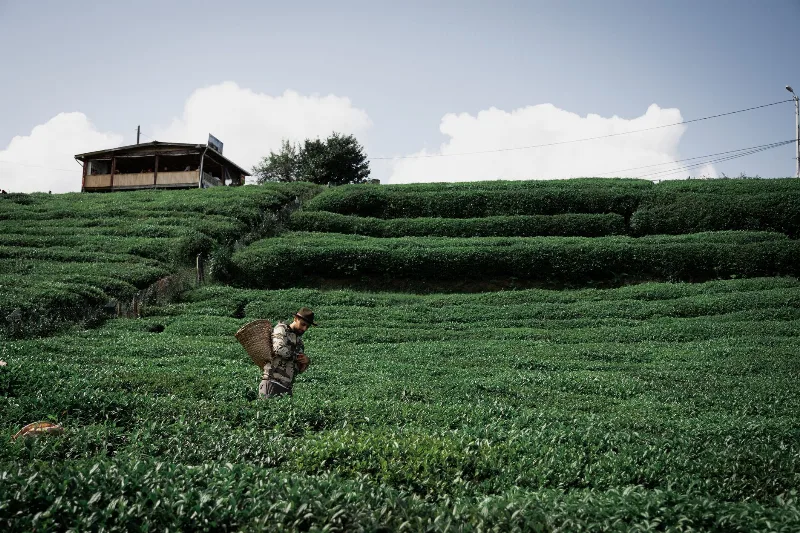
Rize Tea
Rize tea is the black tea grown in Türkiye's northeastern Black Sea province of Rize, where heavy rainfall, persistent humidity and acidic soils create one of the few places in the country where Camellia sinensis thrives.
Explore →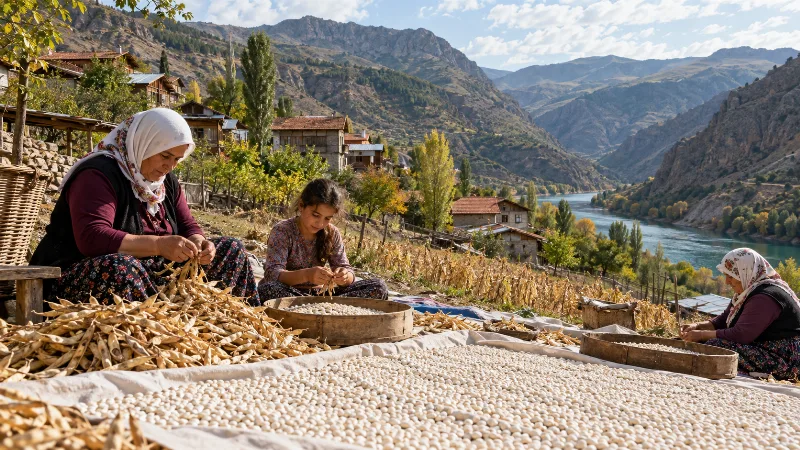
İspir Beans
İspir beans are dried beans grown in the high Çoruh valley of Erzurum province, where cold nights and a short growing season give them a firm texture and earthy flavour prized in Turkish home cooking.
Explore →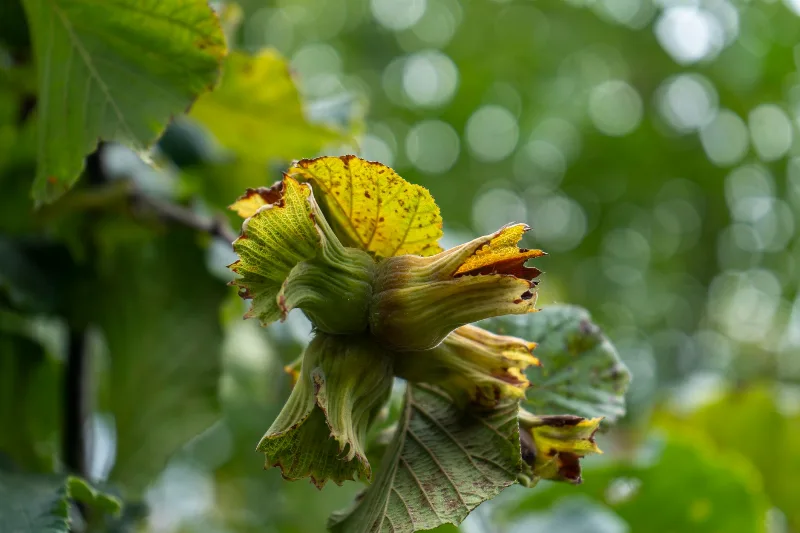
Ordu Hazelnuts
Ordu hazelnuts come from Türkiye's leading hazelnut province on the central Black Sea coast, where humid air, year-round rainfall and steep hillside orchards give the crop its distinctive character.
Explore →Related content
Fethiye
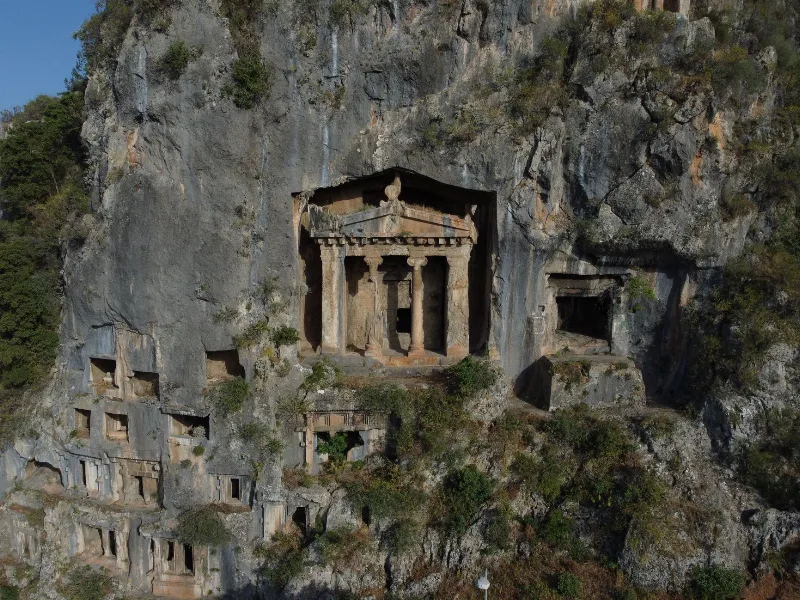
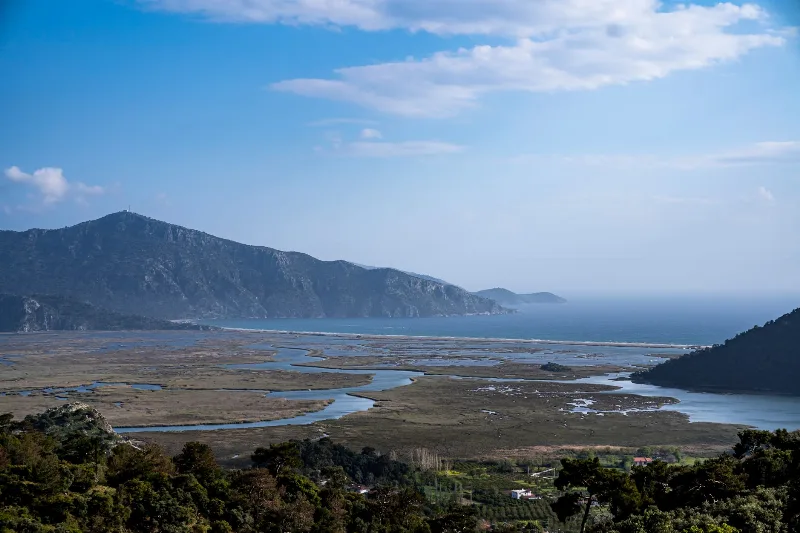
Fethiye is a captivating coastal town known for its stunning blue lagoon, thrilling paragliding experiences, and ancient rock tombs.
Muğla
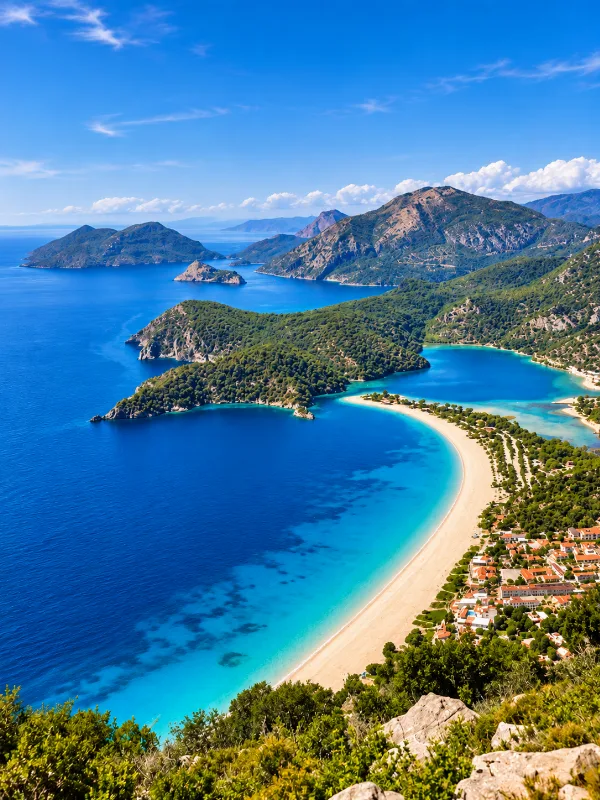
Muğla is a captivating province in southwestern Türkiye, renowned for its stunning Aegean coastline and rich cultural heritage.
Ölüdeniz
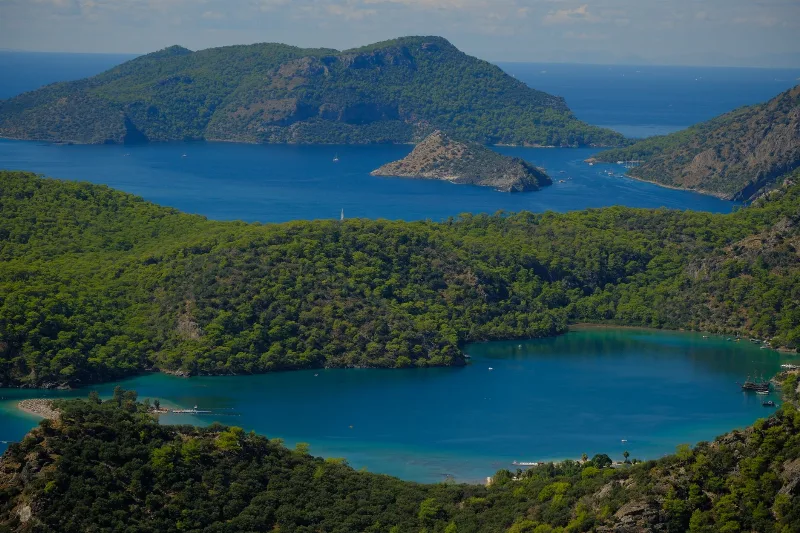
A coastal area near Fethiye in southwestern Türkiye, known for its sheltered lagoon, turquoise water, surrounding mountains, beaches and Mediterranean landscape.
3-Day Fethiye and Ölüdeniz Route
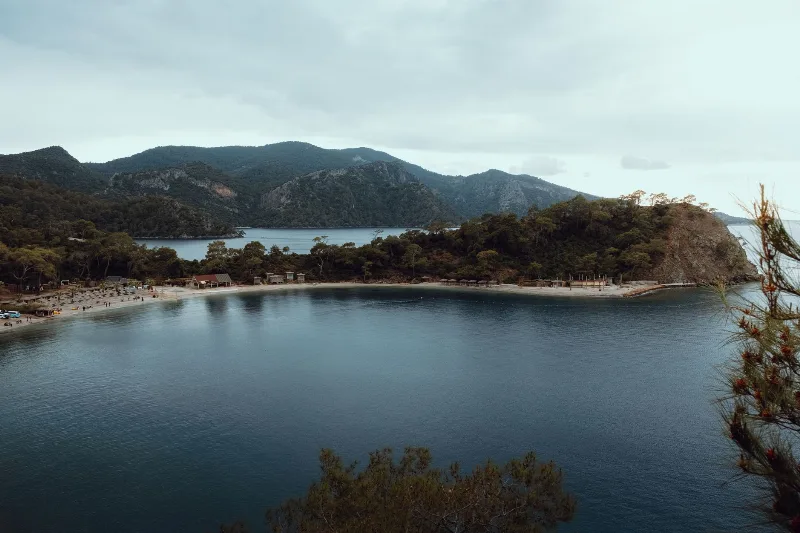
A three-day loop based in Fethiye that combines the Lycian rock tombs and old harbour quarter with the Blue Lagoon at Ölüdeniz, the abandoned village of Kayaköy and the inland gorge at Saklıkent.
Fethiye's Scenic Beauty
Fethiye blends turquoise Mediterranean bays with pine-covered mountains and Lycian history. Its lagoons, coves and gorges make the southwestern coast of Türkiye a rewarding place to explore.
Faralya
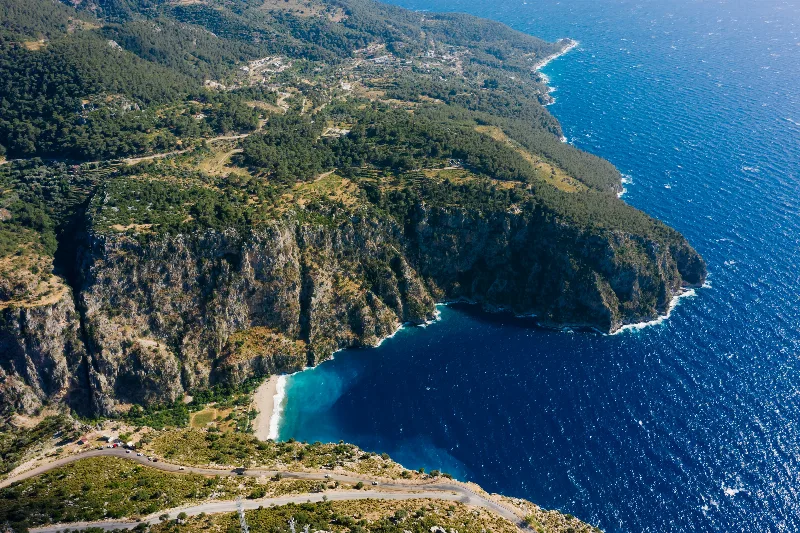
Faralya is a small village in the Fethiye district of Muğla, perched on a pine-covered ridge directly above Butterfly Valley and used as a stage point on the Lycian Way. Its position high above the sea, rather than at the shoreline, is what sets it apart from the resorts around it.