
Tea Harvest in Rize
Tea in Rize is picked from roughly May to September across terraced hillsides above the Black Sea coast, with the tender first flush of May considered the most valuable. The timing of each harvest depends heavily on rainfall, temperature and how fast the new shoots grow.
Tea harvesting in Rize, on Turkey's northeastern Black Sea coast, is a seasonal cycle that normally runs from May through September, when growers trim the young shoots from tea bushes planted across steep terraced hillsides. The first picking of the year, generally in May, is the most prized because the plants have just come out of the cool, slow-growing months and put out tender new leaves. This period is distinctive because the quality and volume of the whole crop depend on how quickly the gardens are cut back and how much rain falls during the growing season. Unlike many fruit harvests, tea is not gathered once: the same bushes are cut repeatedly through the warm months, so the landscape stays in a working, harvested state for much of spring and summer.
Where Rize Tea Grows and Why
Rize province stretches along the eastern Black Sea between Trabzon to the west and Artvin to the east, a narrow strip of coast backed almost immediately by steep, green mountains. Tea is grown from near sea level up into the lower slopes and inland valleys, where the land has been shaped into terraces and small plots rather than large flat fields. The main tea-growing districts include the area around Rize city itself as well as Çayeli, Pazar, Ardeşen, Fındıklı and parts of the Hemşin valleys.
The reason tea thrives here is the climate. The Black Sea keeps the coast mild and constantly humid, and the mountains behind it wring out very heavy rainfall across the year. There is rarely a hard freeze, and the air stays damp even in summer. These conditions suit the tea plant, which needs steady moisture, acidic soils and mild temperatures rather than the dry heat of the interior. The same climate that makes the gardens green also makes the harvest schedule flexible and weather-dependent.
The Harvest Calendar and the Repeated Pickings
Turkish tea is usually cut in several rounds during the season rather than in one short burst. The first flush, typically in May, is the most valued. After that first cut, the bushes begin growing again, and growers commonly return to the same rows roughly every five to seven weeks through the summer, which means further cuttings often fall in early summer and again in late summer, depending on how the plants respond. By September the growing season is winding down and the final pickings tend to be lighter.
This pattern explains why visitors may see freshly trimmed rows at one moment and thick new growth the next. The exact number of cuttings in a given year is not fixed. A cool, late spring can push the first flush back, while a warm, wet early summer can speed up the interval between pickings.
What Creates the Seasonal Change
The trigger for the harvest is not a single date but a combination of temperature and moisture. Once the soil warms and the plants begin pushing out new shoots after the slower winter period, growers start cutting. Heavy rain supports rapid leaf growth, but too much rain at the wrong moment can make the ground soft and the slopes slippery, slowing the picking and transport of leaves. Conversely, an unusually dry spell can slow growth and reduce the tenderness of the leaves, which matters because the youngest two leaves and a bud are the most desirable part of the plant.
Because these factors vary from year to year, the harvest window shifts. Some seasons begin earlier, some later, and the strongest weeks of activity are rarely identical two years in a row. Anyone planning around the harvest should treat May to September as the general window rather than a set calendar.
What the Tea Gardens Look Like During the Season
During the active harvest months the hillsides are covered in dense, clipped rows of tea bushes, bright green and low, following the contours of the land. The terraced plots often climb steep slopes in narrow bands, broken by small paths, drainage channels and the occasional stand of trees. Because the coast is humid, mornings frequently bring mist and low cloud that hang over the valleys and lift later in the day.
The visible condition of the gardens changes with the harvest. Just after a cutting, the rows look flat and neatly trimmed; within a few weeks the new shoots emerge and the surface of the bushes becomes soft and uneven again. In the peak of summer the green is at its fullest, and the gardens are being worked more or less continuously across the region.
Harvesting by Hand and the Working Landscape
Much of the picking in Rize is still done by hand or with small handheld shears, especially on the steeper terraces where machinery is impractical. Pickers work along the rows, taking the top shoots and collecting them into sacks or baskets that are carried up and down the slopes. The freshly cut leaves are gathered from gardens and moved quickly to collection points and processing facilities, because the leaf begins to deteriorate soon after cutting.
For a visitor, this means the season is visible as an ongoing agricultural rhythm rather than a single event. You are likely to see cut leaves, trimmed rows, working paths and, depending on the day, activity on the slopes. You are not guaranteed to witness a cutting on any specific date, since the schedule follows the plants and the weather.
Weather Conditions and Practical Considerations
The Black Sea climate is wet and changeable. Expect humid air, frequent rain and soft, cloudy light, with cool mornings even in summer. Terrain is a major factor: the tea gardens sit on steep ground, and after rain the paths and terraces can be muddy and slick. Inland valleys such as those around Çamlıhemşin and the Hemşin area are greener and often wetter than the coastal strip, while the coast around Rize and Çayeli is milder and lower.
Because rain shapes both the crop and the experience, the best general period to see the gardens at their most active is the first flush in May and the warm weeks that follow. Late summer offers a second strong phase, though the exact timing depends on the season.
Places Nearby Connected to the Tea Landscape
The tea belt runs along the coast and into the valleys, so nearby locations share the same seasonal character. Çayeli and Pazar sit within the main growing zone, while the road inland towards Çamlıhemşin and the Fırtına valley climbs from tea country into forested mountains. Trabzon, to the west, marks the start of the Black Sea tea region, and the coastal route east towards Ardeşen and Fındıklı passes through one continuous stretch of tea-growing country. Together these areas show how the harvest is tied to one specific coastal climate rather than to the country as a whole.
EXPLORE BY THEME
All themes →

Related content
Rize Tea
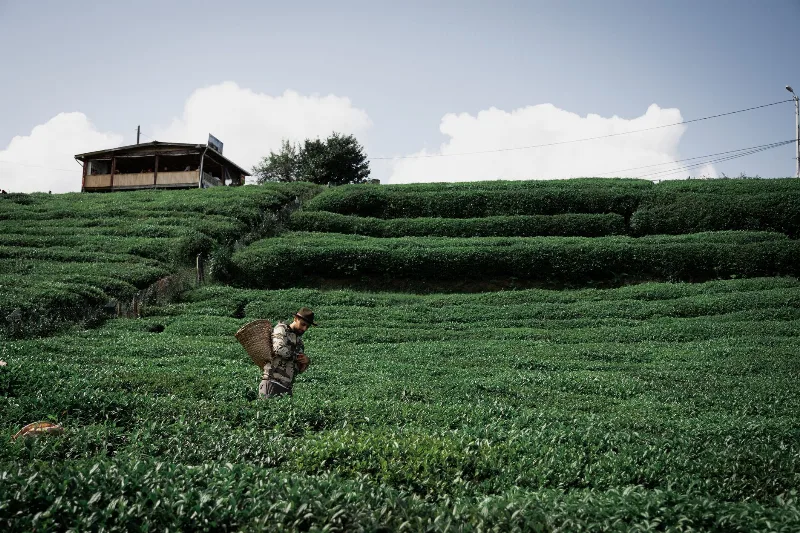
Rize tea is the black tea grown in Türkiye's northeastern Black Sea province of Rize, where heavy rainfall, persistent humidity and acidic soils create one of the few places in the country where Camellia sinensis thrives.
Rize
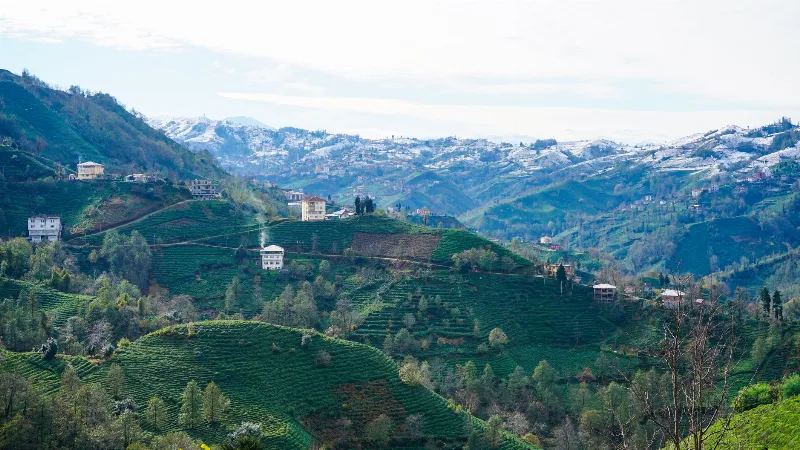
Rize is the capital of Rize Province on Türkiye's northeastern Black Sea coast, a city shaped by tea plantations, steep forested slopes and the high plateaus of the Kaçkar Mountains further inland.
Trabzon
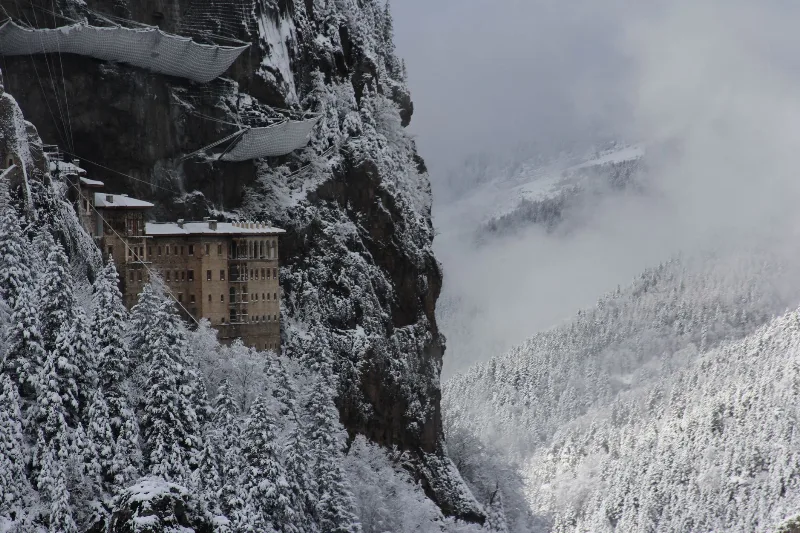
Trabzon is a rain-washed port city on Türkiye's eastern Black Sea coast, framed by the cliffside Sumela Monastery and slopes of tea. Byzantine and Ottoman layers sit close to highland valleys just inland.
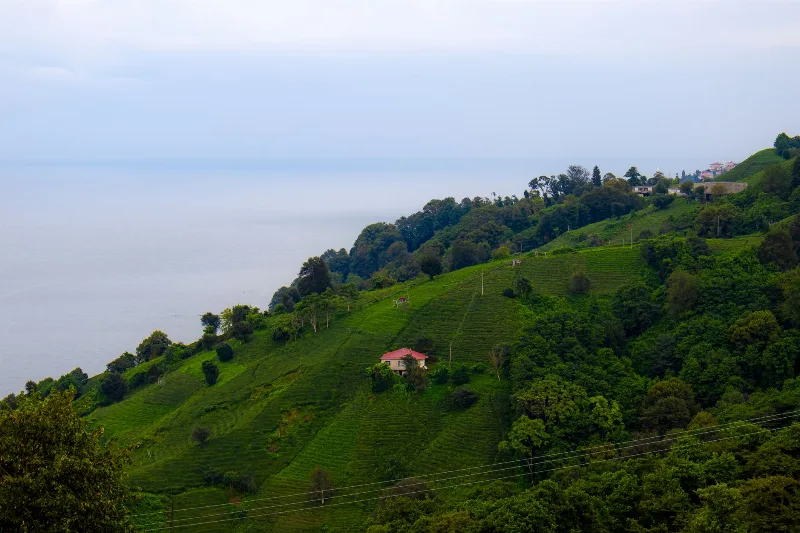
The Tea Gardens of the Black Sea Region
The Black Sea region of Türkiye, especially around Rize, is home to extensive tea gardens that produce Turkish black tea. Visitors can explore these green landscapes and learn about local tea culture.
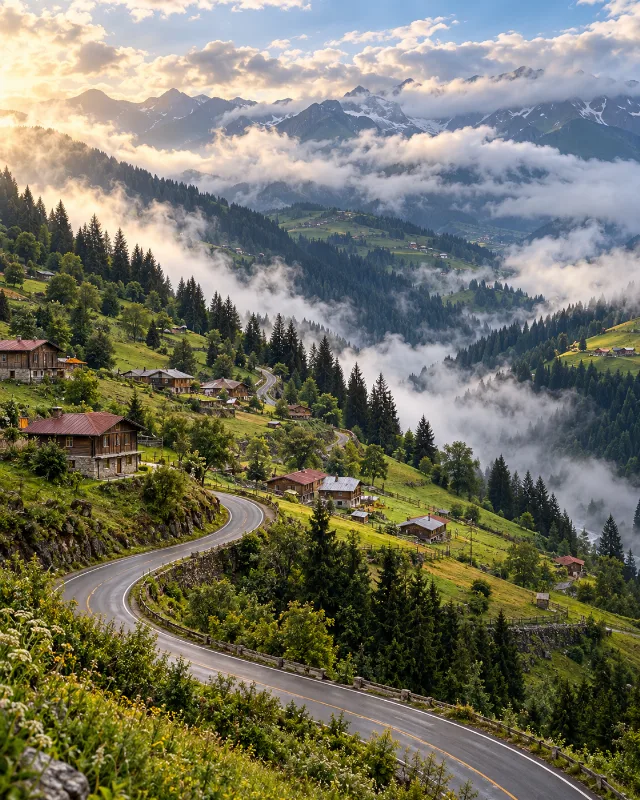
5-Day Eastern Black Sea Route
A five-day journey from Trabzon through Uzungöl, Rize, Çamlıhemşin, Ayder, Borçka and Şavşat, combining Black Sea culture with forests, lakes and highlands.
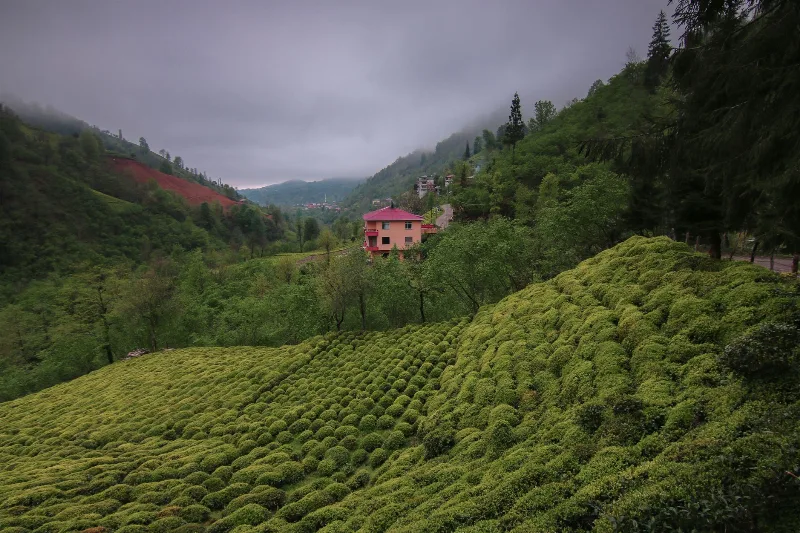
Rize and the Tea Plantations
Rize, on Türkiye's eastern Black Sea coast, is a green province of terraced tea gardens, misty hills and mountain valleys shaped by rain and local tradition.