
Snow Season in Erciyes, Kayseri
Erciyes, the dormant volcano rising south of Kayseri, carries a reliable snow cover from roughly December into March, transforming its bare upper flanks into one of Central Anatolia's main winter playgrounds. The exact start and end of that cover shifts each year with snowfall and temperature.
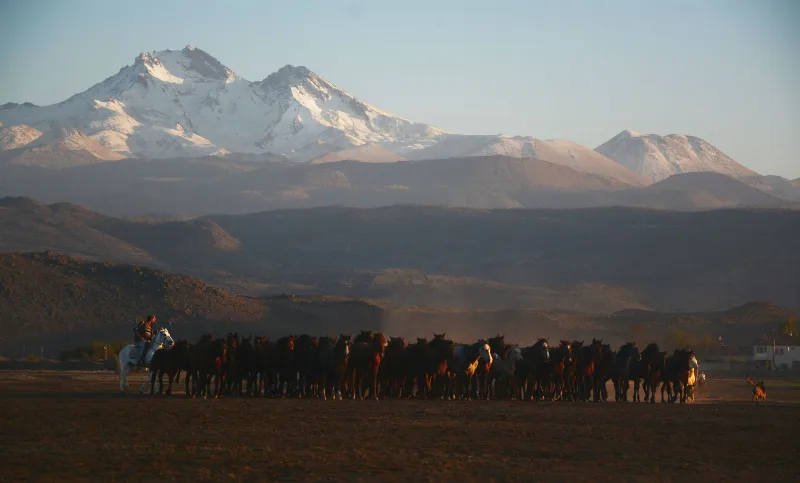
Each winter, Mount Erciyes — the dormant stratovolcano that rises to nearly 3,900 metres just south of Kayseri in Central Anatolia — accumulates a persistent snow cover that typically forms during December and usually lasts into March, sometimes longer on the highest slopes. Because the mountain stands alone above the surrounding plain, its snow-covered summit is visible from much of the city, and the ski terrain on its middle and upper flanks becomes the focus of the region's winter. What makes the period distinctive is that this is not a case of a place merely looking nice in cold weather: the snow itself is the seasonal event, and the mountain's height, exposure and continental climate are what allow it to hold snow while the plains below stay largely bare.
Why the Snow Settles Here and Not on the Plain
Kayseri sits on a high interior plateau with a continental climate: cold winters, limited moisture and large temperature swings between day and night. Elevation is the decisive factor on Erciyes. As air rises over the mountain, it cools, and precipitation that falls as rain in the city can fall as snow on the upper slopes. Once a base has formed, the altitude keeps temperatures low enough for that snow to survive between snowfall events. The mountain's volcanic terrain is also largely open and lightly vegetated above a certain level, which means wind moves snow around rather than trapping it under a forest canopy. Sheltered gullies and north-facing slopes tend to hold snow longer than exposed ridges.
The Typical Snow Window
In an average year, the first meaningful snows on the upper mountain arrive in late autumn or early winter, with a more continuous cover generally establishing itself during December. January and February are usually the coldest and most dependably snowy months. The cover typically persists into March, and in colder years the highest elevations can remain white into April, though this varies considerably. The visible snow season is therefore best understood as a window of roughly three to four months rather than a fixed calendar period.
How Annual Weather Changes the Timing
Snow seasons on Erciyes are not identical from one year to the next. A winter with repeated storm systems and sustained cold can build a deep, long-lasting cover; a milder winter with more rain at mid-elevations can leave the lower slopes patchy and push usable snow higher up. Warm spells and strong winds can strip exposed areas, while a single heavy snowfall can change conditions within days. Anyone planning around the snow should treat December to March as the normal range and accept that the precise start, depth and finish shift according to that year's weather.
What the Landscape Looks Like Under Snow
Under full cover, the upper mountain reads as a broad white massif with dark rocky outcrops breaking through, especially on wind-scoured ridges. Lower down, the snow line is often uneven, with brown steppe, scattered trees and village land visible on the plain while the summit stays white. On clear winter days the contrast is strong: deep blue sky, hard sunlight, long shadows in the gullies and visible wind-carved textures on the surface. Cloud can sit against the mountain for days at a time, and fog or blowing snow occasionally reduces visibility sharply.
On the Slopes During the Season
The lift-served terrain is the reason most visitors come. Skiers and snowboarders use the slopes through the core of the season, and the resort's elevation means runs at the top can hold better conditions than the lower sections, which are more exposed to thaw. Cold mornings often give hard, fast surfaces that soften later in the day; afternoon shade and north-facing pitches usually preserve the best snow. Away from the marked runs, the open upper slopes offer wide views over the Kayseri plain, and cloud inversions — where the city lies under a layer of cloud while the mountain stands in sunshine — are a fairly common winter sight.
Timing a Visit Within the Season
Midwinter generally offers the most reliable snow, but it also brings the coldest temperatures, shortest daylight and the highest chance of storm closures. Late winter and early spring can bring milder, sunnier days with longer light, though snow at lower elevations may already be thinning. Snow depth is normally greatest after a run of winter storms, so conditions a week or two apart can feel like different seasons. There is no guaranteed best week; the practical approach is to aim for the middle of the winter window and expect variability.
Winter Cold Beyond the Snow Line
The same continental winter that keeps Erciyes white shapes daily life around Kayseri. Nights are cold, frost is common, and the plain often carries a thin, temporary snow cover that melts faster than the snow on the mountain. Travel between the city and the mountain is short, which means visitors can move between steppe conditions and full alpine snow in a single trip. That proximity — a snow-holding volcano rising directly out of a dry interior plateau — is what gives the Erciyes snow season its particular character.
EXPLORE BY THEME
All themes →
Villages
Small settlements, traditional architecture and rural landscapes across Türkiye.
Explore →
Historic Places
Ancient cities, monuments, castles and archaeological sites across Türkiye.
Explore →
Nature
Lakes, forests, rivers, canyons, mountains, wetlands and national parks across Türkiye.
Explore →Related content
Kayseri
Kayseri is a major inland city in Central Anatolia, set on a plain at the foot of Mount Erciyes, and known for its Seljuk architecture, its manufacturing economy and a food culture built on pastırma and mantı.
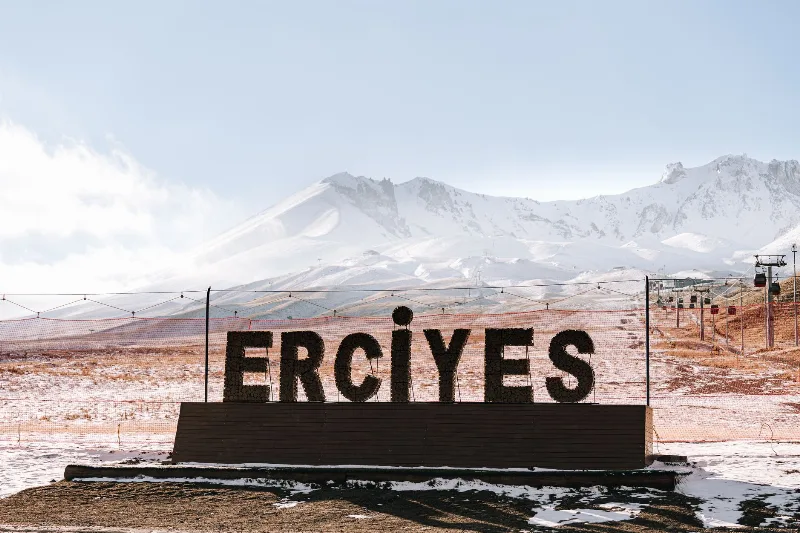
Mount Erciyes
Mount Erciyes is a dormant stratovolcano in Kayseri Province and the highest peak in Central Anatolia, rising sharply from the surrounding plain to a snow-covered summit at 3,917 metres.
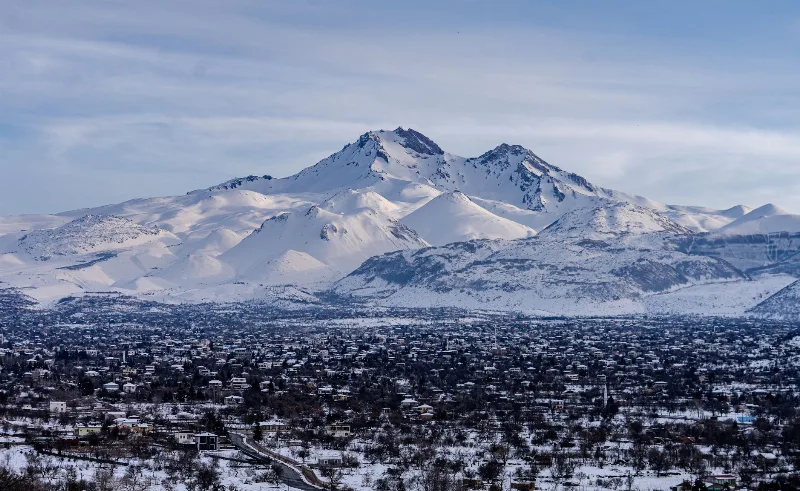
Mount Erciyes
Mount Erciyes is a dormant 3,917-metre stratovolcano rising above the Kayseri plain in Central Anatolia, known for its ski resort, summer trekking routes and its role as a landmark of Turkish volcanism.
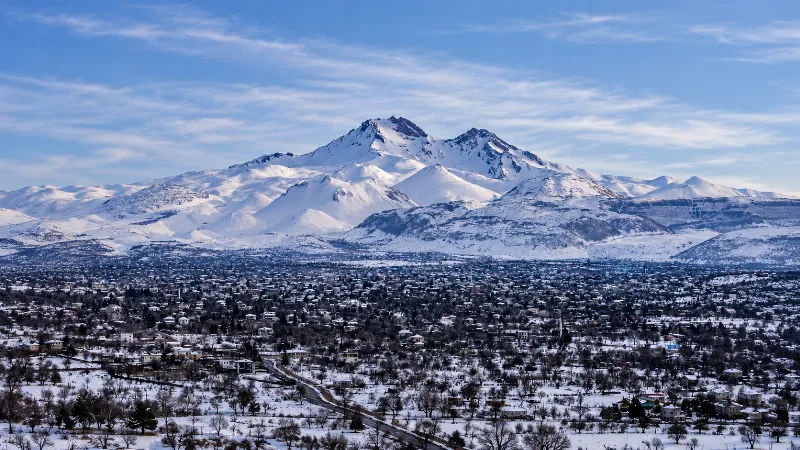
Kayseri and the Art of Turkish Pastry Making
In the Anatolian city of Kayseri, thin sheets of dough are rolled, filled and layered into pastries that anchor everyday meals and festive tables alike.
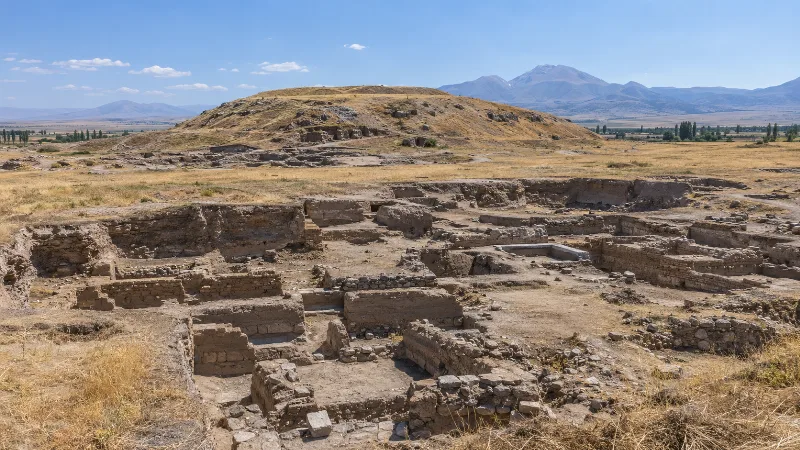
Kültepe
Kültepe, the ancient city of Kanesh, is a Bronze Age mound and lower-city site northeast of Kayseri in central Türkiye. Its Assyrian merchants left behind thousands of cuneiform tablets, the earliest written records discovered in Anatolia.
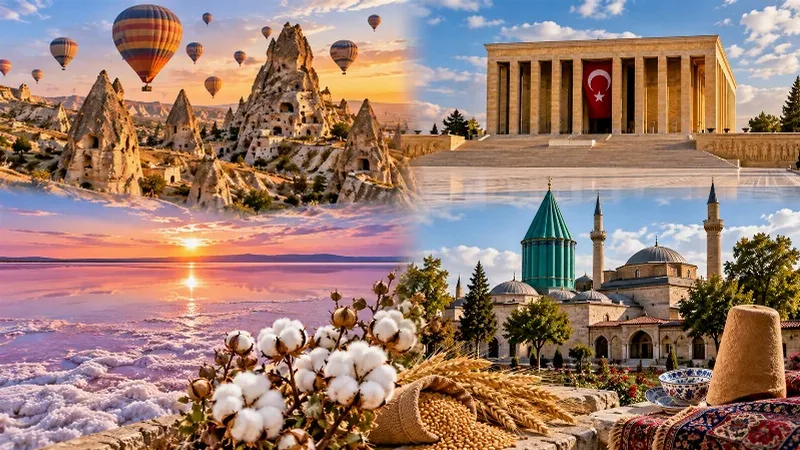
Central Anatolia Region
Central Anatolia is the historic heartland of Türkiye, known for its wide plains, extraordinary rock formations, ancient civilizations and traditional towns. From the fairy chimneys of Cappadocia to the cultural landmarks of Ankara and Konya, the region reveals the rich history and natural beauty of inner Anatolia.