
Autumn in Uludağ, Bursa
Uludağ's forests turn gold and copper between roughly late September and early November, with the colour moving down the slopes as temperatures drop. The timing depends heavily on how quickly autumn cold arrives that year.
Every autumn the forested slopes of Uludağ, the mountain massif rising immediately south of Bursa in northwestern Türkiye, change colour. The deciduous belt that covers the lower and middle elevations turns yellow, gold and copper, usually beginning in late September at the highest tree-covered ground and finishing on the lower slopes near the Bursa plain by early November. What makes this period distinctive is the mountain's steep altitude gradient: because the forest is stacked in vertical bands, autumn arrives at different times on the same mountainside, and the first snow on the upper plateau often falls while trees several hundred metres below are still holding leaves.
Where the autumn colour actually appears
Uludağ is not a single peak but a broad massif with a northern face that drops steeply toward the city of Bursa. The vegetation is layered. Above roughly 1,800 to 2,000 metres, depending on exposure, the closed forest gives way to subalpine meadow, scree and rock. Just below that lies a belt of conifers, mainly black pine and fir, which stay dark green through the season and provide the visual contrast that makes the broadleaf colour stand out. The main event happens in the deciduous belt beneath the conifers, where oriental beech dominates on the cooler northern slopes, mixed with hornbeam, oak, maple and, at lower elevations, sweet chestnut.
The colour is therefore not uniform across the mountain. Northern slopes, which hold more moisture and stay shaded longer, tend to carry beech forest and produce the most sustained gold. Southern and western aspects dry out faster and shift to bronze and brown more quickly. Around the lower forest edge above the Bursa plain, oaks and chestnuts often turn later than the beech higher up.
When the foliage season normally happens
The colour change typically runs from late September to early November, with the most reliable window generally falling in the second half of October. Rather than a single peak date, there is a moving front. The highest deciduous trees usually begin turning first, sometimes while lower forest is still largely green. Colour then works downward through the middle elevations over two to three weeks, and the lowest wooded ground near the city can still show autumn tones into the first half of November.
For any given altitude band, the strong colour usually lasts about two to three weeks before wind and rain strip the canopy. The full progression from first turning leaves to bare branches across the whole mountain generally spans five to seven weeks.
What drives the change
Shortening daylight in late September triggers the process. Trees stop producing chlorophyll, the pigment that keeps leaves green, and the yellow and orange pigments that were already present become visible. In species such as maples and some oaks, red and copper tones develop when cool nights combine with sunny days. The first hard frosts at altitude accelerate the change noticeably, while an unusually warm, dry September tends to delay it.
Weather and ground conditions during the season
Autumn on Uludağ is a transition period and the weather is genuinely variable. Clear October days can be mild on the lower slopes, with daytime temperatures comfortable in the sun, while nights at higher elevations approach freezing. Fog and low cloud are common, particularly in the morning, and can obscure the views that draw people to the upper viewpoints. By November, rainfall becomes more frequent and persistent, and the mountain's upper plateau may receive its first snow, sometimes well before the last leaves have fallen.
Trails and forest tracks on shaded northern slopes stay damp and can be muddy after rain, and the ground becomes colder and harder as the season advances. Conditions change quickly with altitude, so the temperature difference between Bursa and the upper mountain is often considerable.
Reaching the colour zones by cable car
The cable car line from the Bursa side up to the Sarıalan area is the most direct way to pass through several vegetation belts in a short time. A single ascent moves from the warmer lower slopes, through the mixed and beech forest, and up toward the conifer belt, giving a compressed view of the whole seasonal transition. On clear days the ride also opens onto the city and the wider Marmara basin below.
Because the upper stations sit above 1,500 metres, visibility and wind can affect operation on autumn days, and services may be interrupted in poor weather. The cable car is best treated as a way of gaining elevation rather than a guaranteed viewing platform.
What a visitor can realistically expect to see
In a normal year the visual signature is a mosaic rather than a single wall of colour: gold beech on shaded slopes, darker bronze and russet oaks lower down, deep green conifers above, and pale rock and dry grass on the high ground. Water courses and shaded gullies often hold colour longest. Wildlife activity shifts too, with birds moving through the forest as the season progresses, though sightings are never guaranteed.
Autumn is also comparatively quiet outside weekends, and the absence of summer visitors makes forest paths easier to walk. The trade-off is the unpredictability of cloud cover and rain.
How much the timing shifts from year to year
The window is approximate, not fixed. A warm, dry September can push the start back by a week or more; an early cold snap can bring the whole sequence forward and shorten it. Strong wind and heavy rain can remove the canopy within days at exposed elevations. Anyone planning around the foliage should think in terms of a two to three week flexible window rather than a specific date, and should expect the higher forest to peak before the lower slopes.
Places connected with the same seasonal shift
The Sarıalan and Kirazlıyayla areas sit within the forest belt and show the transition directly. Higher up, toward the summit zone at over 2,500 metres, the tree cover thins and the first snow of the season frequently appears there weeks before it reaches the wooded slopes. On the northern side, the foothills and the agricultural ground of the Bursa plain show a much later and gentler version of the same change, with orchards and roadside trees turning well after the mountain forest has thinned.
EXPLORE BY THEME
All themes →
Nature
Lakes, forests, rivers, canyons, mountains, wetlands and national parks across Türkiye.
Explore →
Food
Regional dishes, desserts, local ingredients and culinary traditions across Türkiye.
Explore →
Routes
Road trips, coastal drives, cultural routes and scenic journeys across Türkiye.
Explore →Related content
Bursa
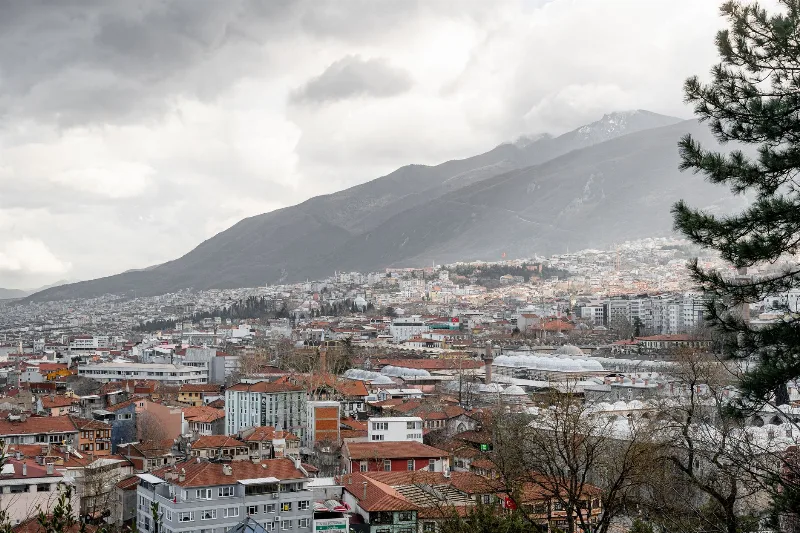
Bursa is a major metropolitan city in northwestern Türkiye and the first great capital of the Ottoman Empire, known for its silk heritage, thermal springs and the mountain of Uludağ rising directly behind it.
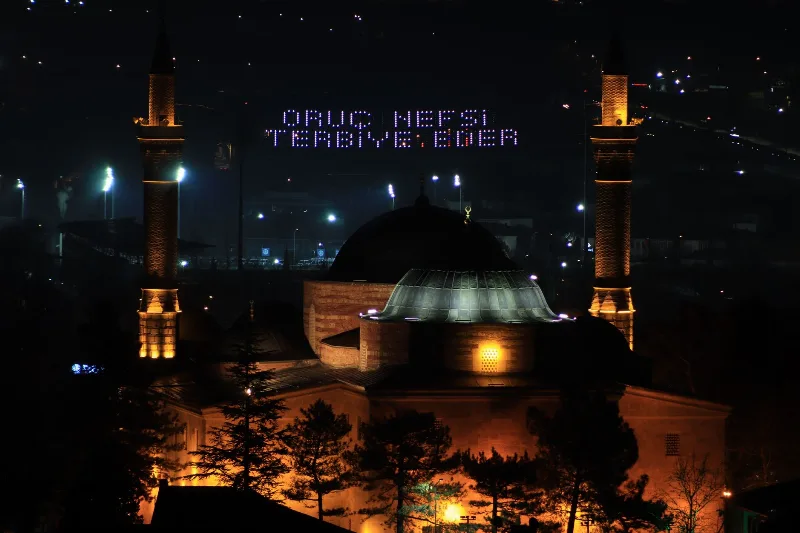
2-Day Bursa and Uludağ Route
A two-day route through Bursa's Ottoman monuments and up to the Uludağ National Park by cable car, combining city walking with mountain hiking or skiing.
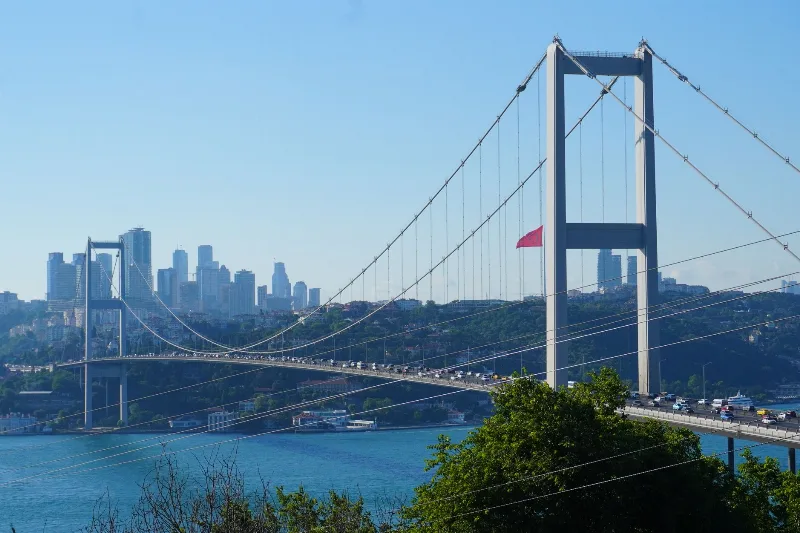
3-Day Istanbul to Bursa Route
Explore the first Ottoman capital on a three-day route from Istanbul to Bursa, combining historic city sites, the mountain landscapes of Uludağ, and the preserved village of Cumalıkızık.
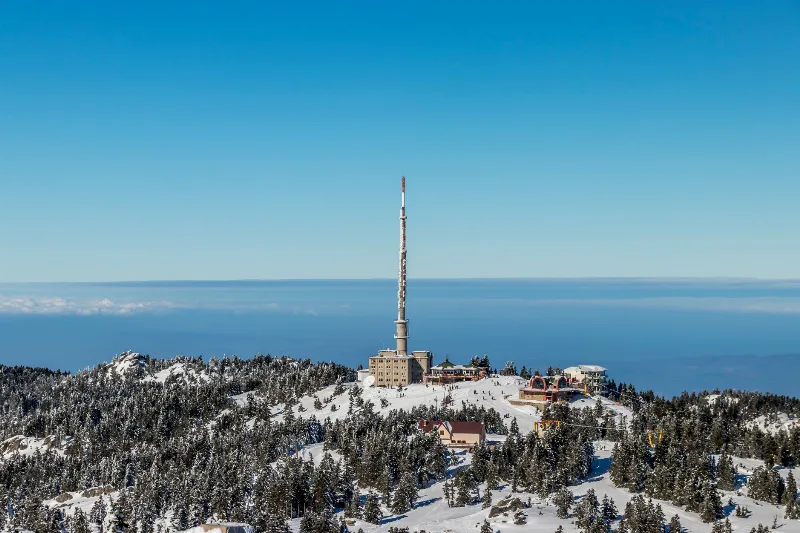
Snow Season in Uludağ, Bursa
Uludağ, the mountain rising above Bursa, holds a continuous snowpack that generally runs from December to March, making it one of Turkey's longest-established winter landscapes. The season depends on altitude and annual weather, so exact dates shift from year to year.
Mount Uludağ
Mount Uludağ is a granite massif rising above Bursa in north-western Türkiye, topped by a 2,543-metre summit and protected as one of the country's oldest national parks. Its forest belts, high meadows, glacial landforms and long snow season shape both its landscape and the way it is visited.
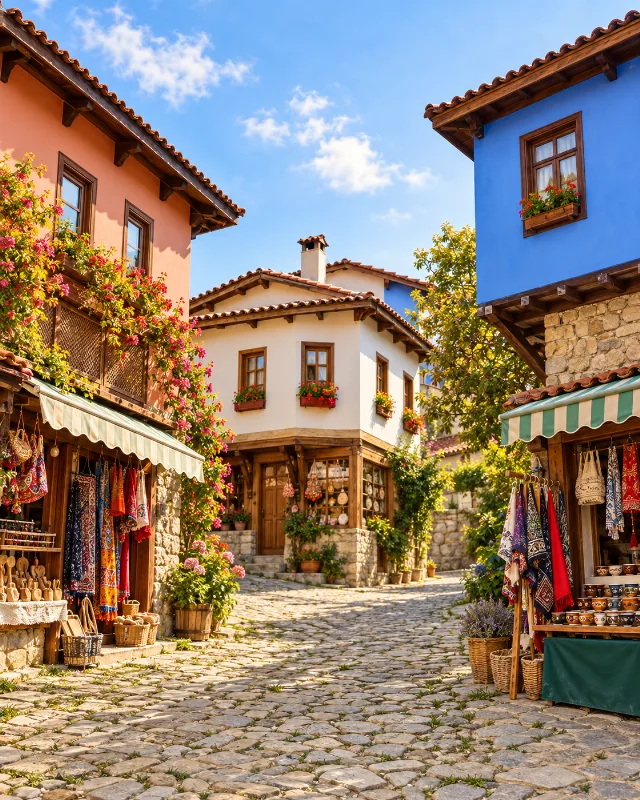
Cumalıkızık
Cumalıkızık is a historic Ottoman village in Bursa, Turkey, known for its well-preserved houses and cobblestone streets. It is part of the UNESCO World Heritage Site 'Bursa and Cumalıkızık: the Birth of the Ottoman Empire'.