
Alacahöyük: A Hittite City and Early Bronze Age Royal Tombs in Çorum
Alacahöyük is an excavated mound in Çorum Province that holds both Early Bronze Age royal tombs and a monumental Hittite gate flanked by carved sphinxes. It is one of the key sites for reading the pre-Hittite and Hittite past of central Anatolia.
Alacahöyük is an excavated archaeological mound and former Hittite city in the Alaca district of Çorum Province, in the interior of northern Anatolia. It lies on the plain about 45 kilometres south of Çorum and roughly 20 kilometres from the town of Alaca, beside the village of Alacahüyük. Two features give the site its standing: a group of richly furnished royal tombs of the Early Bronze Age, and a monumental Hittite gate flanked by carved sphinxes. Few places in Türkiye combine a deep prehistoric burial sequence with monumental Hittite architecture on the same mound, and that combination is why Alacahöyük is treated as one of the founding sites of Anatolian archaeology.
The Setting on the Anatolian Plateau
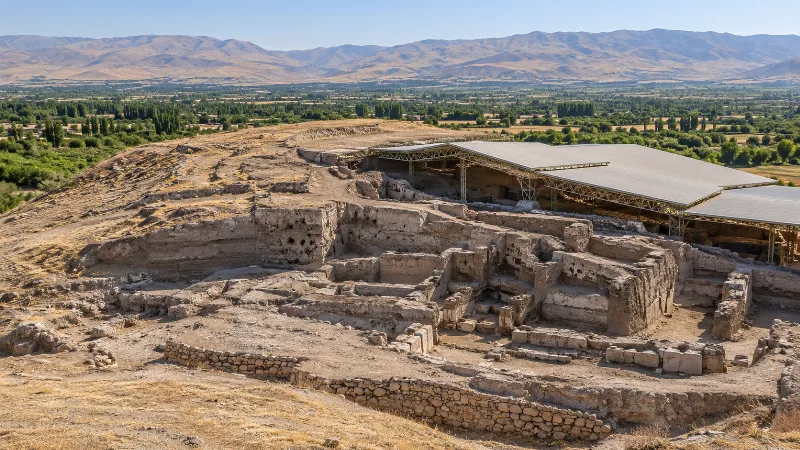
Alacahöyük occupies a low, wide mound on a mostly flat plain farmed for grain, sugar beet and other field crops. The landscape is typical of the Çorum–Yozgat plateau: broad, open and gently undulating, with distant low hills and no forest immediately around the site. The mound itself rises above the surrounding fields, which is exactly why it was chosen in prehistory — a defensible rise with good visibility and farmland within reach.
The site sits in the same broad region as the Hittite capital, and travellers usually encounter it as part of a Hittite-focused route through Çorum Province. The village beside the mound is small and rural, and the surrounding economy is agricultural, so the setting is quiet rather than built-up.
A Mound Occupied Over a Very Long Period
Alacahöyük was inhabited from the Chalcolithic period onwards, and excavation has revealed a long sequence of superimposed settlement levels, one built over another in the way that Near Eastern mounds accumulate. Across that sequence the site passes from prehistoric village communities to an important centre in the Early Bronze Age, then to a Hittite city, with later, thinner traces of occupation after the Hittite period.
The early levels are associated with the pre-Hittite cultures of central Anatolia, often referred to as Hattian, while the monumental architecture belongs to the Hittite state. Turkish archaeologists began work at the mound in the early twentieth century, and systematic excavations were carried out from the 1930s by Remzi Oğuz Arık and Hamit Zübeyir Koşay; later campaigns continued the work, and the mound has been investigated by Turkish teams across many decades. This long excavation history is one reason the site is well documented and widely cited in studies of Anatolian prehistory.
The Early Bronze Age Royal Tombs
The most celebrated discoveries at Alacahöyük are the royal tombs of the mid-third millennium BC. These are shaft-like graves containing a single individual and an exceptional quantity of grave goods. The burials are remarkable not simply for the amount of metal they contained but for the range of objects and the craftsmanship involved.
- Objects of gold, silver, copper and bronze, including jewellery, diadems, pins and fittings.
- Ceremonial standards often described as sun discs — openwork metal discs with animal figures on top, today an emblem closely associated with Anatolian Bronze Age art.
- Animal-shaped vessels, notably examples in the form of a bull and a stag.
- Weapons and tools, including objects of iron, which is rare in contexts of this date because ironworking was not yet common.
Because the tomb groups are so rich and so distinctive, they are central to any discussion of Early Bronze Age metallurgy and elite burial in Anatolia. Many of the finest pieces were taken to Ankara and are displayed in the Museum of Anatolian Civilizations, where the Alacahöyük standards became one of the museum's identifying images.
The Sphinx Gate and Hittite Relief Sculpture
The other defining feature of Alacahöyük is its Hittite gateway, generally known as the Sphinx Gate. A pair of limestone sphinxes — human-headed, lion-bodied figures — flanks the passage, and the walls of the gateway are built from large carved stone blocks set in rows as orthostats. These blocks are decorated in relief, and the carvings are among the best-preserved examples of Hittite stone sculpture found in situ.
The reliefs depict a ceremonial and religious scene rather than a battle narrative: a royal couple and attendants, figures with musical instruments, acrobats or performers, and animals, including animals led for sacrifice. There are also scenes involving hunting. Read together, the carvings give an unusually clear impression of how Hittite royal ritual and court life were represented in stone at a city gate.
The gate forms part of the Hittite fortification system of the site, and the stone-lined passage and flanking walls can be walked through. The style of the reliefs places them within the Hittite sculptural tradition of the second half of the second millennium BC, related in technique and subject matter to the better-known reliefs of the capital region.
Water, Power and the Hittite Dam
Alacahöyük is not only a mound and a gate. In the vicinity of the site there is a Hittite-period dam and reservoir, known as Gölpınar, which is one of the relatively few surviving examples of Hittite hydraulic engineering. Its presence is a reminder that a Hittite city was a managed landscape: fields, water supply and defences were planned together, and water control was a matter of both agriculture and political authority.
What Can Be Seen on Site Today
Visitors see an open excavated mound rather than a reconstructed ancient city. The Sphinx Gate with its flanking reliefs is the focal point, and the exposed stretches of Hittite walling that formed the defensive line can be traced around parts of the summit. Below the Hittite levels, the excavation cuts show the depth and layering of the mound, and the areas where the Early Bronze Age tombs were found form part of the excavated topography even though the objects themselves are in museums.
A site museum at Alacahöyük displays finds from the excavations and provides context for what is visible outside; the Çorum Museum also holds material from the province, and the Museum of Anatolian Civilizations in Ankara holds much of the tomb assemblage. Seeing the objects and the place they came from therefore means visiting more than one location.
Getting There and Practical Points
Alacahöyük lies off the main routes, so the practical approach is by road. The usual base is Çorum, from which the site is roughly a 45-kilometre drive south via the Alaca direction; travellers coming from Ankara reach the region on the main highway to Çorum and then continue towards Alaca. Public transport reaches Alaca rather than the mound itself, so a car, a taxi or a pre-arranged vehicle is the realistic way to arrive and, importantly, to leave again.
Once on site, expect to walk on uneven ground: exposed stone, slopes, steps and loose surfaces around the excavated areas. Strong sun and limited shade on the mound are typical in summer, and there are few facilities in the immediate surroundings. Sensible footwear, water and sun protection make the visit more comfortable. Because the site is an active archaeological area, some sectors may be fenced or closed at times.
When to Go
Çorum Province has a continental Anatolian climate: hot, dry summers and cold winters with frost and snow. The most comfortable periods for walking around an open mound are spring, from roughly April to June, and early autumn, from September to October, when temperatures are moderate; spring also brings green fields and wildflowers on the plain. Midsummer afternoons can be very hot with little shade, and winter visits are possible but cold, and snow can obscure the detail of stone carvings around the gate.
Places That Pair Naturally With Alacahöyük
Because Alacahöyük belongs to a wider Hittite landscape, it is usually combined with other sites in the same region.
- Hattusa and Yazılıkaya at Boğazkale, the Hittite capital and its rock sanctuary, the essential counterpart to the gate and tombs at Alacahöyük.
- Çorum, the provincial city, with its museum and its role as the practical base for the region.
- Alaca, the nearby district town and the last settlement before the site.
- Şapinuva, another Hittite city site in Çorum Province, at Ortaköy, for travellers following Hittite centres rather than a single site.
Put together, these places explain why the Çorum region is the core of Hittite archaeology in Türkiye, and why Alacahöyük matters both for its own discoveries and for what it adds to that wider picture.
Related content
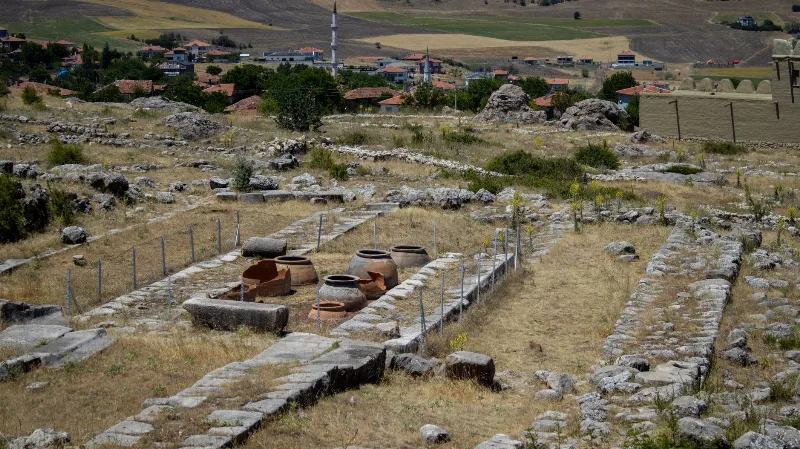
Alacahöyük
In Çorum Province, Alacahöyük preserves a long settlement sequence, elite Early Bronze Age burials and a monumental Hittite gate with carved reliefs.
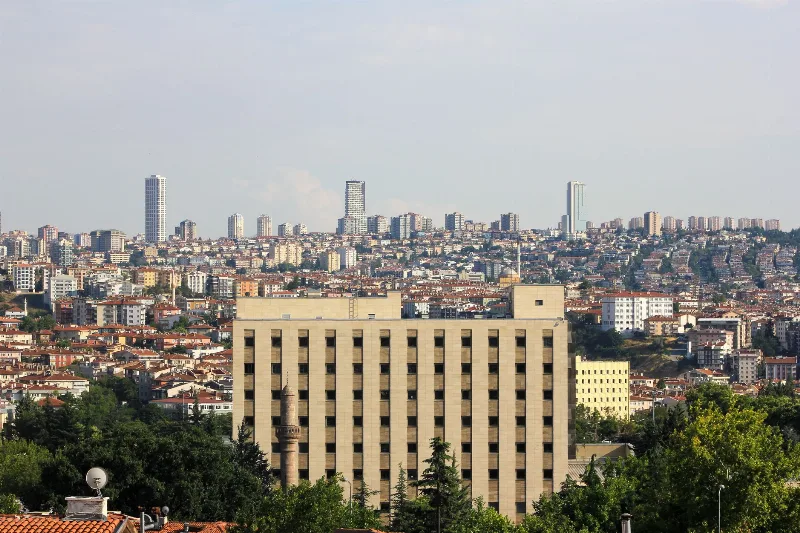
Ankara
Ankara is the capital of Türkiye and the country's second-largest city, set on the high plateau of Central Anatolia and defined by its republican institutions, its long pre-Ottoman history and the mausoleum of Mustafa Kemal Atatürk.
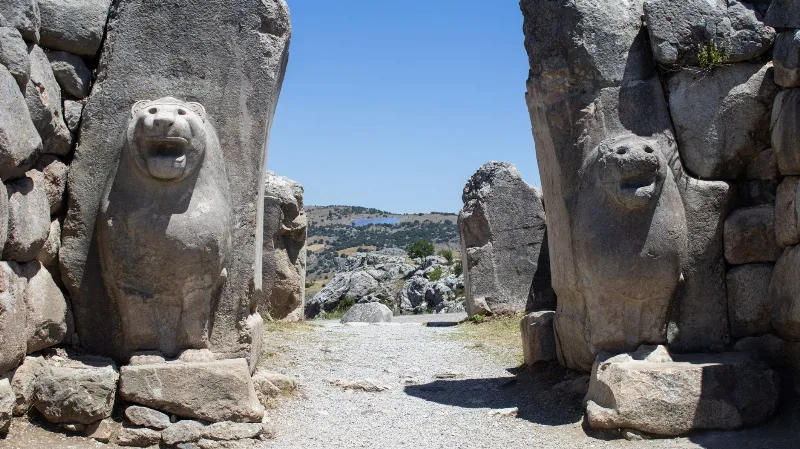
Hattusa
Hattusa was the capital of the Hittite Empire, located near Boğazkale in Çorum Province. Its surviving walls, gates, temples and cuneiform archives make it one of the most important Bronze Age archaeological sites in Anatolia.
The Ancient Hittite Capital of Hattusa
Hattusa, the Hittite capital in Çorum, preserves monumental gates, temples and royal buildings from one of the ancient Near East's great powers.
Hattusa: The Hittite Capital at Boğazkale, Çorum
Hattusa was the seat of the Hittite Empire in the Late Bronze Age and is now a UNESCO World Heritage Site in Çorum Province, Türkiye. Its walls, temples, gates and the nearby rock sanctuary of Yazılıkaya make it one of the most important archaeological landscapes in the ancient Near East.
Arslantepe
Arslantepe is a deep archaeological mound on the Malatya plain in eastern Türkiye, where a Late Chalcolithic palace documents the rise of a centralised state and later Neo-Hittite rulers carved lions for its gates. It became a UNESCO World Heritage Site in 2021.