
Kızkalesi: Maiden's Castle and Coastal Legend in Mersin
Kızkalesi is a small island castle off the Mersin coast, known for its medieval stone walls and the tragic legend of a king's daughter. The surrounding area preserves traces of ancient Korykos and Mediterranean coastal life.
Kızkalesi, also called Maiden's Castle, is one of the most distinctive coastal landmarks in Mersin province, southern Turkey. The castle stands on a tiny island just off the shore near the town of Kızkalesi in Erdemli district. Its romantic silhouette, clear Mediterranean waters and enduring local legend make it a memorable place to explore.
A Castle Set Between Sea and Shore
The castle lies a short distance from the mainland, on a rocky islet washed by the Mediterranean. The coastline here combines sandy beaches with rocky outcrops, and the Taurus Mountains rise inland. The town of Kızkalesi has grown around the ancient site of Korykos, and the castle remains its focal point. From the beach, the fortress appears to float on the water, especially at sunset.
Architecture of the Island Fortress
The sea castle occupies the whole island, with thick stone walls following the irregular shape of the rock. Corner towers and crenellated battlements suggest a defensive role, and the masonry reflects the medieval building traditions of the Cilician coast. The castle was part of a wider fortification system that included a land castle on the mainland, and together they guarded the harbour and surrounding settlement. Although weathered by centuries of sea air, the structure retains a strong sense of its original purpose.
The Legend of the Maiden
The name Kızkalesi means “Maiden's Castle”, and it comes from a well-known local legend. According to the story, a king learned from a fortune teller that his beloved daughter would die from a snakebite. To protect her, he built a castle on a small island, hoping the sea would keep danger away. The princess lived there in safety until a snake hidden in a basket of grapes was brought to the island, and she was bitten. The tale ends tragically, but it has given the castle a lasting place in local culture. Similar legends are told at other castles in Turkey, yet the Kızkalesi version remains closely associated with this coastal setting.
Ancient Korykos and the Surrounding Heritage
The castle is not an isolated monument. It belongs to the ancient city of Korykos, whose ruins are scattered on the mainland nearby. These include a land castle, necropolis areas and traces of streets and buildings. Olive groves and Mediterranean scrub cover much of the surrounding landscape, reflecting the agricultural traditions of the region. The area has been inhabited for centuries, and its layered history can be read in the stonework, the castle and the older foundations that lie close to the modern town.
Coastal Life and Natural Setting
Kızkalesi is also a coastal settlement with a relaxed atmosphere. The beach offers clear water for swimming, and the view of the castle is a constant presence. The climate is typical of the eastern Mediterranean, with hot, dry summers and mild winters. Local cuisine features seafood, olive oil dishes, fresh vegetables and citrus fruits. The nearby countryside produces olives, figs and other crops, and traditional farming continues alongside tourism.
A Landmark of the Cilician Coast
The castle has become a symbol of the Mersin coast. It can be admired from the shore, photographed in different lights, and understood as part of a longer story of defence, trade and settlement. Whether seen as a romantic ruin or a piece of medieval engineering, Kızkalesi invites visitors to consider the relationship between people and the sea.
Related content
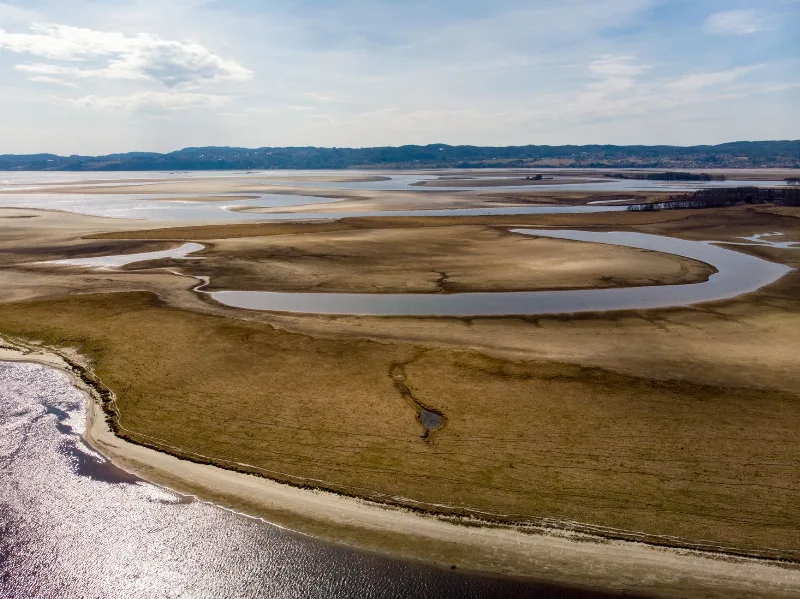
Göksu Delta
The Göksu Delta is a coastal wetland complex in Mersin Province where the Göksu River meets the Mediterranean, made up of lagoons, marshes, mudflats and sand dunes. It is known for its waterbird populations and for sea turtles nesting on its beaches.

The Bosphorus Strait and Its Historic Mansions
The Bosphorus is the winding strait that divides Istanbul between Europe and Asia, and its shores are lined with wooden Ottoman-era waterfront mansions known as yalıs.

Citrus Harvest in Mersin
Along Turkey's eastern Mediterranean coast, the citrus harvest in Mersin usually begins in November and continues into January, as oranges, lemons and mandarins ripen under a mild winter climate. The exact timing shifts each year with the weather, but the picking season is the period when the orchards are most visibly active.
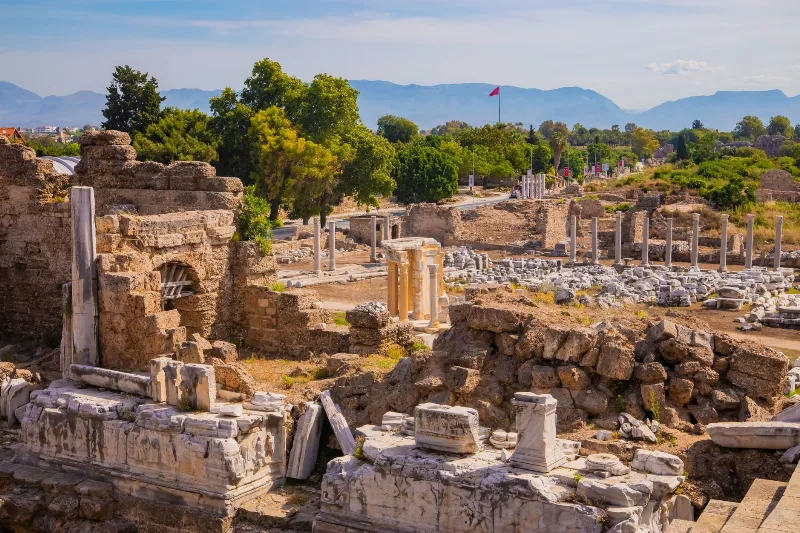
Anemurium
Anemurium is an ancient city on a windswept promontory at Cape Anamur, the southernmost point of Anatolia, in Mersin Province. Its Roman and Byzantine ruins — theatre, baths, walls and a vast necropolis — make it one of the most substantial archaeological sites on Turkey's Mediterranean coast.

Strawberry Harvest in Silifke, Mersin
Silifke's strawberry harvest is one of Türkiye's earliest, normally running from around February to April on the coastal plain where the Göksu River meets the Mediterranean. The mild winter there pushes the fruit to ripeness weeks ahead of most other growing regions.
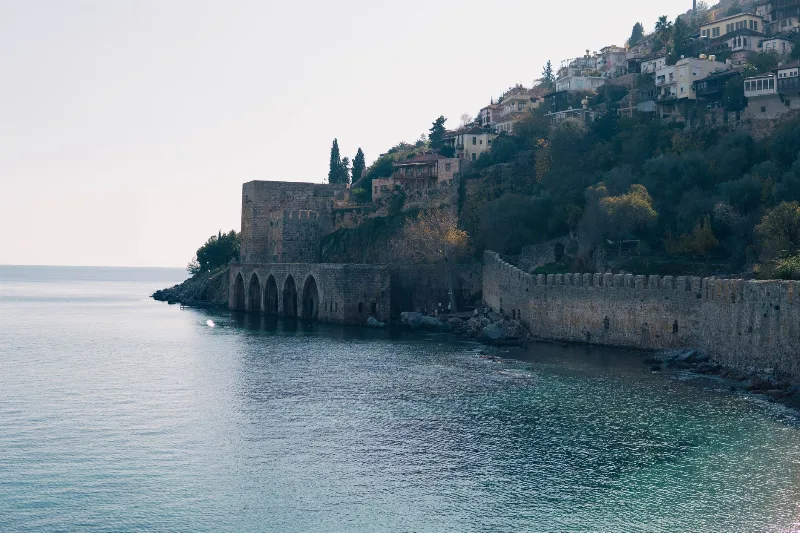
Alanya Castle
Alanya Castle is a 13th-century Seljuk fortress spread across a rocky peninsula above the Mediterranean in Antalya Province, Turkey. Its walls, towers and hilltop citadel form one of the most complete surviving Seljuk defensive complexes in Anatolia.

Tantuni
Tantuni is a traditional Turkish street food from Mersin, made with finely chopped beef sautéed with onions, tomatoes, and spices, then wrapped in lavash. It is known for its juicy, flavorful filling and is a staple of Mersin's culinary culture.
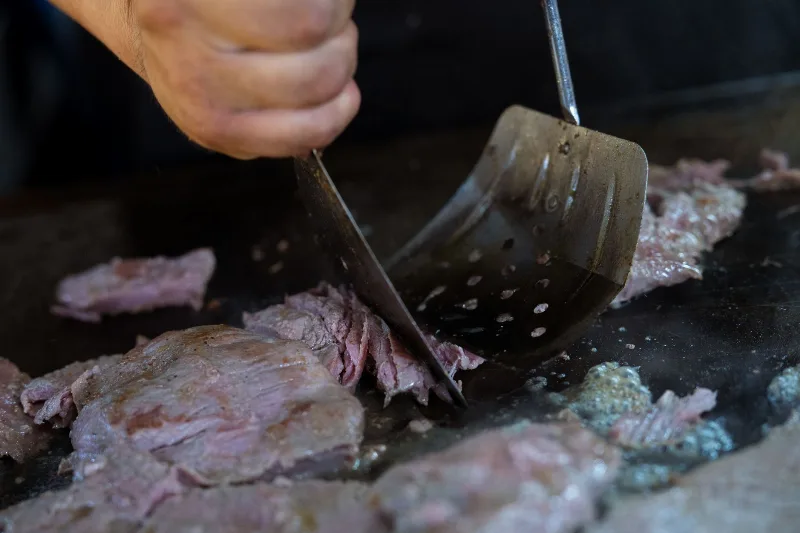
Tantuni
A Mersin street wrap built around finely chopped beef cooked with onion, tomato and pepper on a flat griddle, then rolled in thin lavash and finished with lemon and sumac onion.