
Blue Mosque
The Blue Mosque, known formally as the Sultan Ahmed Mosque, is an early 17th-century Ottoman mosque in Istanbul famous for its hand-painted blue Iznik tiles and six minarets.
The Blue Mosque, officially called the Sultan Ahmed Mosque (Sultan Ahmet Camii), is a historic Ottoman mosque standing on the Sultanahmet square in the Fatih district of Istanbul, Türkiye. It was commissioned by Sultan Ahmed I and built between 1609 and 1617, during a period when the Ottoman Empire was a major political and cultural power across southeastern Europe, the Middle East and North Africa. The mosque is significant as one of the last great classical Ottoman imperial mosques and as a defining architectural landmark of the historic peninsula of Istanbul. Its continued use as an active place of worship, together with the survival of its tile decoration, makes it one of the most studied religious buildings of the Ottoman period. The wider area around the mosque was inscribed on the UNESCO World Heritage List in 1985 as part of the Historic Areas of Istanbul.
Location and Setting
The mosque occupies the southeastern side of the Hippodrome area of the old city, facing Hagia Sophia across a broad open square. This position places it within the historic core of Istanbul, on the European side of the Bosphorus, in the district of Fatih. The site sits on the first of Istanbul's seven hills, close to the Sea of Marmara and the southern shore of the historic peninsula. The surrounding neighbourhood contains monuments from the Byzantine and Ottoman periods, including the Hippodrome, the Basilica Cistern, Topkapı Palace and Hagia Sophia, all within easy walking distance.
The choice of location was deliberate. Building an imperial mosque opposite Hagia Sophia, the great Byzantine church converted into a mosque after 1453, placed the new Ottoman structure in direct visual dialogue with the most prestigious monument of the conquered city.
Historical Background
Sultan Ahmed I came to the throne in 1603 at the age of thirteen, after the death of his father Mehmed III. Unlike several of his predecessors, he did not pursue major military campaigns, and much of his reign was shaped by wars with the Safavid Empire in the east and with the Habsburgs in central Europe. He became known for his building projects in Istanbul, of which the mosque bearing his name was the most ambitious.
Construction began in 1609 under the supervision of the royal architect Sedefkâr Mehmed Agha, a pupil of the celebrated Ottoman architect Mimar Sinan. The mosque was completed in 1617, the year of the sultan's death, and he was buried in a mausoleum beside it. The complex was conceived not only as a place of prayer but also as a külliye, a charitable foundation that combined religious, educational and social functions.
Architecture
The mosque belongs to the classical Ottoman architectural tradition and marks a late phase in that tradition after the great works of the sixteenth century. The prayer hall is covered by a central dome supported on four massive piers, surrounded by a series of smaller domes and semi-domes in a cascading arrangement. This structural system distributes the weight of the central dome outward and creates a spacious interior with an emphasis on a single unified volume.
The main dome rises to a considerable height, and the interior is illuminated by a large number of windows that line the walls and the base of the domes. The wide use of glazing gives the prayer hall a bright character that differs from some earlier Ottoman mosques, where the interiors were more dependent on lower-level lighting.
The complex includes a madrasa, a hospital, a caravanserai, a primary school and a market, arranged around the mosque and its courtyard. Not all of these structures survive in their original form or function. The courtyard is one of the largest of any Ottoman mosque, surrounded by a colonnade of domed arcades.
The Blue Tiles and Interior Decoration
The popular name of the building derives from the hand-painted ceramic tiles that cover large areas of the interior, particularly the walls of the galleries and the lower parts of the prayer hall. These tiles were produced in İznik, the town in northwestern Anatolia that was the leading centre of Ottoman ceramic production in the sixteenth and early seventeenth centuries.
More than twenty thousand tiles are traditionally said to have been used, in a palette dominated by blue and white with additions of green and turquoise. The designs include floral motifs, vines, tulips, carnations and roses. Because the mosque was built in the early seventeenth century, the tiles reflect a later phase of İznik production, when the quality and colour range had begun to change compared with the earlier, more saturated wares of the previous century.
The interior is further decorated with painted ornament, calligraphic panels and carved stone and marble elements, including the mihrab, the minbar and the marble entrance to the prayer hall.
The Six Minarets
The mosque is distinguished by having six minarets, a feature that made it unusual among Ottoman mosques at the time of its construction. Four of the minarets stand at the corners of the mosque and are fluted, each carrying three balconies. Two further minarets stand at the outer corners of the courtyard and are slightly shorter, each with two balconies.
According to a widely repeated account, the unusual number of minarets once caused controversy because the Great Mosque of Mecca also had six at that period, and the sultan is said to have resolved the issue by adding a seventh minaret to the Meccan sanctuary. This story is part of the traditional narrative surrounding the mosque, and it should be treated as a historical account rather than an established certainty.
What Visitors Can See Today
The mosque remains an active place of worship, and visitors enter through a designated side entrance rather than the main portal used by worshippers. Inside, the main features to observe are the central dome and its supporting structure, the tile-covered galleries, the marble mihrab and minbar, the elevated sultan's lodge and the rows of windows that light the hall.
Outside, the courtyard, the ablution fountain and the surrounding colonnade are visible, along with the outer walls enclosing the complex. The mausoleum of Sultan Ahmed I stands near the mosque, as does a smaller mausoleum containing the tombs of several later members of the Ottoman dynasty. The arcaded façade along the Hippodrome side and the garden area between the mosque and the square are also part of the setting.
The Külliye and Its Changing Functions
The charitable complex around the mosque changed through the centuries. The madrasa, hospital, soup kitchen and caravanserai served different functions over time, and some buildings were repaired, repurposed or lost. In the twentieth century, parts of the complex were used for other purposes before later restoration efforts returned attention to the historic structures.
Restoration work has continued into recent decades, with interventions on the domes, the stonework and the tile decoration. These campaigns aim to stabilise the building and preserve its surfaces while keeping it in active use.
UNESCO World Heritage Status
The mosque lies within the area inscribed on the UNESCO World Heritage List in 1985 under the name Historic Areas of Istanbul. The listing covers the historic peninsula and recognises the city's architectural and cultural heritage from the Byzantine and Ottoman periods. The Blue Mosque forms part of this wider protected zone rather than being listed as a separate monument.
Getting There and Practical Context
The mosque is located in the Sultanahmet area of Fatih, on the historic peninsula. The area is served by public transport, including tram and metro lines that connect it with other parts of the city, and it is easily reached on foot from nearby monuments such as Hagia Sophia, the Hippodrome and Topkapı Palace. Because the mosque is active, access to the prayer hall is arranged around prayer times, and visitors are expected to dress respectfully, with head coverings for women and removal of shoes before entering the carpeted areas.
The site can be visited throughout the year. Spring and autumn generally offer milder weather for walking around the surrounding historic quarter, while summer can be warm and busy. The surrounding streets open onto a dense cluster of Ottoman and Byzantine monuments, so the mosque is best understood as part of a single walkable historic landscape rather than an isolated attraction.
Nearby Historic Places
Within a short walk are Hagia Sophia, the Basilica Cistern, the Hippodrome with its obelisks and column, Topkapı Palace and the Archaeological Museums of Istanbul. These places, together with the Blue Mosque, form the core of the historic peninsula and allow visitors to trace the transition from Byzantine to Ottoman rule in a compact area.
Routes
All routes →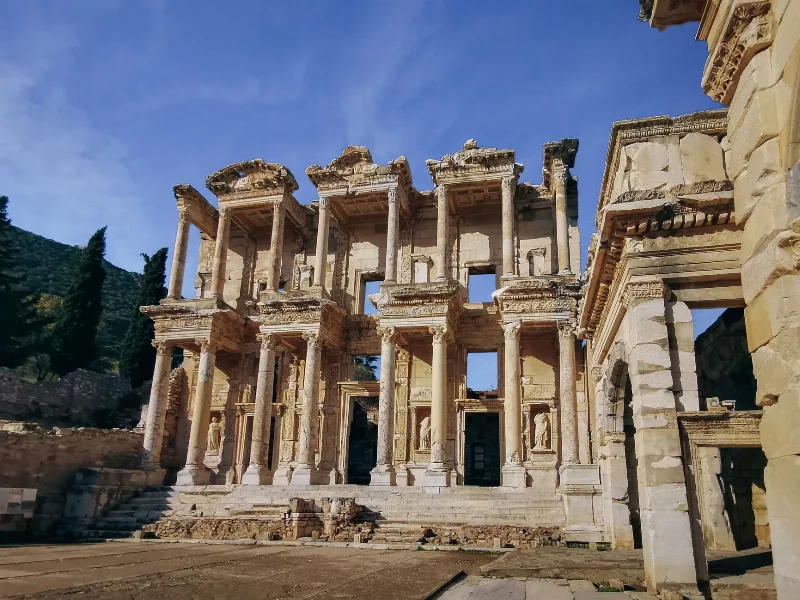
6-Day Aegean Ancient Cities Route
A six-day linear journey from Izmir to Denizli through the great ancient cities of the Aegean, linking Ephesus, Priene, Miletus, Didyma, Lake Bafa, Pamukkale, Laodicea and Aphrodisias in one coherent corridor.
Explore →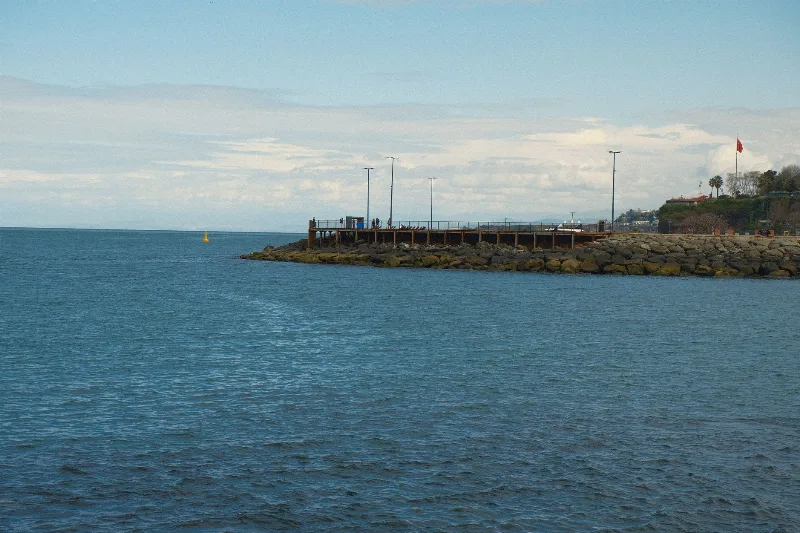
6-Day Central Black Sea Route
A six-day journey along Turkey's Central Black Sea coast from Samsun to Trabzon, visiting Ordu and Giresun with highland and beach stops.
Explore →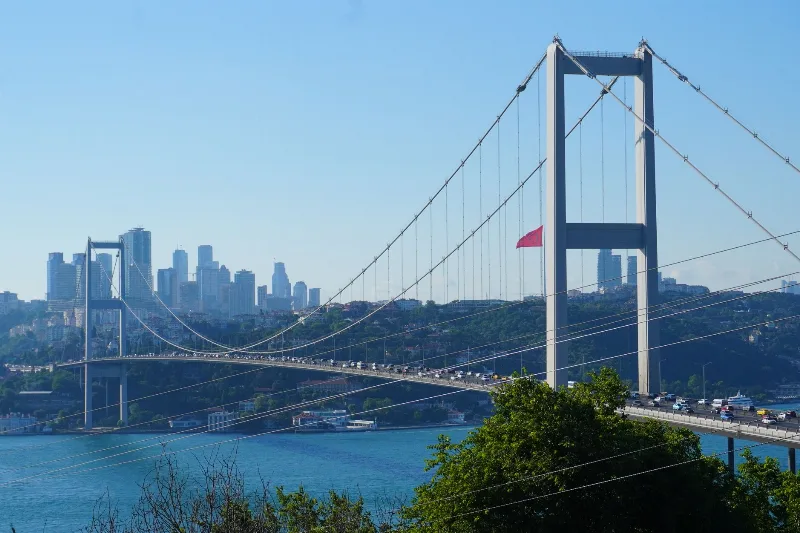
3-Day Istanbul to Bursa Route
Explore the first Ottoman capital on a three-day route from Istanbul to Bursa, combining historic city sites, the mountain landscapes of Uludağ, and the preserved village of Cumalıkızık.
Explore →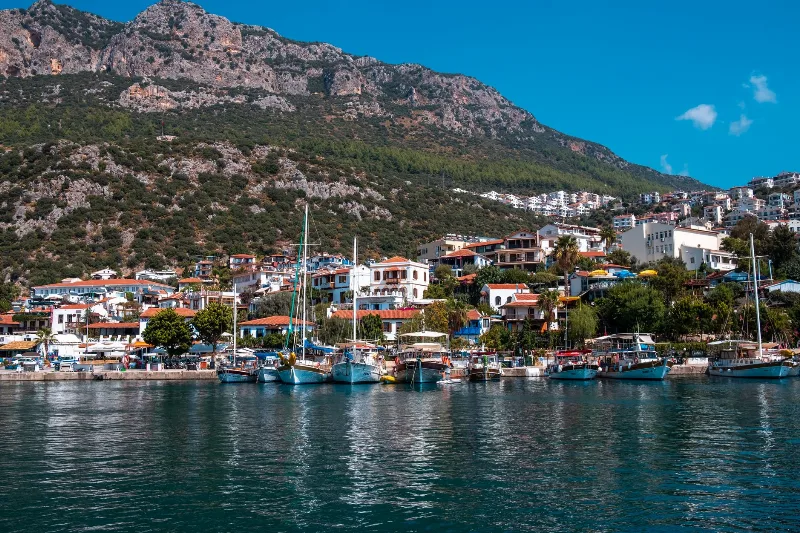
5-Day Antalya to Fethiye Coastal Route
A five-day driving itinerary along Turkey's Mediterranean shore, linking Antalya, Phaselis, Olympos, Demre, Kekova, Kaş, Kalkan, Patara and Fethiye. The route is linear, coastal for most of its length, with short inland detours to Lycian ruins.
Explore →Related content
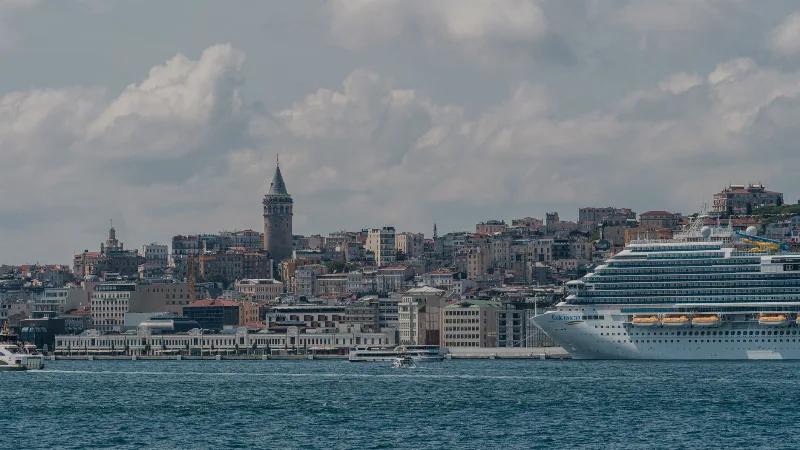
Istanbul
Istanbul is Türkiye's largest city and the country's only metropolis that spans two continents, divided by the Bosphorus strait into a European and an Asian half. Its long run as an imperial capital left a historic core of palaces, mosques and bazaars that still shapes the city's identity.
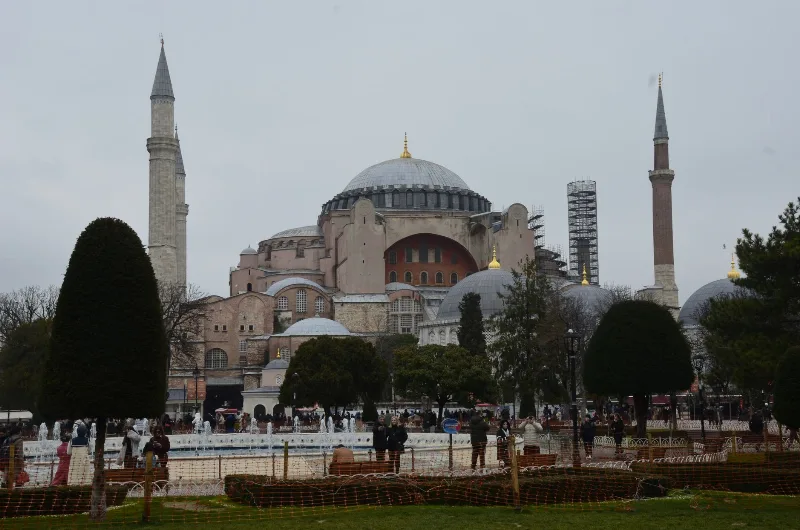
Hagia Sophia
Hagia Sophia in Istanbul is a monumental religious building begun under the Byzantine emperor Justinian I in 537 CE, later converted into an Ottoman mosque and today serving again as a mosque and UNESCO-listed monument.
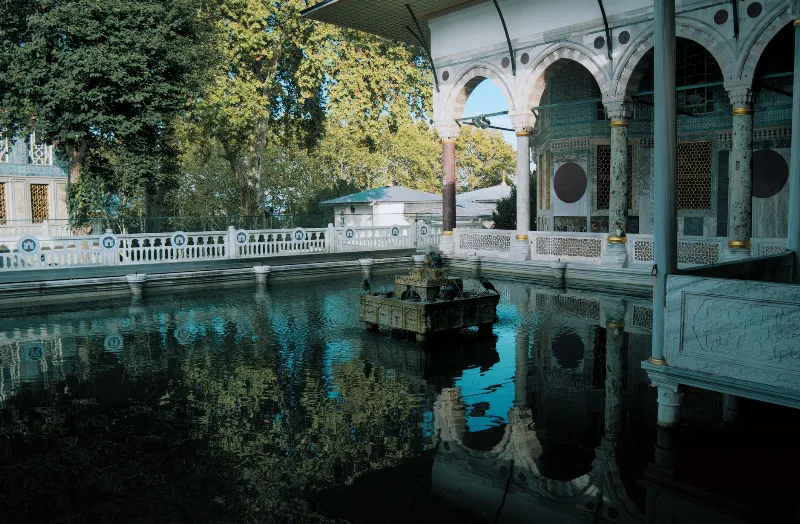
Topkapı Palace
Topkapı Palace on Istanbul's Seraglio Point served as the residence and administrative heart of the Ottoman sultans for nearly four centuries, and today it is a museum displaying its courtyards, opulent interiors and the imperial collections of the Sacred Relics.
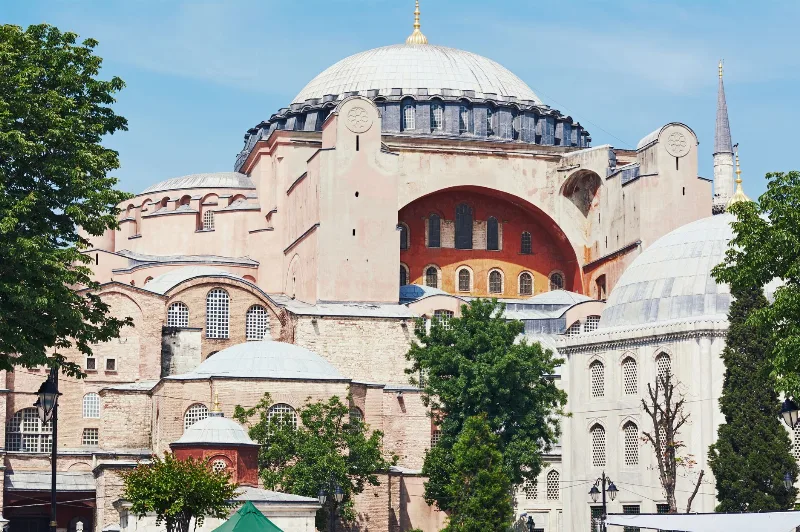
1-Day Istanbul Historic Peninsula Route
Explore Istanbul's Historic Peninsula in one day on foot, visiting Hagia Sophia, the Blue Mosque, Topkapı Palace, and the Grand Bazaar. This compact walking route covers the highlights of Sultanahmet with a logical, easy-to-follow order.
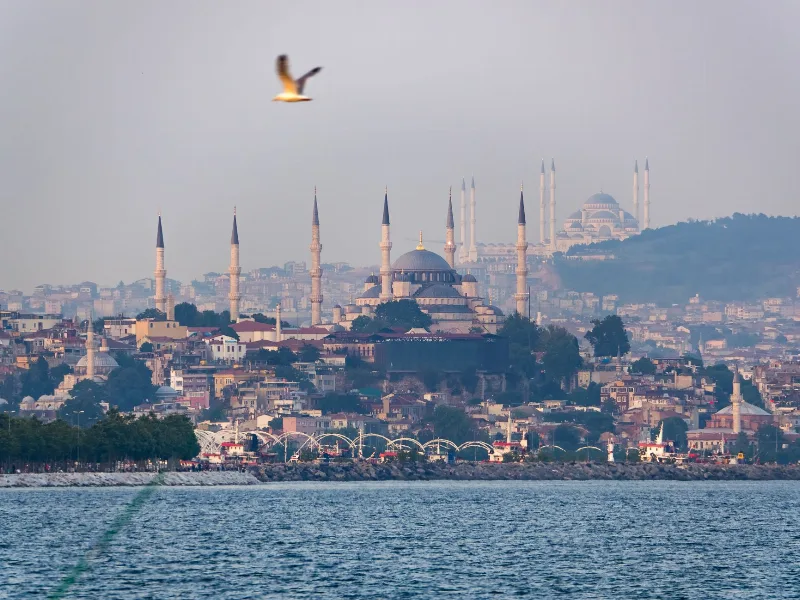
Istanbul's Historic Sultanahmet
Sultanahmet is Istanbul's historic core, a walkable peninsula of Byzantine and Ottoman monuments facing the Bosphorus and the Sea of Marmara.
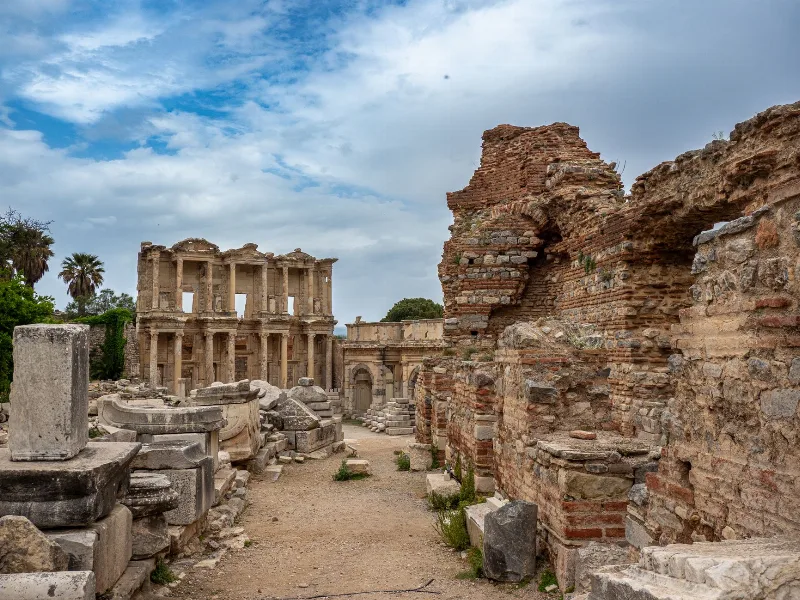
Historic Places in Türkiye
Discover Türkiye's rich history through its ancient cities and iconic landmarks.