
Bodrum Castle
Bodrum Castle, also called the Castle of St. Peter, is a 15th-century fortress built by the Knights of St. John in Bodrum, Muğla. It now houses the Museum of Underwater Archaeology, with its towers, dungeons and shipwreck collections open to visitors.
Bodrum Castle is a medieval fortress standing on a rocky peninsula in the town of Bodrum, in Muğla Province on Turkey's southwestern Aegean coast. Often called the Castle of St. Peter, it was raised by the Knights of St. John, also known as the Knights Hospitaller, across roughly a century between the early fifteenth and early sixteenth centuries. The castle now contains the Bodrum Museum of Underwater Archaeology, and its walls, towers, dungeons and shipwreck collections make it one of the most historically layered sites in the country.
What the Castle Is and Who Built It
The Knights Hospitaller were a military-religious order that had been forced out of the Holy Land after the fall of Acre at the end of the thirteenth century. They relocated to Rhodes and, from there, needed a stronghold on the Anatolian mainland to control the channel between the mainland and their island base. They chose the harbour of ancient Halicarnassus, the site of present-day Bodrum, and began building a castle there in the early 1400s.
The fortress was dedicated to St. Peter and became the order's western anchor on the Aegean coast. It was not a single construction project but a long campaign of building and reinforcement, funded partly by donations from various European kingdoms and religious houses, which is why the castle carries the marks of several national traditions in its stonework.
Where It Stands: Setting and Geography
The castle occupies a peninsula that projects into the Aegean and effectively separates Bodrum's two harbours. Because of this position, it commands the entrance to the town from the sea and is visible from boats approaching the coast. The modern town has grown up around and behind it, so the fortress today sits at the heart of Bodrum rather than on its edge.
The surrounding coastline is rocky and indented, with clear water and a dry, sunny climate typical of the southern Aegean. The land rises gently behind the harbour into low hills covered with whitewashed houses and Mediterranean vegetation.
Architecture and the Towers
The castle is a compact, heavily walled complex rather than a sprawling country fortress. Its defences include a moat, sections of which were cut into the bedrock, and a ring of strong towers. Several of these towers are named after the European groups that helped pay for them, among them the English Tower, the French Tower, the German Tower, the Italian Tower and the Spanish Tower. A separate tower, known as the Snake Tower, is associated with the order's penal functions.
Inside the walls there is a chapel, along with courtyards, stairways, battlements and underground spaces. Carved coats of arms and inscriptions survive on the masonry, recording the grand masters and benefactors connected with the building. The English Tower, in particular, carries notable heraldic decoration.
The Mausoleum Connection
Bodrum was known in antiquity as Halicarnassus, the capital of the region of Caria. Its most famous monument was the Mausoleum, the elaborate tomb of the satrap Mausolus, which became one of the Seven Wonders of the Ancient World. By the time the Knights arrived, the Mausoleum had already been badly damaged by earthquakes and was no longer intact.
The Knights quarried its remaining stone and incorporated it into the castle walls and towers. As a result, dressed blocks from one of antiquity's most celebrated structures are embedded in the fabric of a medieval fortress, giving the site a rare, layered character that spans ancient, medieval and modern history in a single place.
The Museum of Underwater Archaeology
Since the mid-twentieth century the castle has housed the Bodrum Museum of Underwater Archaeology, which occupies many of its halls, chambers and courtyards. The museum is dedicated to finds recovered from shipwrecks excavated along the Turkish coast, and it is one of the most important collections of its kind in the world.
Among the highlights are materials from the Uluburun Late Bronze Age shipwreck and the Cape Gelidonya shipwreck, both recovered from the waters off southern Turkey. These cargoes include copper ingots, glass, ivory, jewellery and other trade goods that illuminate the maritime networks of the Bronze Age Mediterranean. The museum displays reconstructed hulls, amphorae and objects that illustrate how ancient ships were built and what they carried. Because the exhibits are set within the historic rooms of the castle itself, the architecture and the collection are experienced together.
From Fortress to Museum
The castle's military role ended when the Knights left the region in the early sixteenth century, after the Ottoman sultan Suleiman the Magnificent took Rhodes. The fortress then passed into Ottoman hands and served at different times as a garrison and, later, as a prison. In the modern era it was restored and converted to cultural use, and it has since become a museum and a landmark for the town. It has also been placed on Turkey's tentative list of sites proposed for UNESCO World Heritage status.
What You Can See Inside
A visit takes in the gateways and ramparts, the named towers, the chapel, the dungeons and various vaulted chambers. Several of the internal spaces are planted as gardens, with Mediterranean flowers, shrubs and trees growing among the old walls. From the battlements and upper levels there are wide views over both harbours, the marina and the town, as well as out across the Aegean.
The museum galleries are spread through the complex, so exploring the castle and viewing the collection are part of the same walk. Signage and displays explain the history of the fortress and the archaeology of the wrecks. Because the site mixes open courtyards with enclosed rooms, visitors move between sunlit and shaded areas throughout the route.
Access, Terrain and Practicalities
The castle stands in the centre of Bodrum, within easy walking distance of the harbour and the marina, so most visitors reach it on foot from within the town. Bodrum itself is connected to the rest of Turkey by road and by air through Milas-Bodrum Airport, and it is also served by ferries and boats along the coast.
Entry is through the main gate, and tickets are required. Opening hours and admission arrangements vary with the season, so it is worth confirming current times locally before setting out. The terrain inside is uneven: there are slopes, flights of stairs, cobbled surfaces and narrow passages between walls. Wheelchair access is limited, and visitors with mobility difficulties should expect a demanding route. Comfortable shoes, water and sun protection are sensible, since much of the site is outdoors and exposed.
Seasonal Conditions and the Best Time to Visit
The southern Aegean has hot, dry summers and mild, wetter winters. July and August are the hottest and busiest months, and the open courtyards and ramparts offer little shade at midday. Spring, especially April and May, and autumn, particularly September and October, generally bring more comfortable temperatures and thinner crowds. Visiting earlier in the day is usually more pleasant in high summer, and winter visits are quieter, though some days can be cool or wet.
Nearby Places Worth Knowing
Several other sites in Bodrum connect directly to the castle's story. The remains of the Mausoleum of Halicarnassus, the source of much of the castle's stone, lie a short distance inland and help complete the picture. The ancient theatre of Bodrum, carved into a hillside above the town, and the Myndos Gate, a surviving section of the ancient city walls, are other reminders of Halicarnassus. The Bodrum Maritime Museum and the town's traditional streets and harbour are within easy reach. Further out along the Bodrum Peninsula, coastal settlements and quiet bays offer a change of pace after a visit to the fortress.
Related content
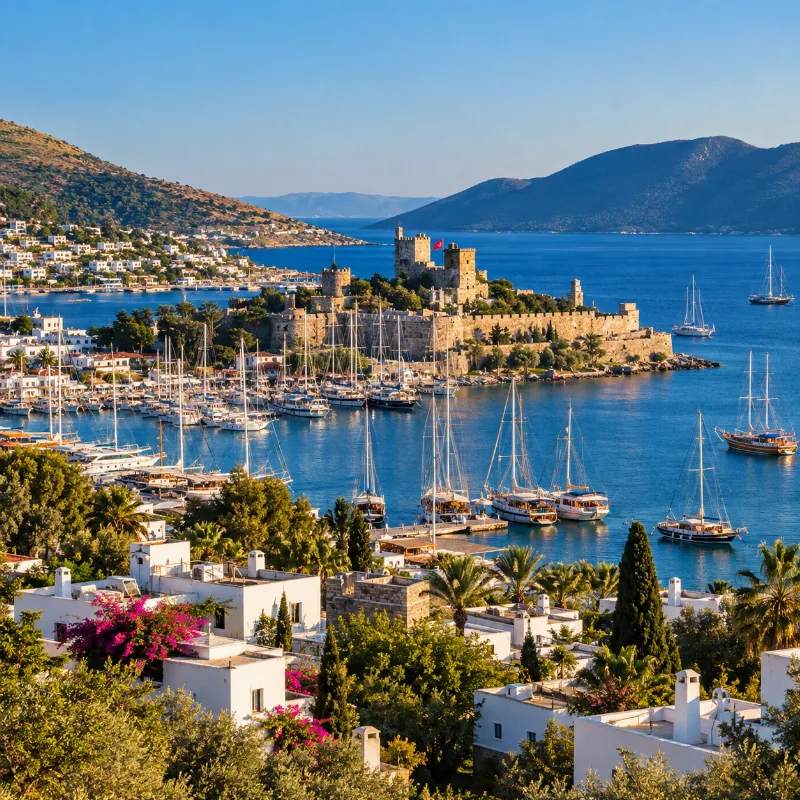
Bodrum
Bodrum is a coastal district of Muğla Province known for its whitewashed architecture, castle, Aegean coastline, bays and ancient Halicarnassus heritage.
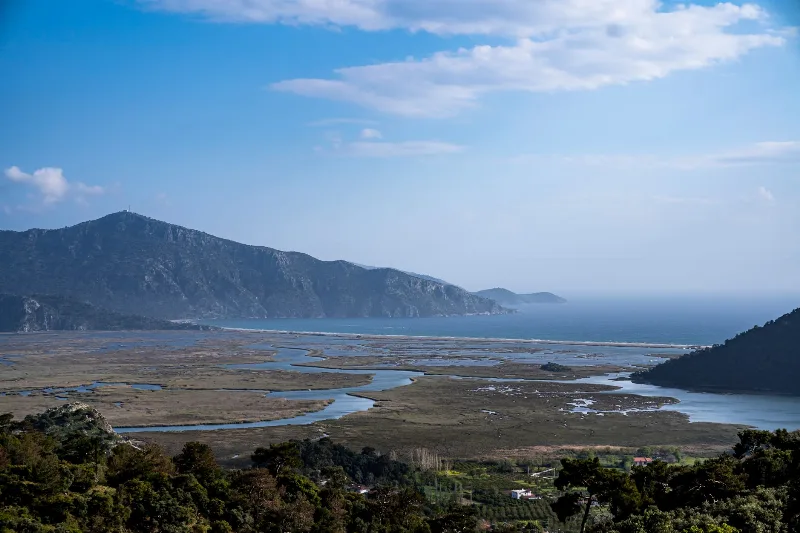
Muğla
Muğla is a captivating province in southwestern Türkiye, renowned for its stunning Aegean coastline and rich cultural heritage.
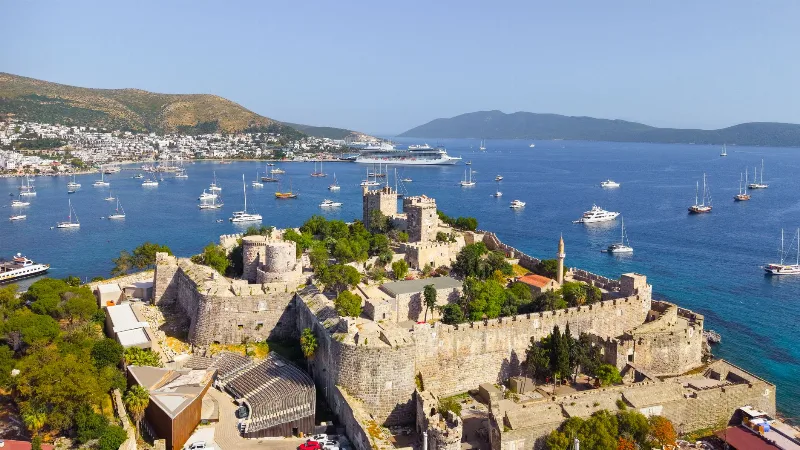
Bodrum Castle
Raised by the Knights Hospitaller above ancient Halicarnassus, Bodrum Castle is both a medieval fortress and the home of one of the world's leading museums of underwater archaeology.
Gümüşlük
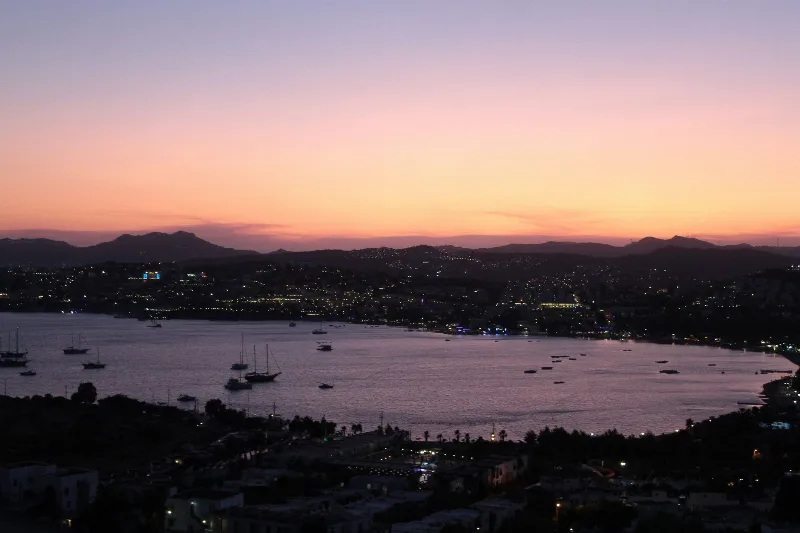
Gümüşlük is a former fishing village on the western tip of the Bodrum peninsula in Muğla, Türkiye, built over the ancient city of Myndos and known for its sunset views across the bay and its seafood culture.
Yalıkavak
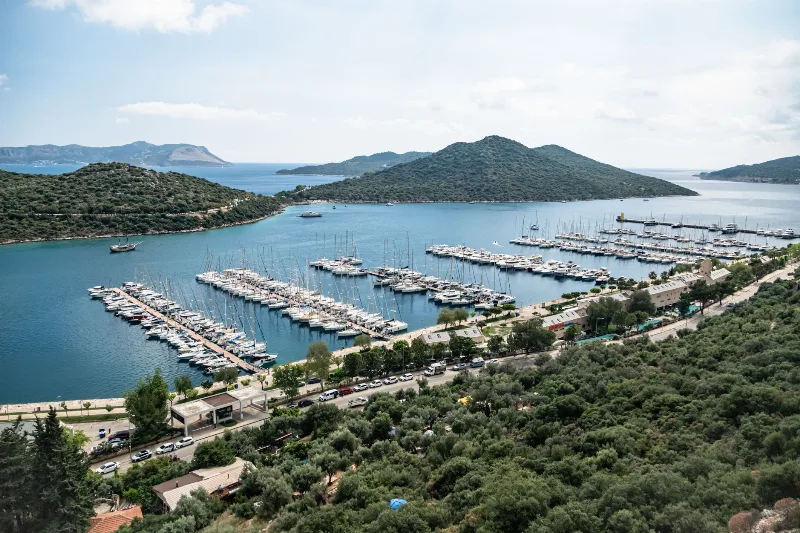
Yalıkavak is a coastal neighbourhood of Bodrum district in Muğla Province, on the northern shore of the Bodrum Peninsula. It is known for its large marina, a group of old stone windmills on the ridge above the bay, and a town centre that still carries traces of its fishing-village past.
Bodrum Peninsula in Türkiye
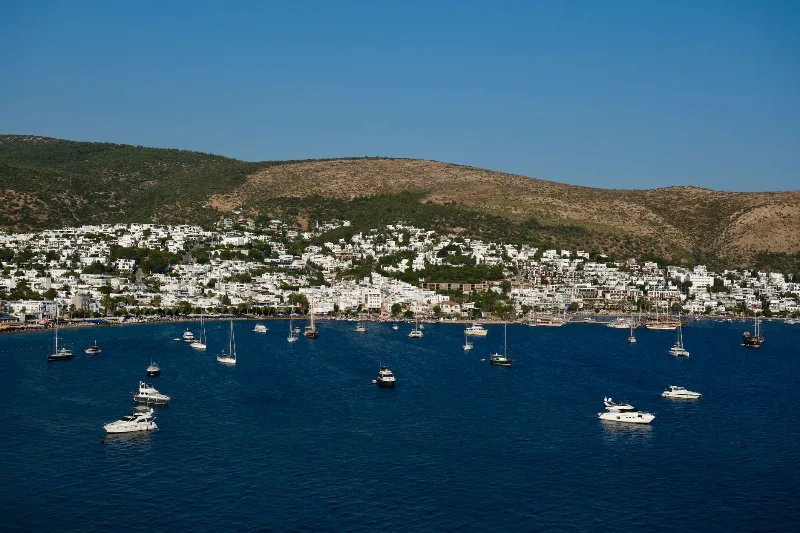
Explore the Bodrum Peninsula, a sought-after holiday spot in Türkiye known for its stunning beaches and lively nightlife.