
Termessos: The Pisidian Mountain City of Antalya
Termessos is an ancient Pisidian city set high in the Taurus Mountains of Antalya Province, Türkiye. Its abandoned ruins, including a theatre, gymnasium, cisterns and a sprawling necropolis, form one of the most complete archaeological landscapes of the Pisidian region.
Termessos is an ancient Pisidian city in Antalya Province, southern Türkiye, built on a mountain plateau in the western Taurus range roughly thirty kilometres northwest of the modern city of Antalya. It was founded and inhabited by the Pisidians, an Anatolian people of the mountainous interior, and it is distinguished above all by its defensive position and by the extent of its surviving ruins. Because the settlement was abandoned rather than built over in later centuries, its theatre, council house, gymnasium, temples, cisterns and tombs still stand largely in place, making Termessos one of the most complete archaeological landscapes of the Pisidian world.
Location and Natural Setting
Termessos occupies a saddle-like plateau between the peaks of Güllük Mountain (Güllük Dağı) at an elevation of around one thousand metres, within what is now Güllük Mountain National Park. The site is enclosed by steep ridges that function almost as natural walls, and access was traditionally possible only through a small number of narrow approaches. From the plateau the land drops sharply toward the Pamphylian plain, and on clear days the Gulf of Antalya and the coastal strip are visible far below. The surrounding slopes are covered with cedar and pine forest together with typical Mediterranean maquis, and the combination of altitude, rock and woodland is a defining part of how the city looked and how it survived for so long.
The Pisidians and the Origins of the City
The Pisidians were an Iron Age people of the Taurus highlands who resisted outside domination for centuries. Their language, known from a limited number of inscriptions, belongs to the Anatolian branch of the Indo-European family. Termessos was one of their larger settlements, and the city appears in written sources mainly from the Classical and Hellenistic periods onward, while its identity is also recorded on its own coinage and public inscriptions. The chief deity of the city was Zeus Solymeus, a mountain god associated with the nearby heights, and his image appears on Termessos coinage. The city governed itself through magistrates and a council, minted its own money, and maintained a strongly independent political character throughout its history.
Termessos and Alexander the Great
In 333 BC Alexander the Great advanced along the southern coast of Anatolia. The Termessians refused his demand for submission, and the Macedonian army found the city's mountain position extremely difficult to attack. Rather than commit to a prolonged siege in difficult terrain, Alexander withdrew and turned northward into the interior. Termessos is therefore remembered as one of the few Anatolian cities that Alexander did not take. This episode became part of the city's reputation for independence, and it shaped how later Greek and Roman writers described the Termessians as a proud and difficult people.
Alcetas and the Accounts of Ancient Writers
After the death of Alexander, his successors fought over his empire. Alcetas, a Macedonian general and brother of Perdiccas, was defeated in Pisidia around 320 BC and fled to Termessos as a suppliant. Ancient writers, above all Diodorus Siculus, record that the older citizens were prepared to hand him over to his pursuer Antigonus, while the younger men of the city wished to protect him. According to this account, Alcetas took his own life when he understood the situation, and the young Termessians later honoured him with a burial. The tomb of Alcetas was known in antiquity and is mentioned by later geographers. The story is preserved in ancient literary sources rather than confirmed by archaeology at the city itself.
Termessos as an Ally of Rome
Termessos entered a new phase of its history through its relationship with Rome. In 71 BC the Roman Senate recognised the city as an ally and friend of the Roman people, a status recorded in inscribed decrees set up at Termessos. This alliance allowed the city to keep its own institutions and laws while benefiting from Roman protection during the wars against Mithridates VI of Pontus. In the following imperial centuries Termessos enjoyed a period of prosperity, reflected in civic building, public dedications and continued minting. The city was never reduced to a minor provincial town in the way many coastal settlements were, and its elites continued to fund monuments in the Greek civic tradition under Roman rule.
The Main Surviving Monuments
The ruins of Termessos are spread across two general levels connected by paths, with the most prominent public buildings on the upper section and further structures, tombs and walls on the lower slopes and in the surrounding valleys.
The Theatre
The theatre is the most recognisable structure at Termessos. It was built into the slope in the Hellenistic tradition and later modified in the Roman period. Its cavea, cut into the rock, could seat several thousand spectators, and its position gives it a wide view over the valley below. The stage building is partly collapsed, but rows of seating, stairways and sections of the retaining walls remain visible, and the way the structure is fitted into the natural hillside is one of its most instructive features.
The Odeon and Council Building
Near the theatre stands a smaller roofed structure, generally identified as an odeon or bouleuterion, used for meetings, performances and civic business. Its compact plan and surviving seating illustrate how a Greek city of this size combined entertainment with the practical government of public affairs. Its proximity to the theatre shows how public life was concentrated in one part of the plateau.
The Gymnasium and the Agoras
Termessos preserves a large gymnasium complex, an institution central to Greek education, athletics and social life, along with more than one open square or agora. Colonnaded stoas, foundations of buildings and stretches of paving give a sense of the organised civic centre, where commerce, administration and public ceremonies took place. The scale of these spaces shows that Termessos was not an isolated stronghold but a fully developed city with the institutions expected of a Hellenistic polis.
Temples and Public Buildings
Several temple foundations and monumental structures survive, including remains associated with the cult of Zeus Solymeus. Inscriptions, statue bases and architectural fragments are scattered across the site and provide evidence for the dedications, benefactors and magistrates of the city. The surviving stonework also reveals a mix of local limestone construction with architectural influences drawn from the wider Greek and Roman world.
The Necropolis and the Tombs
One of the most extensive features of Termessos is its necropolis. Thousands of tombs, sarcophagi and rock-cut graves are distributed along the roads and slopes around the city, and many carry inscriptions naming the deceased and sometimes threatening penalties against those who disturbed the grave. The tombs vary from simple stone coffins to elaborate monuments with carved lids and architectural frames, and together they provide a detailed picture of the city's population, family structures and burial customs. Walking through the necropolis is one of the clearest ways to understand the size and wealth of ancient Termessos.
Water Supply, Earthquakes and Abandonment
Termessos had no reliable natural spring within its walls, so its survival depended on an elaborate system of cisterns, both rock-cut and built, that collected and stored rainwater. This system supported the city through dry seasons and sieges and remains visible throughout the site. In the later Roman and Byzantine periods, the city declined. Earthquakes damaged buildings across the region, and the combination of structural destruction, difficult access and shifting settlement patterns led to the gradual abandonment of the plateau. Unlike many coastal cities, Termessos was not extensively reoccupied or quarried for later construction, which is precisely why so much of its original layout survives.
What Visitors Can See Today
Today Termessos is an open archaeological site within Güllük Mountain National Park. Visitors follow a trail that climbs through the ruins, passing city walls, gateways, cisterns and tombs before reaching the civic centre with its theatre, odeon, gymnasium and agoras. The site is not reconstructed or heavily restored, so the experience is one of reading a city in its original setting, with stonework, inscriptions and foundations still in their ancient positions. Termessos is not inscribed as a UNESCO World Heritage Site, but it has been included on Türkiye's Tentative List in recognition of its archaeological value.
Visiting the Site: Access, Terrain and Timing
Termessos is reached from Antalya by road toward Korkuteli, with a turn-off to the national park entrance before the climb to the site. From the car park, the route to the ruins is a steady uphill walk on rocky and uneven ground, so sturdy footwear is essential. There is very little shade in the exposed upper parts, and no reliable water on the plateau, so carrying water is advisable. The paths cross loose stones and steep sections, and visitors should allow several hours to see the main monuments without hurrying. Spring and autumn offer the most comfortable conditions, while summer afternoons can be very hot and winter may bring cold, rain or occasional snow at this altitude. The site is a protected national park area, and visitors are expected to stay on marked paths and leave archaeological material undisturbed.
Related Historic Sites in the Region
Termessos belongs to a wider landscape of Pisidian and Pamphylian sites around Antalya. The Pisidian city of Ariassos lies to the northwest, while the coastal cities of Perge and Aspendos, both rich in Roman remains, lie to the east and south near the Pamphylian plain. Karain Cave, one of the most important prehistoric caves in Anatolia, is located in the same general area, and further inland the Pisidian city of Sagalassos and the mountain city of Selge illustrate how settlement developed across this rugged interior. The old quarter of Antalya itself preserves later Seljuk and Ottoman layers, showing how the region's history continued long after Termessos was left empty on its mountain plateau.
Routes
All routes →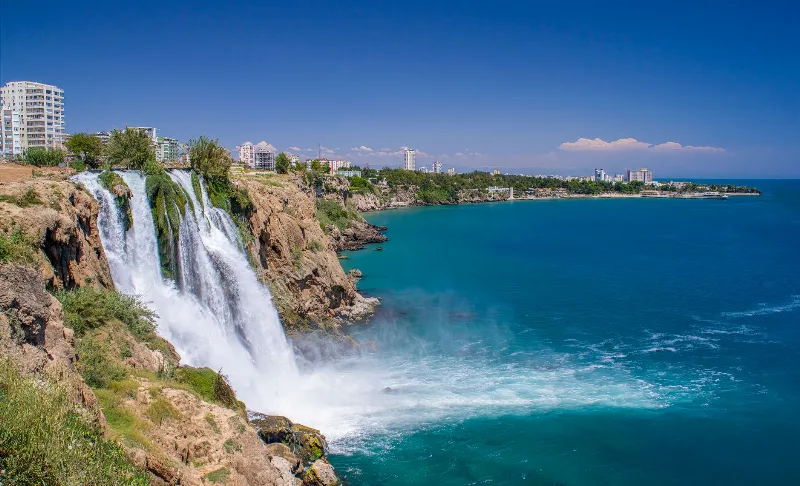
2-Day Antalya Waterfalls and Ancient Cities Route
A circular two-day route based in Antalya that pairs the Düden and Kurşunlu waterfalls with the ancient cities of Perge, Aspendos and Termessos, following the eastern coastal plain on the first day and the Taurus foothills on the second.
Explore →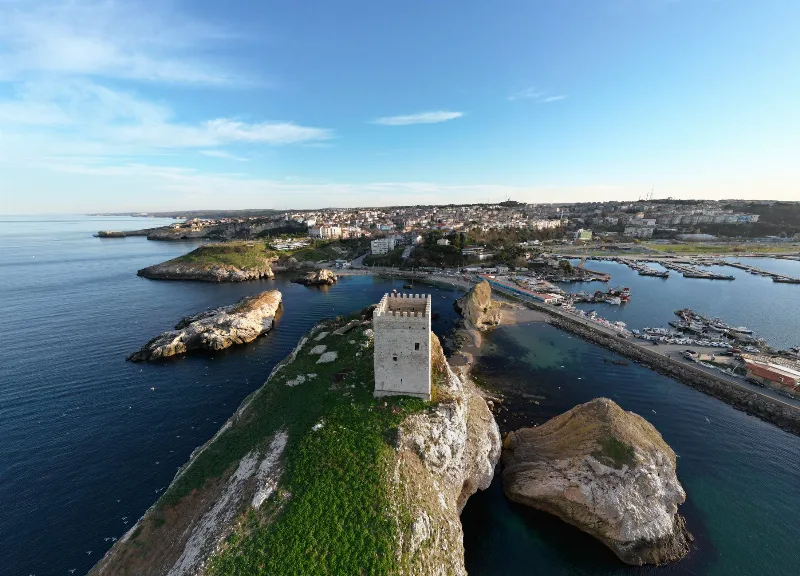
1-Day Sinop Route: Old Town, Castle and Hamsilos Bay
A single-day route through Sinop, from the old harbour and castle walls to the archaeological museum, the historic prison and the wooded bays along the coast west of the city.
Explore →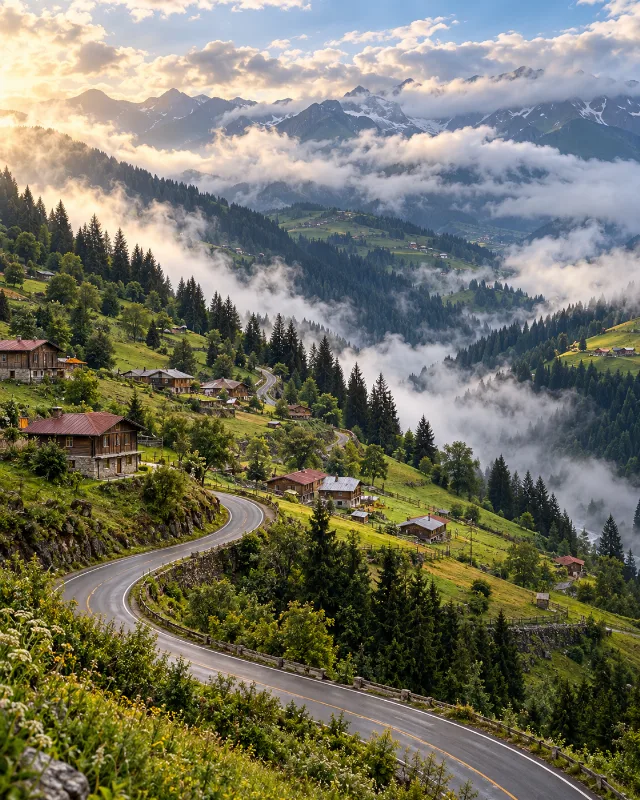
5-Day Eastern Black Sea Route
A five-day journey from Trabzon through Uzungöl, Rize, Çamlıhemşin, Ayder, Borçka and Şavşat, combining Black Sea culture with forests, lakes and highlands.
Explore →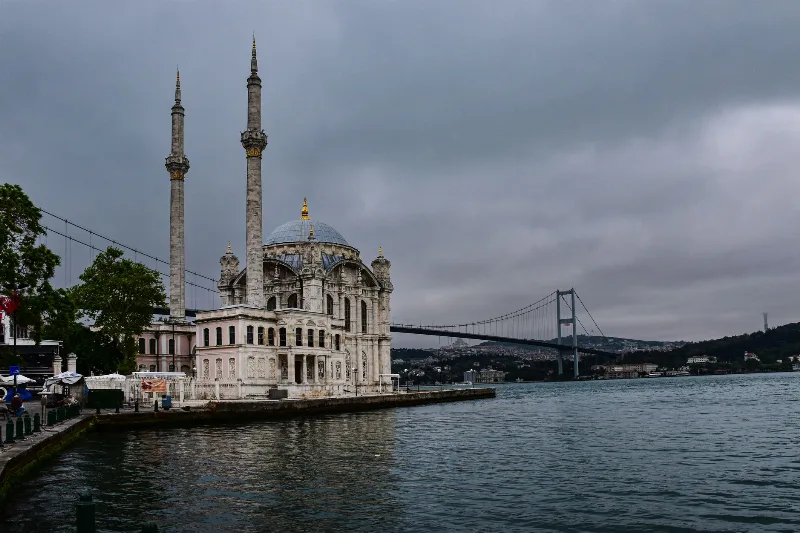
2-Day Istanbul Bosphorus Route
A two-day Bosphorus route that starts on Istanbul's European shore at Ortaköy and Bebek, includes a ferry cruise up the strait, then crosses to the Asian side for Kadıköy and Üsküdar.
Explore →Related content
Termessos
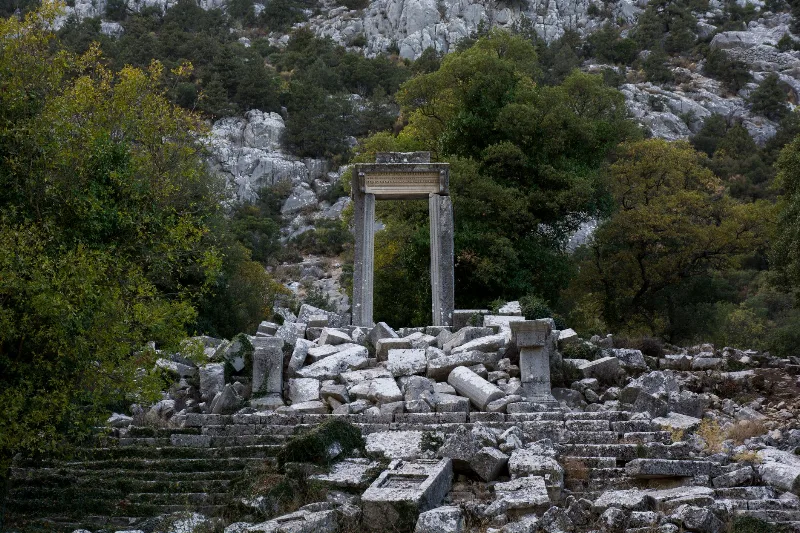
Termessos is an abandoned Pisidian city on a mountain plateau inside Güllük Mountain National Park, northwest of Antalya, known for its theatre, temples and rock-cut tombs. Reaching the ruins requires a steep walk.
Antalya
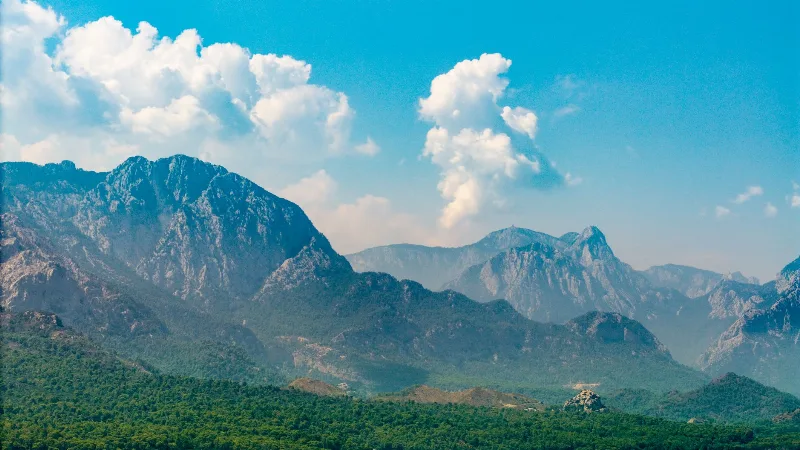
Antalya offers a unique blend of vibrant history and stunning natural beauty, making it a must-visit destination in Türkiye.
Perge
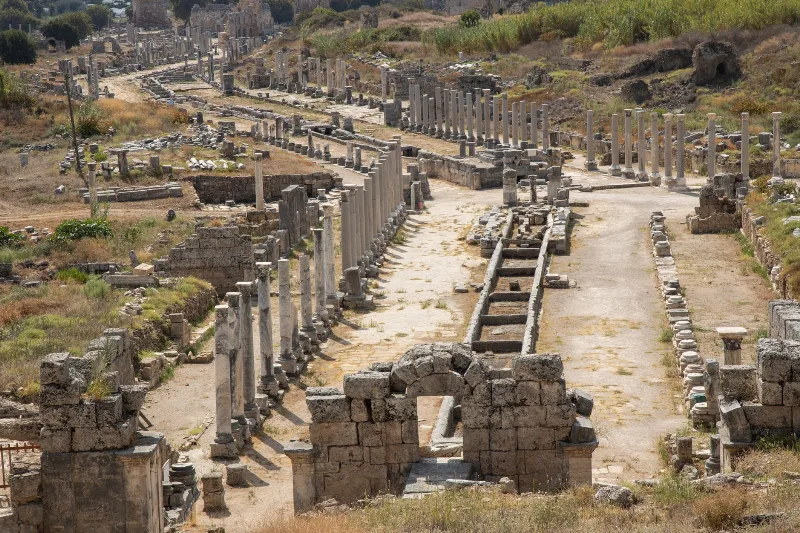
Perge is a Graeco-Roman city in the Pamphylian plain east of Antalya, Türkiye, whose surviving urban plan includes two colonnaded streets with central water channels, a hillside Roman theatre and one of Anatolia's best-preserved stadiums.
2-Day Antalya Waterfalls and Ancient Cities Route
A circular two-day route based in Antalya that pairs the Düden and Kurşunlu waterfalls with the ancient cities of Perge, Aspendos and Termessos, following the eastern coastal plain on the first day and the Taurus foothills on the second.
Antalya's Ancient Ruins
Antalya's ancient ruins trace Lycian, Pamphylian, Roman and Byzantine life across the Mediterranean coast and the Taurus foothills. Scattered theatres, colonnaded streets and rock-cut tombs reveal how successive peoples shaped this landscape.
Termessos Ancient City Mountain Setting in Antalya
Termessos is a Pisidian city built on a high ledge of the Taurus Mountains north-west of Antalya, where a theatre, council house and rock-cut tombs stand among pine forest.